There’s something satisfying about building a wellness habit that fits into your evening. No gym membership. No appointment. Just ten or twenty quiet minutes at home. A full-body red light therapy mat is designed for exactly that kind of routine.
If you’ve just bought one, or you’re still deciding, this guide walks through everything from setup to session length. We’ll answer the practical questions first. Then we’ll look at what to consider when choosing a mat, including where the LuxReda Red Light Therapy Mat fits in.
What Is a Full-Body Red Light Therapy Mat?
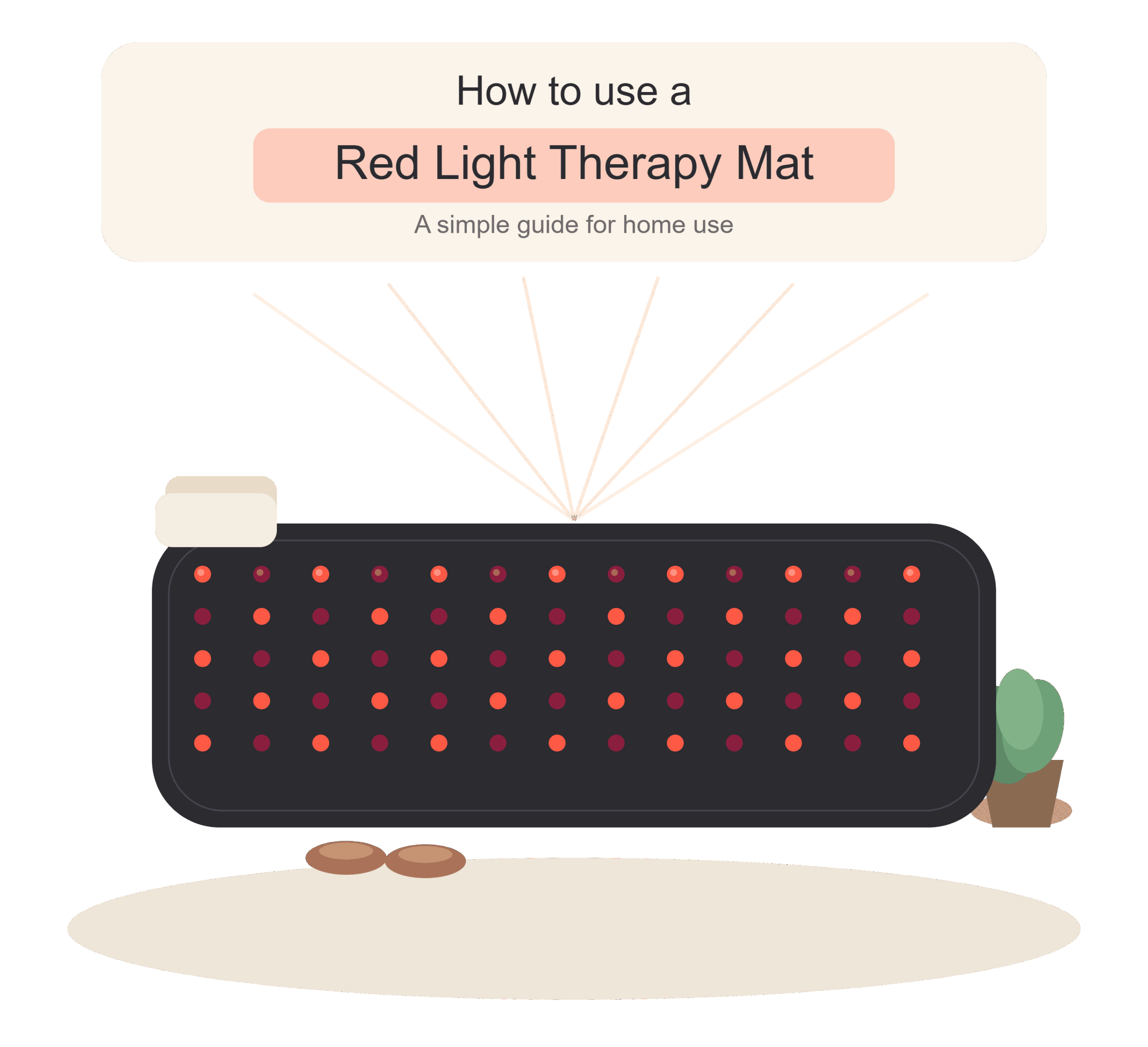
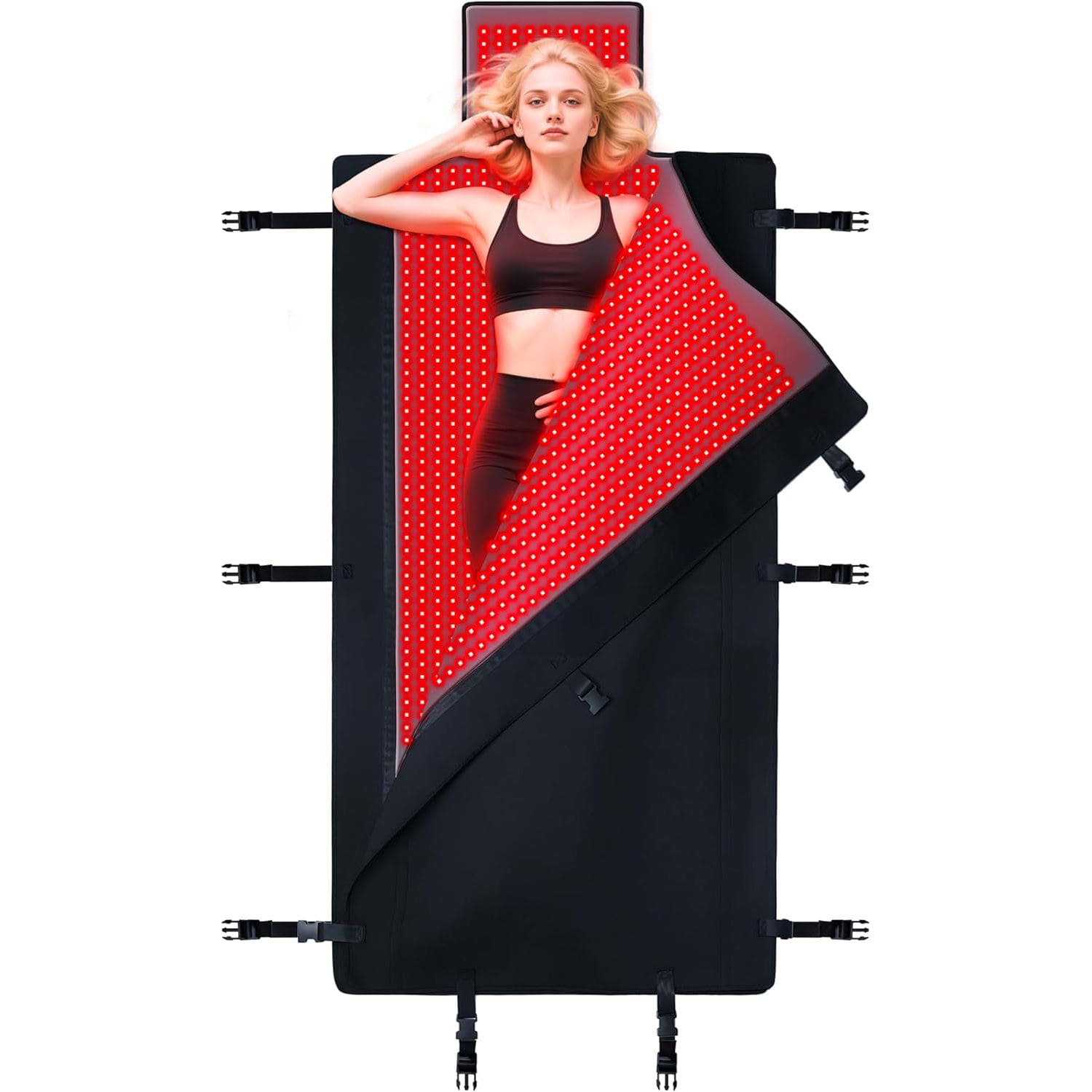
A full-body red light therapy mat is a flexible, LED-lined mat. You lie on it to expose large areas of skin to red and near-infrared light at once. Instead of moving a small panel across different body parts, you position your whole body over the light source in one session.
This full-body format is one of a few home options. Some people prefer a panel that targets one area at a time. Others choose a wearable blanket instead. If you’re comparing formats, this red light therapy mat vs. panel comparison breaks down the practical differences. This guide on choosing between a red light therapy blanket and a mat is also worth a look if you haven’t settled on a format yet.
How Does a Red Light Therapy Mat Work?
Red light therapy mats use LEDs that emit specific wavelengths of visible red and near-infrared light. This process is often called photobiomodulation. The idea is that certain wavelengths can be absorbed by cells and influence activity inside them.
Research on the mechanism points to a specific enzyme inside mitochondria, called cytochrome c oxidase. This enzyme is identified as a primary site where red and near-infrared light gets absorbed at the cellular level.
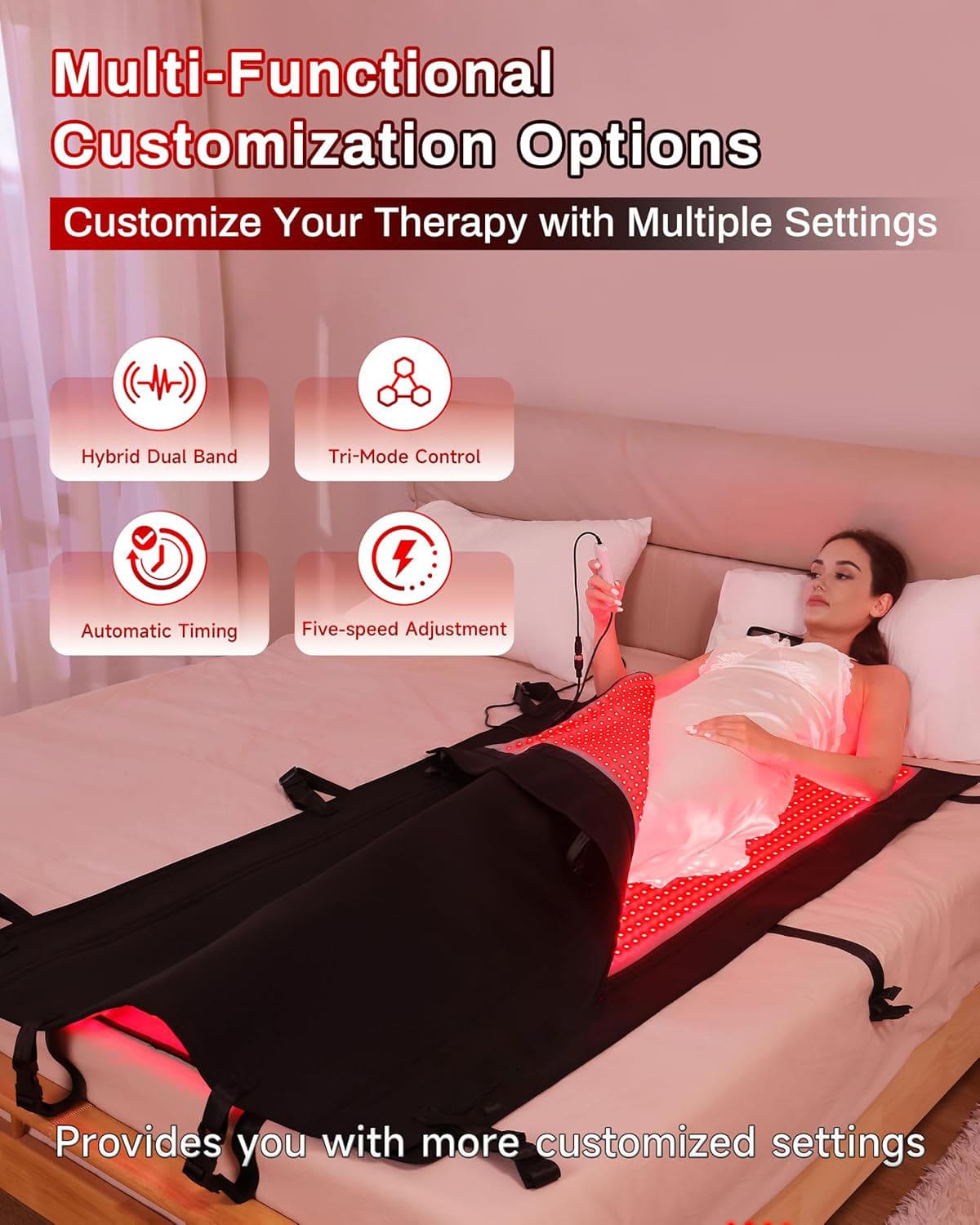
That’s the science in brief. For home use, what matters is simpler. You position yourself so the light reaches the skin you want to treat. You choose a session length and a mode that fits your routine. We’ll cover modes and timing next.
A Note on Regulation
Light therapy devices sold for general wellness use aren’t always reviewed the same way as medical devices. The FDA has published draft guidance on how it evaluates photobiomodulation devices. The evaluation depends on the claims a manufacturer makes and the device’s intended use. Some light-emitting products fall under general wellness policy. Others are treated as regulated medical devices, depending on risk level. This distinction is worth keeping in mind as you research red light therapy.
How to Set Up Your Red Light Therapy Mat
Getting a full-body mat ready for a session is straightforward. A few steps make the experience smoother and safer.
- Choose a flat, stable surface. A yoga mat, bed, or padded floor space works well. Avoid setups where the mat could slide.
- Check the power connection. Plug in the unit. Confirm the controller responds before you lie down.
- Clear the area. Give yourself enough space so cords aren’t a tripping hazard.
- Keep the remote within reach. You’ll want to adjust the mode or timer without getting up.
- Decide on clothing. Many people use minimal clothing on the treated area, since fabric can block some light. Follow your manufacturer’s instructions.
Taking a minute to set up properly means you can relax once the session starts. You won’t need to fuss with cords halfway through.
How to Position Yourself on a Full-Body Mat
Positioning is where a full-body mat has a real edge over smaller panels. You don’t have to move the device around to cover more of your body.
- Lie flat on your back for sessions targeting your torso, legs, and arms.
- Flip to your stomach partway through if you want to treat your back too.
- Center the areas you care about most on the mat, rather than at the edges.
- Keep skin exposed where it makes sense for your goals, following the product’s usage guidance.
A large treatment area matters here. The bigger the mat, the less repositioning you need. That’s a big part of why full-body coverage appeals to people who want a simple routine.
660nm Red Light vs. 850nm Near-Infrared Light
Most full-body mats combine two wavelength ranges. It helps to understand what each one generally does.
| Wavelength | Type | General Characteristic |
|---|---|---|
| 660nm | Visible red light | Penetrates the skin’s surface layers |
| 850nm | Near-infrared light | Penetrates more deeply, into muscle and connective tissue |
Near-infrared light sits just outside the visible spectrum. You may notice it looks less bright than the red LEDs, even at full output. Research describes red and near-infrared light together as covering a broader “optical window.” Using both ranges, rather than just one, is the reasoning behind most dual-wavelength mats on the market today.
Choosing a Session Mode: Continuous, 10Hz, or 40Hz
Full-body mats commonly offer more than one mode. It helps to know what each one means before picking one for your routine.
- Continuous (constant) mode delivers steady, uninterrupted light for the full session. This is the simplest option for beginners.
- 10Hz pulse mode cycles the light on and off ten times per second. Some people prefer this rhythm.
- 40Hz pulse mode cycles faster. Like 10Hz, it’s an alternative rhythm, not a stronger dose.
There isn’t a universal “best” mode. It often comes down to personal preference. If you’re just starting out, continuous mode is usually the easiest place to begin.
How Long Should You Use a Red Light Therapy Mat?
This is one of the most common questions people ask before their first session. The honest answer depends on your manufacturer’s guidance.
As a general pattern, home sessions commonly run 10 to 20 minutes. Always check the instructions for your specific mat. Output intensity and recommended timing vary between products.
How Often Should You Use a Red Light Therapy Mat?
Consistency tends to matter more than intensity. That’s true for any home wellness habit, and a red light therapy routine is no different. Many people use their mat a few times a week. Some devices are labeled for daily use, so check your manufacturer’s guidance.
A realistic routine might look like:
- 3 to 5 sessions per week
- Sessions scheduled around a time you’re already relaxing, like winding down at night
- Occasional rest days, especially when starting out
Pair it with something you already do, like reading before bed. That makes the habit far more likely to stick than finding a brand-new slot in your day.
Tips for Building a Consistent Home Routine
A few small habits help you stay consistent over weeks and months, not just the first few sessions.
- Pair it with something you already do, so the time doesn’t feel like an extra chore.
- Keep the mat accessible, not stored away, so setup takes seconds.
- Track your sessions loosely, even with a quick note on your phone.
- Be patient with the process. Home wellness routines work best as a steady habit, not a one-time fix.
Treat it like stretching or a short wind-down routine. It’s a small, repeatable act of self-care, not a big production every time.
What to Consider When Choosing a Full-Body Red Light Therapy Mat
If you’re still shopping, a few factors are worth comparing across mats:
- Treatment area size — a larger mat means less repositioning.
- LED count and wavelength combination — check whether it combines red and near-infrared light.
- Available modes — continuous-only devices are simpler; multi-mode mats offer more flexibility.
- Build materials — mats that fold or roll are easier to store.
- Manufacturer guidance — clear instructions on session length are a good sign.
For a deeper look, this full-body red light therapy device buying guide covers the comparison in more detail. This red light therapy blanket guide is useful if you’re weighing a blanket against a mat.
LuxReda Red Light Therapy Mat: 2,570 LEDs and Full-Body Coverage
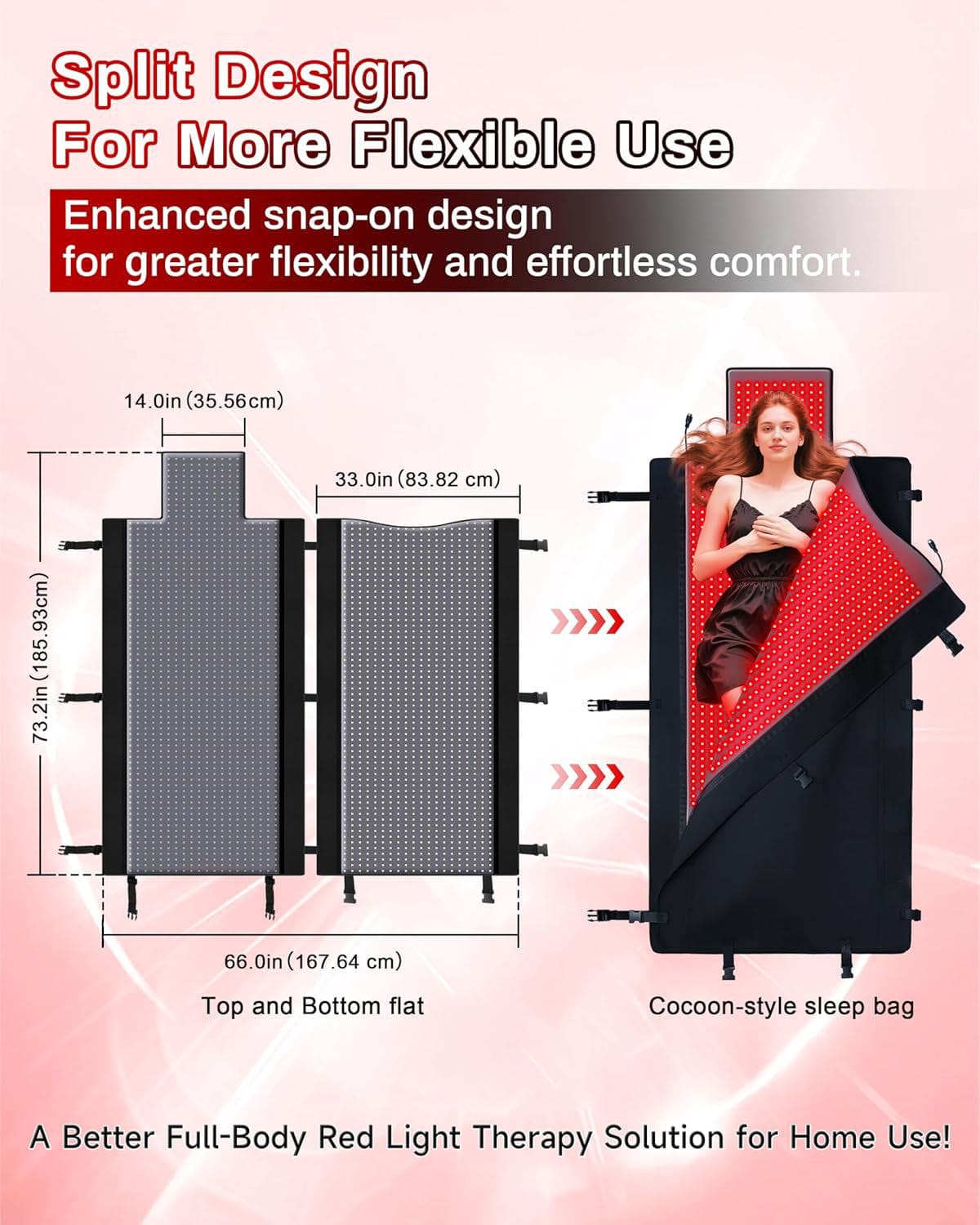
The LuxReda Red Light Therapy Mat is built around the full-body approach in this guide. It uses 2,570 LED beads across a 73″ x 33″ treatment area. It combines 660nm red light and 850nm near-infrared light in one device.
The mat offers three modes: constant, 10Hz pulse, and 40Hz pulse. You can pick the session style that fits your preference. It’s built with neoprene and TPU, designed for the kind of at-home use covered in this guide.
If you’re comparing full-body formats, it’s also worth reading how to use a red light therapy pod or this guide to red light therapy blanket benefits.
Frequently Asked Questions
It’s a flat, LED-lined mat you lie on. It exposes large areas of your body to red and near-infrared light in one session.
Set the mat on a flat surface. Connect the power, choose a mode, and lie down. Position the areas you want to treat over the LEDs for the recommended time.
This depends on the specific device. Home sessions commonly fall in the 10 to 20 minute range. Always follow your manufacturer’s instructions.
Many people use their mat several times a week. Guidance varies by manufacturer, so check your device’s instructions.
660nm is a wavelength of visible red light used in red light therapy devices. It’s generally associated with penetrating the skin’s surface layers.
850nm is a near-infrared wavelength, just outside the visible spectrum. It’s generally associated with penetrating more deeply into tissue.
Continuous mode delivers steady, uninterrupted light. Pulsed modes, like 10Hz or 40Hz, cycle the light on and off at a set rate.
Yes, for many people. It fits naturally into an existing routine, like an evening wind-down. Frequency should still follow your manufacturer’s guidance.
Consider treatment area size, wavelength combination, available modes, build quality, and how clear the manufacturer’s instructions are.
A larger mat covers more of your body in one session. That means less repositioning and a simpler routine.
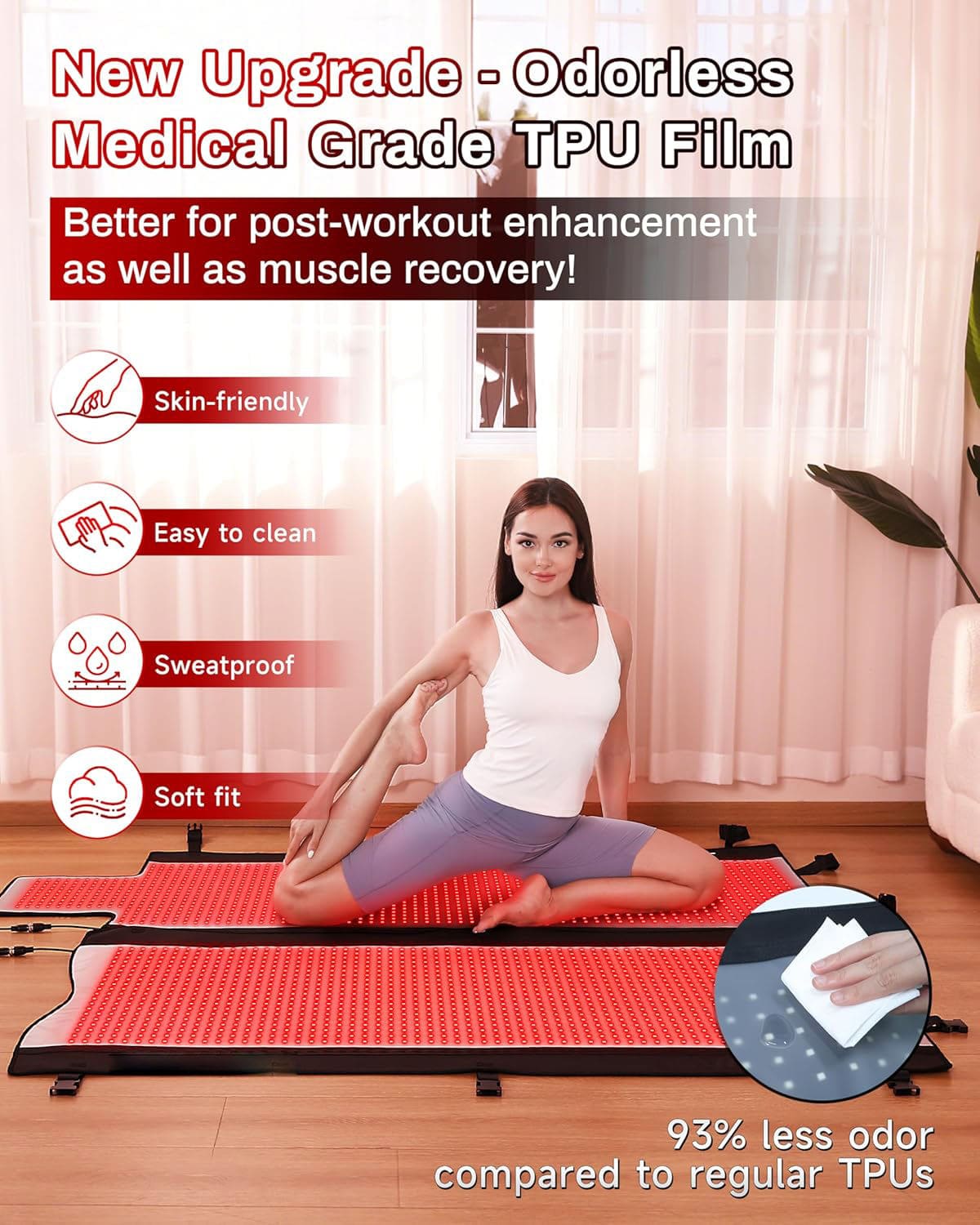
However you build your routine, the goal is the same. Keep it simple enough that you’ll actually stick with it. Take time to get your setup right, follow your mat’s guidance, and let the routine settle in at its own pace.
Thank you