Building a home wellness routine often starts with small choices. A better pillow. A few extra minutes of stretching. A quiet corner for winding down after work. Adding a full body red light therapy device is one more way people are making self-care part of everyday life. For some, that means easing tight muscles after a workout. For others, it’s simply a calmer evening routine.
If you’re researching a full body red light therapy device for the first time, you’ve probably noticed the market is crowded. Panels, mats, blankets, and sleeping-bag-style wraps all promise “full body” coverage. In practice, they work very differently.
This guide answers the question most shoppers actually have. What should you look for before buying? Not which single product is “the best.” By the end, you’ll know how to compare wavelengths, coverage, LED density, and comfort. That way, you can pick a device that fits your space, your body, and your routine.
What Is a Full Body Red Light Therapy Device?
A full body red light therapy device is any LED-based product built to expose most of your body to red and near-infrared light at once. It treats a wide area, not one small spot at a time.
Smaller handheld devices and compact panels work fine for a face, a shoulder, or a knee. Full-body sessions are different. Lighting up your back, legs, arms, and torso in one sitting takes enough surface area and enough LEDs.
That’s the real distinction between “spot” devices and full-body ones:
- Spot devices treat a limited area and require you to move the device or reposition your body several times.
- Full body devices are built wide or long enough to lie in, sit under, or wrap yourself in once. The light does the rest.
Neither format is objectively better. It depends on your home wellness routine and how much space you have.
Why Coverage and Device Size Actually Matter
It’s tempting to focus only on wavelength numbers when comparing red light therapy devices for home use. But size and coverage area affect your day-to-day experience just as much.
Session Convenience
A device with limited coverage means more repositioning. Say you want to light your calves, thighs, lower back, and shoulders in one sitting. A narrow panel forces you to stop and adjust several times. A larger mat or blanket-style device lets you settle in once.
Consistency Across Sessions
Coverage also affects consistency. A device that wraps around or lies under most of your body exposes roughly the same skin area every time. Smaller panels are different. Exposure can vary more, depending on how carefully you position yourself.
Realistic Space Planning
Before you buy, think honestly about where you’ll actually use the device:
- A wall-mounted panel needs clear floor space and a few feet of standing distance.
- A flat mat needs a section of floor, a yoga mat area, or a bed.
- A foldable blanket or sleeping-bag style device can often be stored away between uses. That matters in smaller apartments.
Are you deciding between a large panel and a full-body red light therapy mat? Measure your available space first. It will save you from returning an oversized product later.
Understanding 660nm Red Light and 850nm Near-Infrared Light
Almost every full-body device on the market advertises “660nm and 850nm dual wavelength” technology. Here’s what that actually means in plain language.
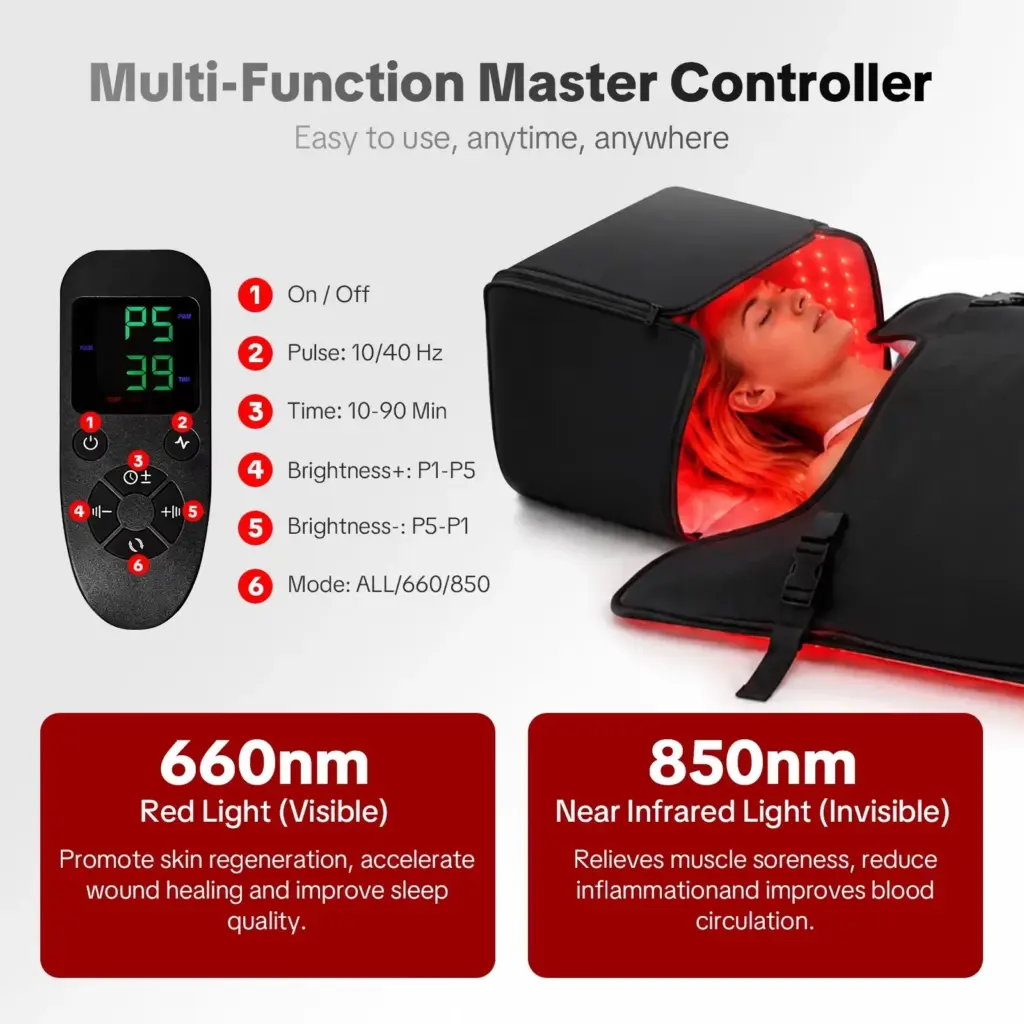
660nm Red Light
660nm sits in the visible red portion of the light spectrum. Research on photobiomodulation, the broader category this technology falls under, generally associates this wavelength with more surface-level effects on skin. Manufacturers commonly describe 660nm as relevant to skin appearance and surface tissue.
850nm Near-Infrared Light
850nm falls into the near-infrared range, which is invisible to the human eye. Near-infrared wavelengths penetrate further than visible red light. That’s why brands typically market 850nm as the wavelength associated with reaching muscles and deeper tissue.
A peer-reviewed overview of photobiomodulation on PubMed explains the basic mechanism. Red and near-infrared light is absorbed by light-sensitive receptors inside cells, including a mitochondrial enzyme tied to cellular energy production. That receptor-level absorption is what most red light therapy research points to.
Why Dual Wavelength Devices Are Popular
A device that combines both wavelengths gives you surface-level and deeper-reaching light in one session. That’s why “660nm 850nm red light therapy” has become close to a standard spec, not a premium add-on.
Red light therapy is a general wellness category. It is not a diagnostic or treatment tool for medical conditions. Nothing in this guide should be read as a claim that any device can diagnose, treat, cure, or prevent a disease.
Comparing Device Formats: Panels, Mats, Blankets, and Sleeping Bags
Full-body coverage can come in several physical formats. Each one has real tradeoffs.
| Format | Best For | Considerations |
|---|---|---|
| Standing panel(s) | People with dedicated wall space | Usually treats the front or back of the body at a time, not both simultaneously |
| Flat mat | Floor or bed use, stretching routines | Bottom of the body gets more consistent contact than the front |
| Blanket / wrap style | Wrapping around the body for more even exposure | Flexible fabric can conform to different body shapes and sizes |
| Sleeping-bag style | Hands-free, lie-down sessions | Often foldable for storage; designed so LEDs surround more of the body at once |
Panels
Panels are a familiar format. They resemble early red light therapy setups used in clinics and gyms. A single large panel, or a few panels arranged around a person, can offer strong coverage. Most still treat only one side of the body per session.
Mats
Mats are flexible and often used on a yoga mat, bed, or floor. They tend to work well for people who want to lie down and target their back, legs, or torso. No holding required.
Blankets and Sleeping-Bag Style Devices
Blanket and sleeping-bag formats are designed to wrap around more of the body at once. That’s why they’re increasingly popular for people who want a genuinely hands-free, full-body session. The material is flexible rather than rigid, so it can fold for storage and adapt somewhat to different body sizes.
Do you enjoy winding down at the end of the day? A wrap-style device you simply lie back and relax in can fit naturally into a bedtime or after-workout routine.
What to Consider Before Buying a Full Body Red Light Therapy Device
Once you understand wavelengths and formats, narrow your decision using these practical factors.
1. Wavelength Configuration
Look for a device offering both 660nm and 850nm, rather than a single wavelength. This matters most if your goal is broad, general wellness use across skin and deeper tissue areas.
2. LED Density and Configuration
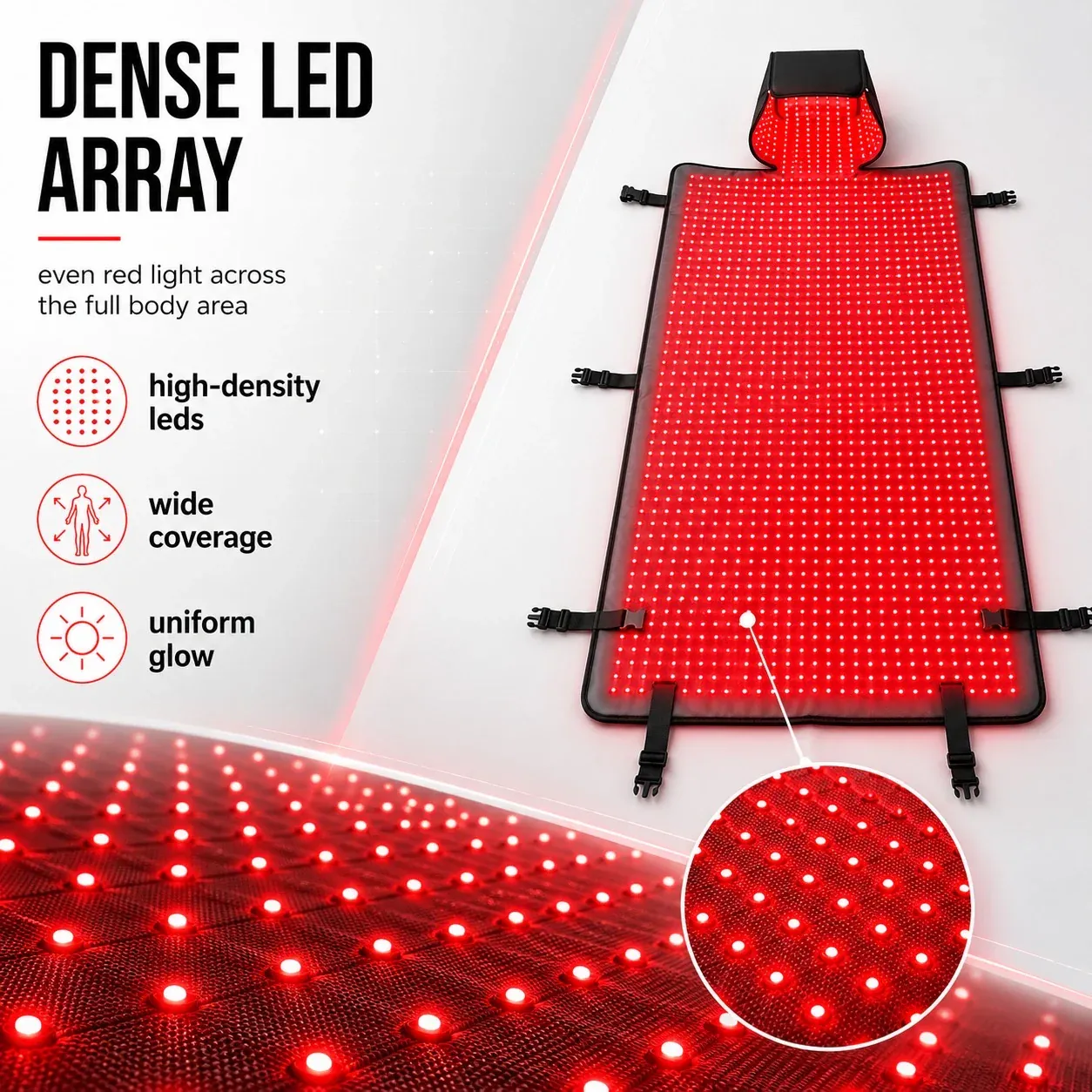
More LEDs generally means more even light distribution across the treatment area. There are fewer isolated bright spots with gaps in between. Check the manufacturer’s stated LED count and configuration, not just the device’s outer size.
3. Coverage Area and Dimensions
Compare the actual treatment dimensions, not just marketing terms like “extra-large” or “full body.” Look for measurements in inches. That way, you can judge whether the device fits your height and the areas you want to target.
4. Flexibility and Body Fit
A rigid panel and a flexible blanket create very different user experiences. Want a device that wraps around your shoulders, hips, or legs comfortably? A soft, foldable material is usually more forgiving than a flat, stiff panel.
5. Portability and Storage
Apartments and smaller homes benefit from foldable devices that store easily. If you’re not committing an entire room to home wellness equipment, this factor matters more than it first appears.
6. Ease of Use
Look for practical features such as an adjustable timer, adjustable intensity, and a remote control. These details determine how simple the device is to use consistently. That matters more than any single spec on a page.
7. Comfort for Longer Sessions
Full-body sessions often run longer than a quick spot treatment. Comfort features like a soft interior lining and a hands-free design make a real difference in whether you’ll actually use the device regularly.
An Example of a Flexible Full-Body Format: The LuxReda Mat Blanket
If you’re comparing flexible, wrap-style options, the LuxReda Extra Large Full Body Red Light Therapy Mat Blanket is one example of this blanket and sleeping-bag category.
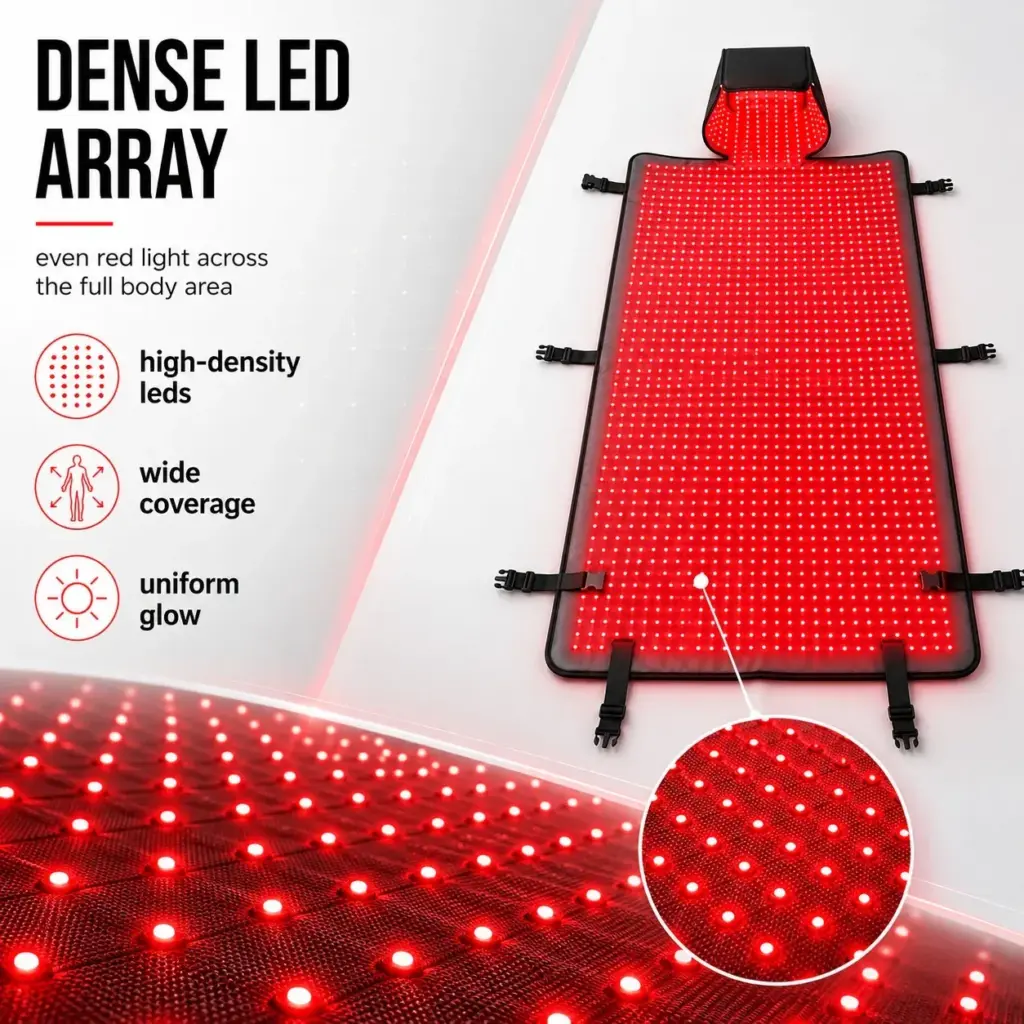
Based on the product’s published specifications, it uses a 660nm red light and 850nm near-infrared dual-wavelength configuration. It has a foldable sleeping-bag-style design intended to surround more of the body during a session. The listed dimensions run 98 by 32 inches. It has high-density LEDs distributed across the interior, an adjustable timer, and remote control operation.
This isn’t a suggestion that a wrap-style blanket beats a panel or mat. It’s simply a real-world example of the buying factors above: dual wavelengths, a large treatment area, foldable storage, and a hands-free design.
Do you prefer a rigid, wall-mounted setup instead? Shoppers can look at LuxReda’s red light therapy device category to compare panel-style options side by side.
Finding a Device That Fits Your Own Wellness Routine
There’s no single “correct” answer here. The right full body red light therapy device depends on your space, your budget, and your habits.
- If you value a quick, standing session, a panel might suit you better.
- If you want to lie down and stretch afterward, a mat could fit naturally into that habit.
- If you want a hands-free, cocoon-style session before bed, a blanket or sleeping-bag format is worth a closer look.
Take a few minutes to think through your daily routine, rather than buying on size alone. You’ll be far more likely to stick with the device long-term. A wellness routine only works if it’s easy to keep up with. Pick a format you’ll actually use more than once or twice.
Frequently Asked Questions
A panel is typically a rigid, wall-mounted or free-standing unit. It treats the side of the body facing it. A mat or blanket is made of flexible material that can be laid flat, wrapped, or folded. This lets it surround more of the body during a single session.
Many full-body devices combine both wavelengths. 660nm is generally associated with more surface-level effects, and 850nm near-infrared light is associated with deeper reach. A dual-wavelength device gives you both options in one session, rather than requiring two separate devices.
It depends on the format. Panels need standing distance and wall or floor space. Flat mats need enough floor or bed space to lie down. Foldable blanket and sleeping-bag styles are usually easiest to store in smaller homes. They fold flat when not in use.
Many general-wellness red light devices fall outside FDA’s medical device requirements. This applies when they aren’t marketed to diagnose, treat, or cure a specific condition. The FDA’s guidance on general wellness products explains this distinction for consumers who want to understand how these products are classified.
No. Red light therapy uses visible red and near-infrared wavelengths. Indoor tanning equipment uses ultraviolet (UV) light instead. UV exposure carries its own well-documented risks. It should never be treated as risk-free or described as “safe tanning.” Anyone using UV tanning equipment should follow the manufacturer’s instructions and applicable FDA guidance for that specific equipment category.
A Few Final Thoughts
Choosing a full body red light therapy device doesn’t have to be complicated. Once you know what to compare, the decision gets much easier: wavelengths, coverage, LED density, flexibility, and how the format fits your routine. Focus on what you’ll realistically use week after week, not the specs that look most impressive on a product page.
Whatever you decide, building a small, consistent wellness habit is a genuinely good way to take care of yourself. That might mean a nightly wind-down session, or just a few minutes after a workout. If a flexible, hands-free format sounds right for you, explore LuxReda’s full body red light therapy mat blanket.