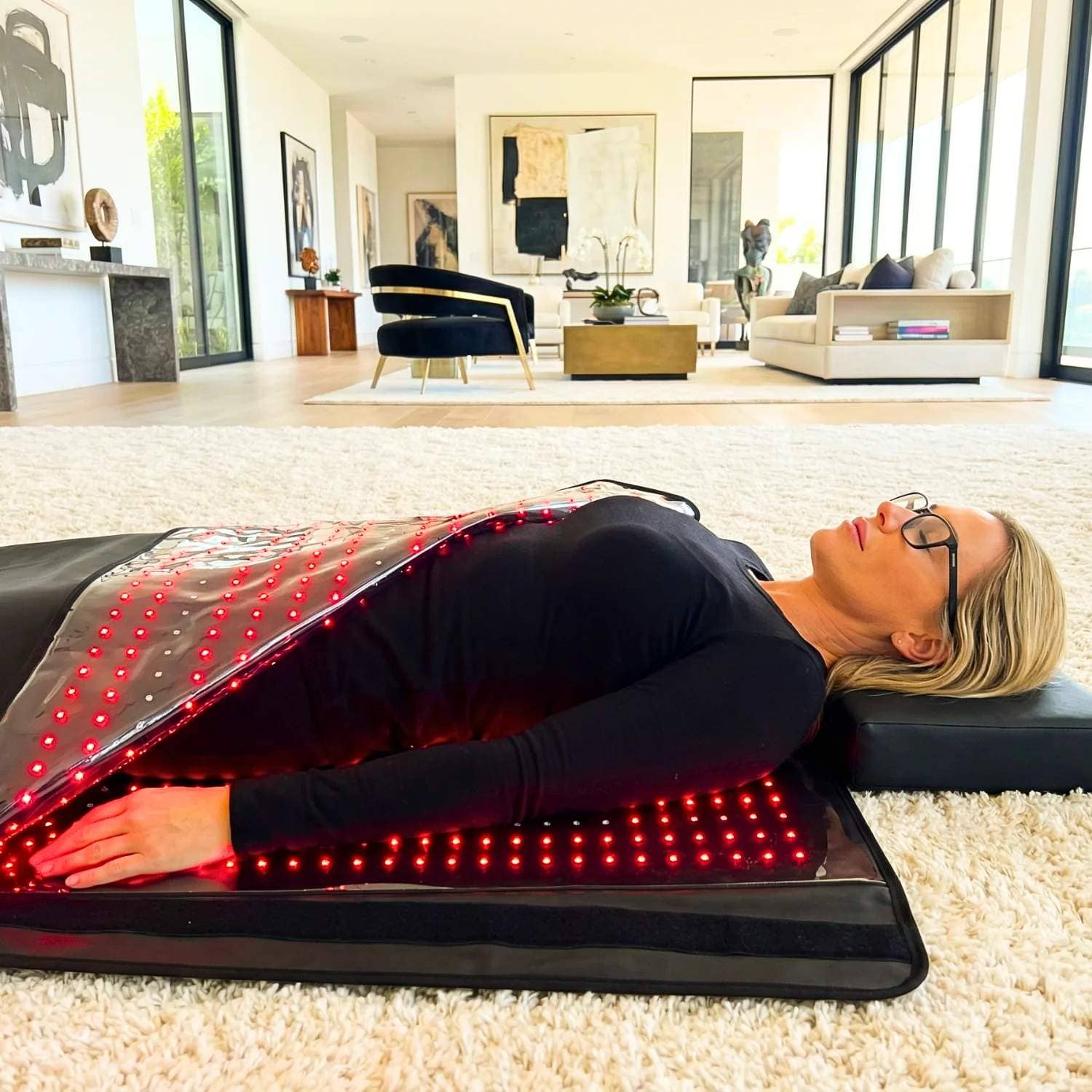
Carving out time for your own wellness routine matters, even on busy weeks. A few quiet minutes of relaxation at the end of the day can help you reset before tomorrow starts. That’s part of why more people across the United States are adding a red light therapy blanket to their at-home recovery and self-care routine.
If you’ve been researching full-body red light therapy, you probably have three questions. What does the light actually do? Is a blanket better than a panel? And what should you look for before you spend real money on one? This guide answers all three, in plain language, without the hype.
What Is a Red Light Therapy Blanket?
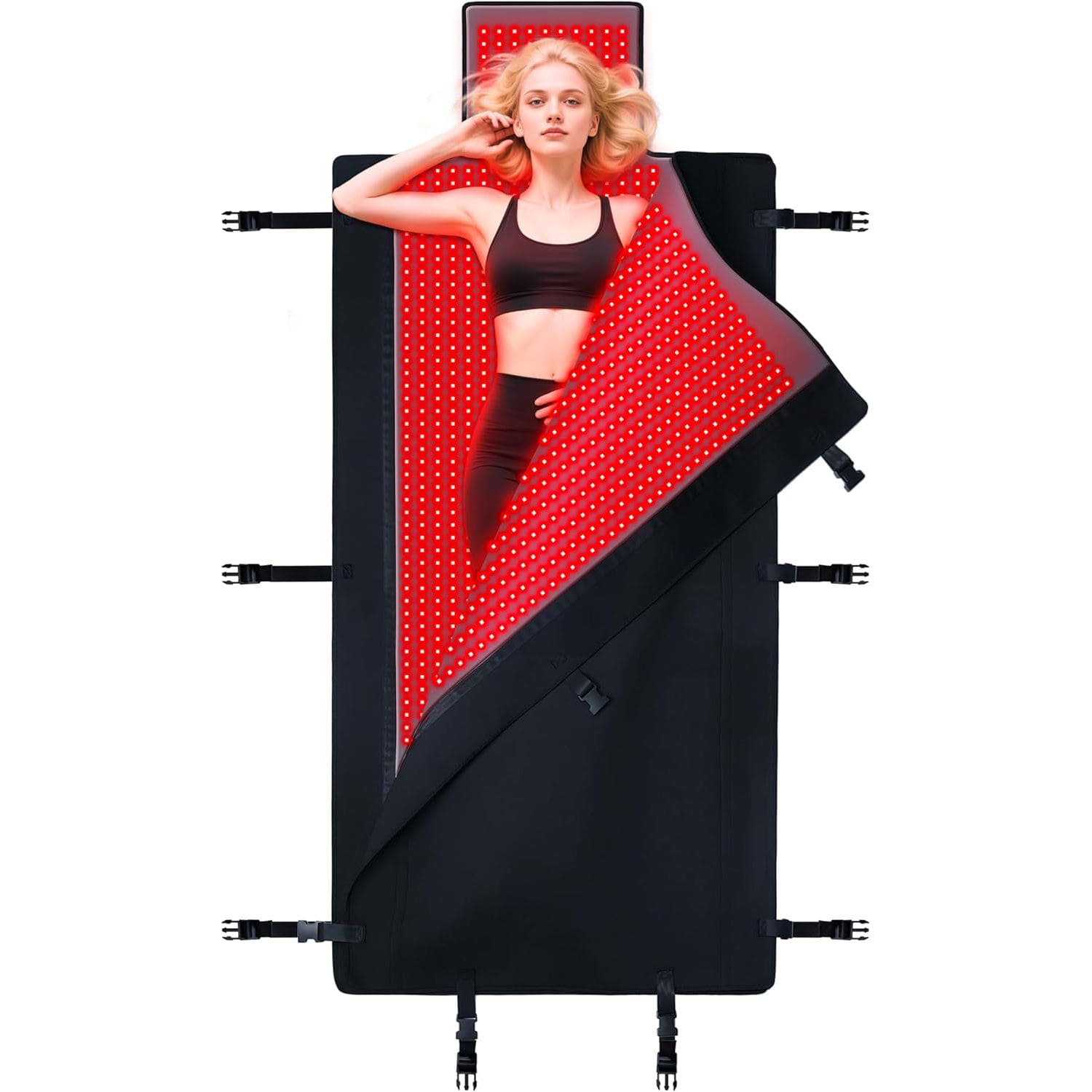
A red light therapy blanket is a foldable, sleeping-bag-style mat lined with LED lights. You climb inside it the way you would a sleeping bag, and the LEDs surround your body with light instead of just shining on one spot.
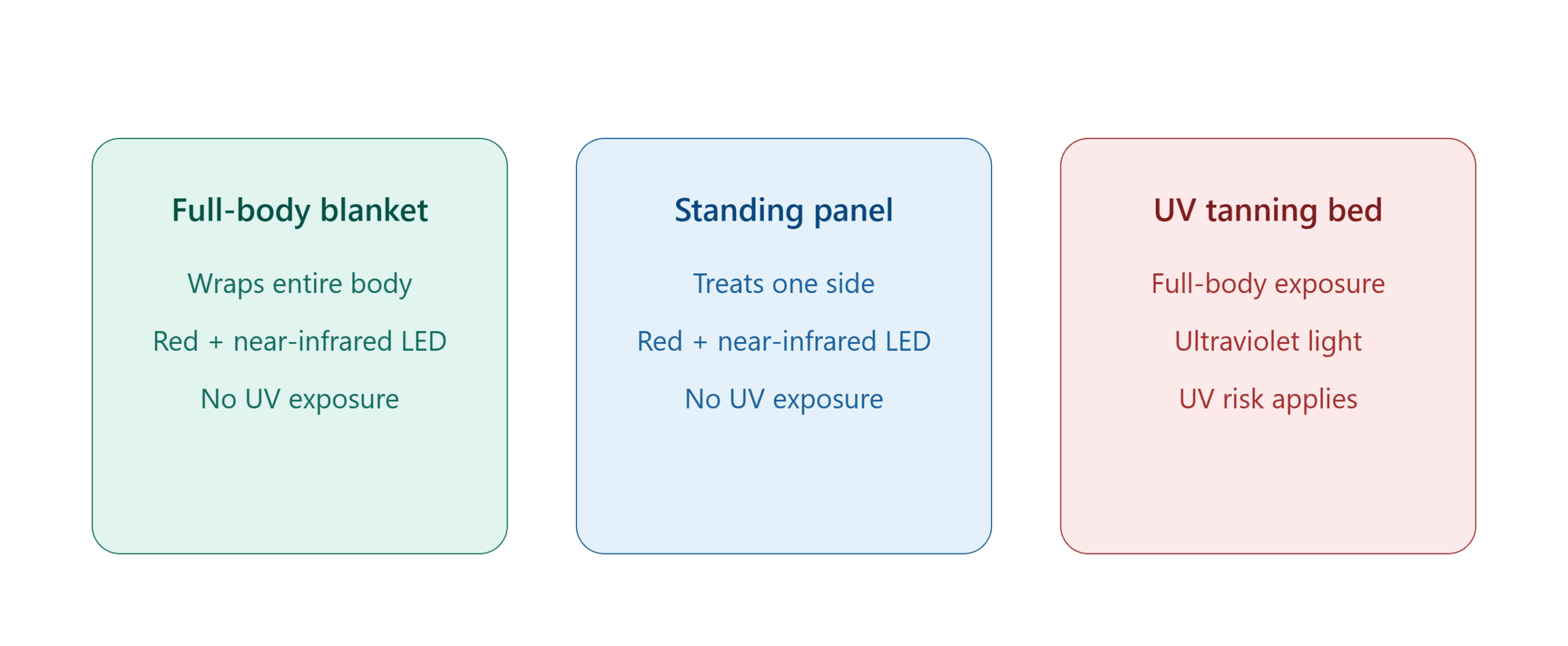
This full-body design is the main thing that separates a blanket from a standing panel. A panel treats whichever side of your body faces it. A blanket wraps around your neck, shoulders, back, arms, abdomen, hips, legs, and feet at the same time.
Most full body red light therapy blankets, including the LuxReda Extra Large Red Light Therapy Mat Blanket, use a dual-wavelength LED setup. That means the mat emits both red light and near-infrared light rather than a single wavelength.
How Red Light Therapy Blankets Work: 660nm vs. 850nm Explained
To understand what a red light therapy blanket does, it helps to know the two wavelengths involved.
660nm Red Light
Visible red light at 660nm sits at the surface end of the spectrum. It’s absorbed mostly by the skin and the tissue just beneath it. This is the wavelength most associated with skin-focused use, including support for a healthy complexion.
850nm Near-Infrared Light
Near-infrared light at 850nm is invisible to the human eye, but it travels deeper into tissue than 660nm light does. This is the wavelength people usually connect with muscles, joints, and recovery routines, since it reaches past the surface layer of skin.
The Science Behind Photobiomodulation
The general process behind both wavelengths is called photobiomodulation. Researchers have studied how red and near-infrared light interacts with mitochondria, the energy-producing structures inside cells. A research review hosted by the National Institutes of Health describes photobiomodulation as a non-thermal light therapy that scientists have studied for its effects on mitochondrial function and related cellular processes. That research is still developing, and it doesn’t amount to a guarantee of any specific outcome for any individual.
It’s worth being clear here: photobiomodulation is an active area of research, not a settled medical treatment. A red light therapy blanket is a wellness product, not a substitute for medical care.
Potential Benefits of Full-Body Red Light Therapy
People use full-body red light therapy for a range of everyday wellness goals. None of these outcomes are guaranteed, and results vary from person to person.
Recovery and fitness routines:
- Winding down after a workout
- Supporting a regular stretching or mobility routine
- Building a consistent post-exercise habit
Skin-focused routines:
- Supporting an existing skincare routine
- General skin wellness as part of a self-care habit
Relaxation and sleep routines:
- Creating a calm wind-down period before bed
- Adding a few minutes of quiet time to a nightly routine
A short, screen-free session before bed can be a genuinely relaxing part of an evening routine, separate from any specific claim about the light itself. That kind of intentional downtime is valuable on its own.
None of this should be read as a claim that a red light therapy blanket treats, cures, or prevents any disease or medical condition. Anyone managing a health condition should talk with a doctor before starting a new light therapy routine.
How to Use a Red Light Therapy Sleeping Bag at Home
Getting the most out of a full-body mat comes down to a simple routine rather than anything complicated.
- Set up in a comfortable, flat space. A bed, yoga mat, or floor space works well since the mat folds out like a sleeping bag.
- Choose your session length. Most full-body blankets, including LuxReda’s, offer an adjustable timer so you can start short and adjust from there.
- Select an intensity or pulse setting if the device offers one. Adjustable intensity lets you customize the session to your comfort level.
- Use it consistently. A short, regular routine tends to fit more easily into daily life than an occasional long session.
- Follow the manufacturer’s instructions every time. This includes recommended distance, session length, and any eye protection guidance included with the device.
Building this into an existing routine — after a workout, before bed, or during a weekend reset — tends to work better than treating it as a one-off. Wellness habits that fit naturally into your day are the ones that actually stick.
What to Look for When Choosing a Full-Body Red Light Therapy Mat
Not every red light therapy blanket on the market is built the same way. Here’s what actually matters when you compare options.
| Feature | Why It Matters |
|---|---|
| Wavelengths offered | Dual 660nm + 850nm coverage addresses both surface and deeper tissue |
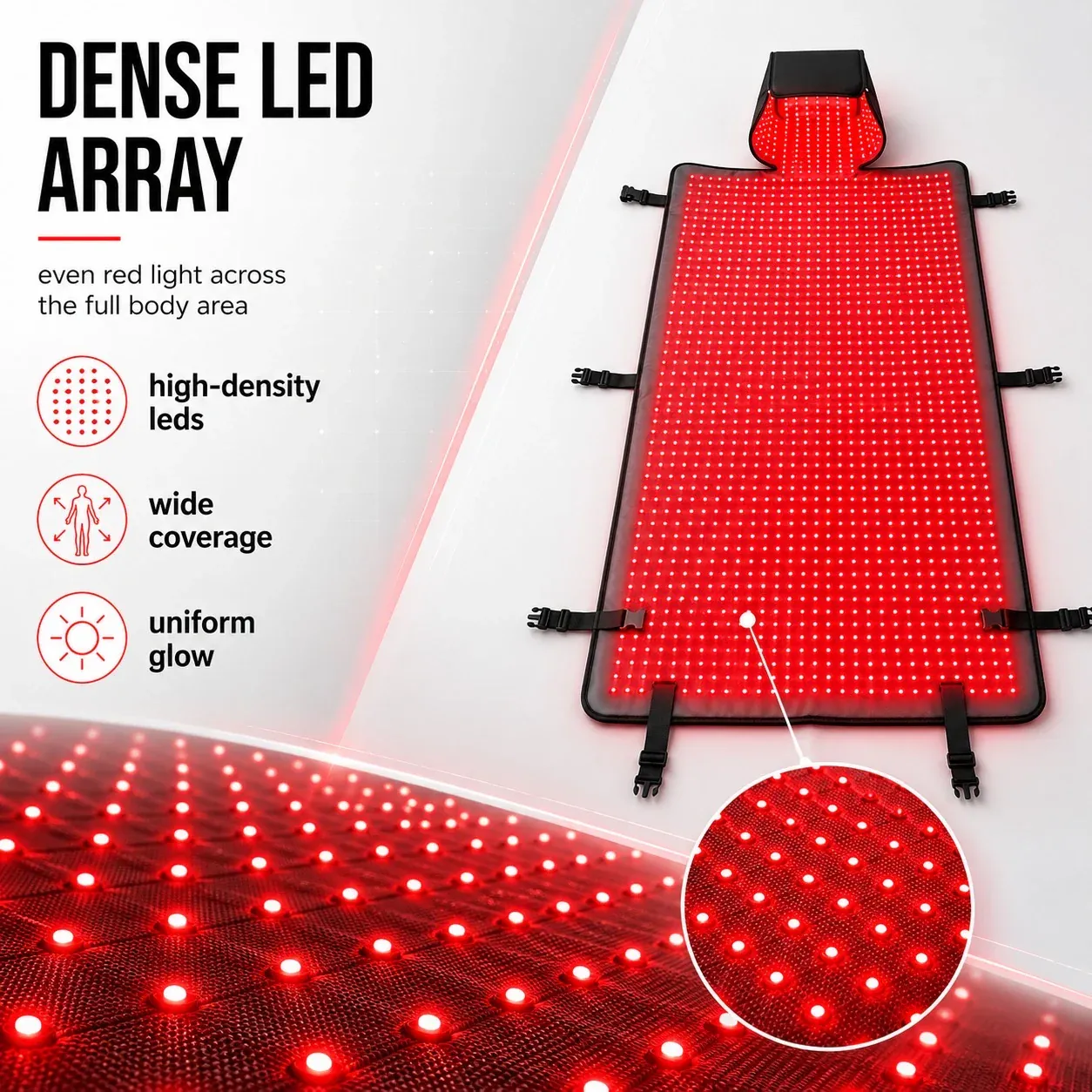
| LED density | Higher-density LED arrays generally provide more even light coverage |
| Coverage area | A true full-body design should reach the back, legs, and feet, not just the torso |
| Adjustable timer | Lets you customize session length to your routine |
| Pulse mode | Offers variable output settings for different preferences |
| Materials | A waterproof exterior and skin-friendly interior lining affect comfort and durability |
| Portability | A foldable design matters if you plan to store it between sessions |
| Warranty | A documented warranty period reflects manufacturer confidence |
As one example of how these specs come together, the LuxReda Extra Large Red Light Therapy Mat Blanket uses 3,020 LEDs across a 660nm and 850nm dual-wavelength design, with an adjustable 10 to 90-minute timer, a 10Hz to 40Hz pulse mode, a waterproof neoprene exterior with a latex-free PVC interior, and a one-year warranty. It measures 98 inches by 32 inches and folds for storage. These figures come directly from the product’s own specification sheet, so treat them as a reference point rather than a universal industry standard.
If you’re comparing this style of full-body mat against a standing LED panel, our red light therapy mat vs. panel comparison walks through the trade-offs of each format in more depth.
For shoppers still narrowing down a category rather than a specific product, LuxReda’s red light therapy devices collection includes panels, pods, and full-body blankets side by side.
Red Light Therapy Blanket vs. Panels and Tanning Beds: Key Differences
People sometimes lump red light therapy in with tanning beds because both involve lying inside or under a light-emitting device. The two are not the same thing.
A UV tanning bed uses ultraviolet light to darken skin pigment, and UV exposure carries known risks that the FDA and dermatology organizations have documented for decades. Nothing about UV tanning should be described as risk-free, and anyone considering a home tanning bed should follow the manufacturer’s instructions and current FDA guidance closely.
A red light therapy blanket works differently. It uses red and near-infrared LED light, not UV light, and it isn’t designed to change skin pigment at all.
| Red Light Therapy Blanket | Standing Red Light Panel | UV Tanning Bed | |
|---|---|---|---|
| Light type | Red + near-infrared LED | Red + near-infrared LED | Ultraviolet |
| Coverage | Full body, all sides | One side at a time | Full body |
| Skin pigment change | No | No | Yes |
| UV exposure | None | None | Yes |
Many red light therapy products, including full-body blankets, are marketed in the US under the FDA’s general wellness policy for low-risk devices. This policy applies to certain low-risk products intended for general use that promote a healthy lifestyle, rather than products making specific disease-treatment claims. Reviewing a product’s own listed intended use is a reasonable step before buying any light therapy device.
Readers researching this category more broadly may find LuxReda’s best red light therapy device buyer’s guide useful for comparing device types beyond just blankets and panels.
Frequently Asked Questions
No. A tanning bed uses UV light to change skin pigment, while a red light therapy blanket uses red and near-infrared LED light and does not tan the skin.
This depends on the device and the manufacturer’s instructions. Many full-body mats offer adjustable timers, commonly in a range of about 10 to 90 minutes, so you can start shorter and adjust based on comfort.
Many people build red light therapy into a daily or near-daily routine, similar to stretching or a skincare step. Always follow the specific manufacturer’s usage guidance for your device.
Manufacturer instructions vary, so check the guidance that comes with your specific device, including any recommendations about eye protection.
It depends on your goals. A blanket offers simultaneous full-body coverage, while a panel lets you target one area more precisely. Our blanket vs. panel comparison breaks down the differences in more detail.
Many consumer red light devices are marketed under the FDA’s general wellness policy for low-risk products rather than going through full medical device approval. Always check how a specific product is marketed and what claims it makes before buying.
Final Thoughts
A red light therapy blanket won’t replace a doctor, a physical therapist, or a dermatologist, and it shouldn’t be marketed as if it will. What it can offer is a convenient, full-body format for people who already value a wellness routine and want to build in a few extra minutes of intentional self-care.
If you’re comparing options, start with the wavelengths, the coverage area, and how the device fits your actual daily routine, not just the marketing copy. Shoppers who want to see how a full-body mat compares with other formats can browse LuxReda’s wellness and recovery collection for additional context before deciding.
Whatever you choose, make it a habit that feels easy to keep. Small, consistent routines tend to matter more than any single product, and a little time set aside for yourself is always worth it.
Thank you.