Carving out a few quiet minutes for yourself can make a real difference in how you feel by the end of the day. That’s part of why more people are bringing red light therapy into their homes instead of driving to a clinic for every session.
If you’re comparing a red light therapy blanket vs mat, the short answer is this: blankets generally offer more full-body coverage and require less positioning effort, while mats tend to be flatter, easier to combine with stretching, and often more budget-friendly. Which one fits you best depends on your space, your routine, and how you like to relax.
This guide breaks down the real differences so you can choose with confidence.
What Is Red Light Therapy, in Simple Terms?
Red light therapy uses LED light, usually in the red and near-infrared range, to expose the skin and underlying tissue to specific wavelengths. Scientists call this process photobiomodulation.
In plain language, photobiomodulation means using light to interact with cells rather than to heat or burn them. Research published in the National Library of Medicine’s PMC archive explains that red and near-infrared light are absorbed by structures inside cells, which can influence energy production and support the body’s normal repair processes (NIH/PMC).
This is very different from UV tanning beds, which use ultraviolet light and carry separate safety considerations. Red and near-infrared light therapy devices don’t use UV wavelengths at all.
A few quick facts to set expectations:
- LED red light therapy is considered a low-risk, general wellness category by the FDA when it isn’t marketed to treat a specific disease.
- Results and experiences vary from person to person.
- Following the manufacturer’s instructions for distance, timing, and frequency matters for a comfortable, consistent routine.
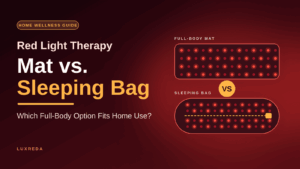
Red Light Therapy Blanket vs. Mat: The Core Differences
Both formats use the same basic LED technology. The real differences come down to shape, coverage, and how you position your body during a session.
| Feature | Red Light Therapy Blanket | Red Light Therapy Mat |
|---|---|---|
| Body coverage | Wraps around most of the body at once | Typically covers one side (usually the back) at a time |
| Positioning effort | Minimal — fold and relax | May require flipping or repositioning |
| Flexibility | Soft, foldable, contours to the body | Often flatter and firmer |
| Portability | Rolls or folds for storage | Varies by size and thickness |
| Best paired with | Lying down, resting, winding down | Stretching, yoga, floor exercises |
| Typical setup | Fewer steps, more passive | Slightly more hands-on |
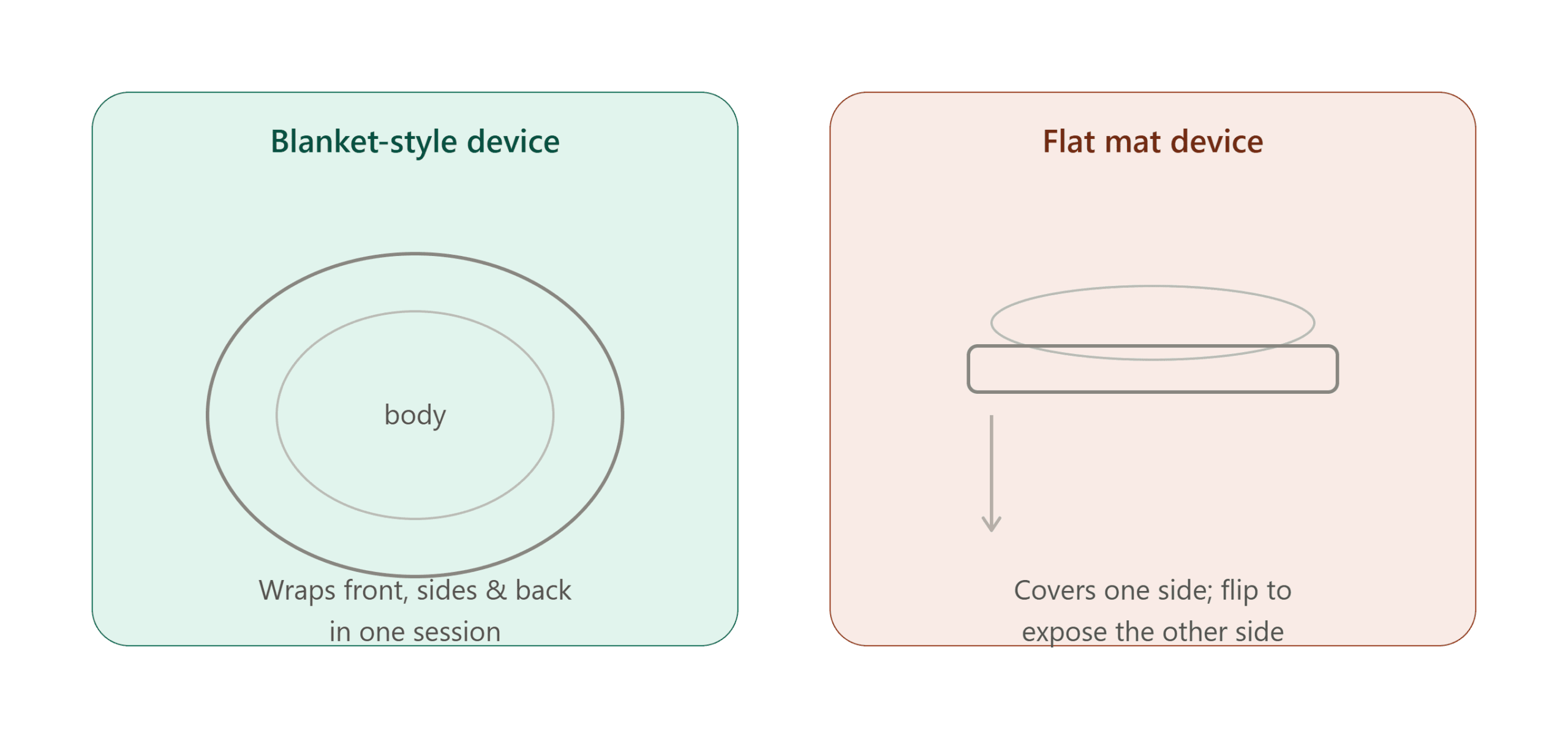
Neither format is universally “better.” A blanket-style device suits people who want a low-effort, full-body wrap-around session. A mat suits people who like combining light exposure with movement or who want a flatter surface for a specific area.
Full-Body Coverage, Comfort, and Positioning
This is usually the deciding factor for people searching for full body red light therapy at home.
Blankets fold around the body like a soft cocoon, so light reaches the front, sides, and back in the same session. You don’t need to flip over halfway through. That matters if you’re using the session to unwind before bed rather than actively exercising.
Mats lay flat, so they usually expose one side of the body per session unless you reposition. Some people don’t mind this step, especially if they’re already stretching or doing light mobility work on the floor.
A cozy, low-effort format can be the difference between actually using a wellness device regularly and letting it sit in the closet. If your goal is a relaxing wind-down routine, the wrap-style design tends to fit more naturally into an evening routine.
Why 660nm and 850nm Wavelengths Matter
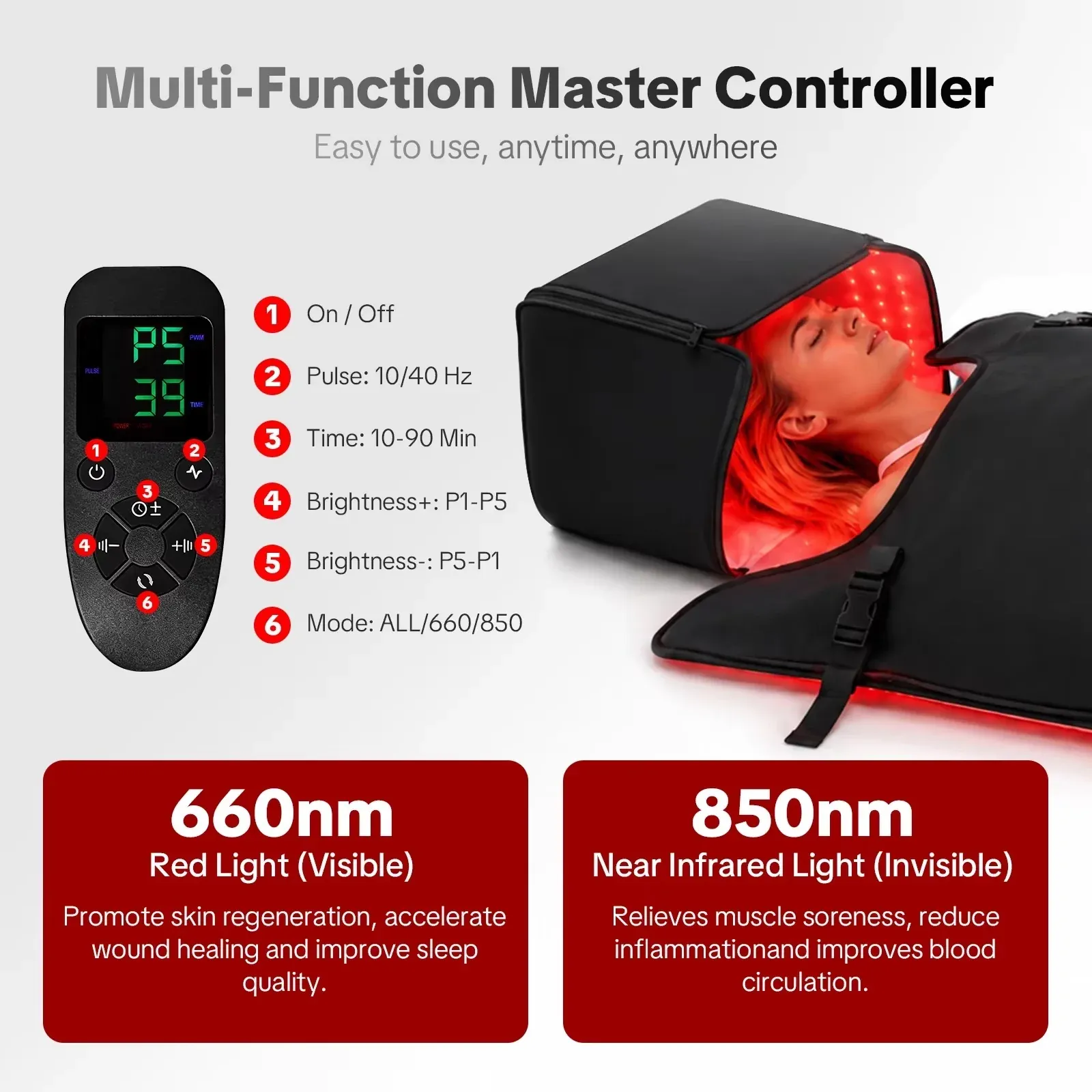
Most quality full-body devices, blankets and mats alike, use a dual wavelength approach combining 660nm red light and 850nm near-infrared light.
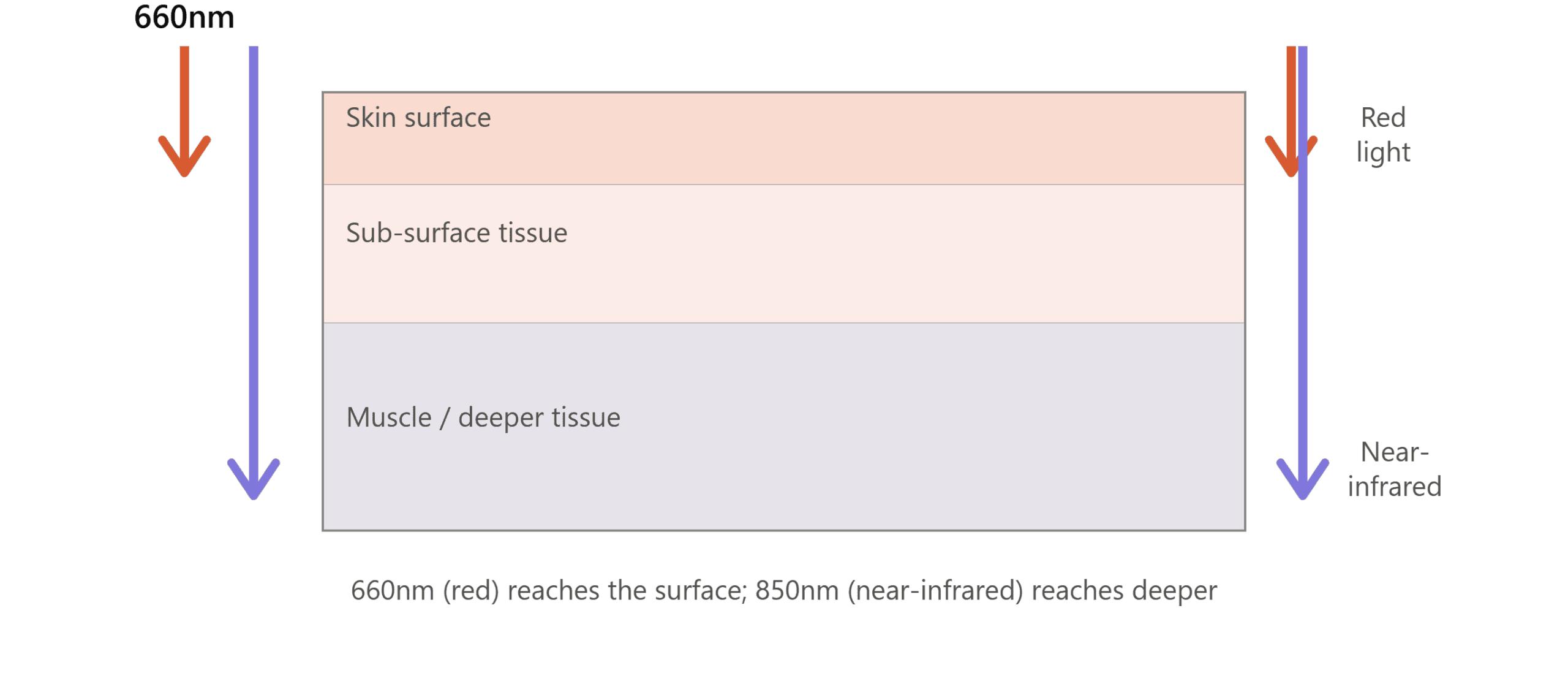
- 660nm red light sits at the visible end of the spectrum and is commonly associated with surface-level skin exposure.
- 850nm near-infrared light sits just past what the eye can see and is generally understood to reach further into tissue.
A review of photobiomodulation mechanisms notes that red light in the 620–700nm range and near-infrared light in the 700–1440nm range are both absorbed by cellular structures, which is why manufacturers often pair the two rather than using a single wavelength (ScienceDirect / PubMed).
In practical terms, dual-wavelength devices are designed to address both the skin surface and deeper areas like muscles and joints in the same session, rather than focusing on just one layer.
What to Look for When Choosing a Home Red Light Therapy Device
Whether you lean toward a blanket or a mat, a few specifications are worth comparing side by side before you buy.
- LED density. More LEDs packed into the surface generally means more consistent coverage across the body, with fewer gaps in exposure.
- Wavelengths offered. Look for confirmed 660nm and 850nm output rather than vague marketing language.
- Timer and intensity controls. An adjustable timer (commonly in the 10–90 minute range) and adjustable intensity make a device easier to fit into different routines.
- Pulse mode. Some devices offer pulsed light settings in addition to continuous mode.
- Material and build. A waterproof or wipeable exterior makes cleanup simpler after a session.
- Portability and storage. A foldable design is easier to store in an apartment or a shared space.
- Regulatory category. In the U.S., many general wellness light therapy devices fall under the FDA’s low-risk wellness framework rather than requiring medical clearance, as outlined in the agency’s guidance on general wellness devices. This distinction matters when comparing product claims.
Reading the specification sheet closely, not just the marketing copy, is the best way to compare two devices fairly.
Who Should Choose a Blanket vs. a Mat?
There’s no single right answer, but a few patterns tend to hold true.
A blanket-style device may suit you better if:
- You want full-body coverage without flipping positions mid-session.
- You plan to use the device while resting, reading, or winding down before bed.
- You like the idea of a soft, sleeping-bag-style design that feels more like a cozy routine than a clinical treatment.
- You have limited floor space for a flat mat setup.
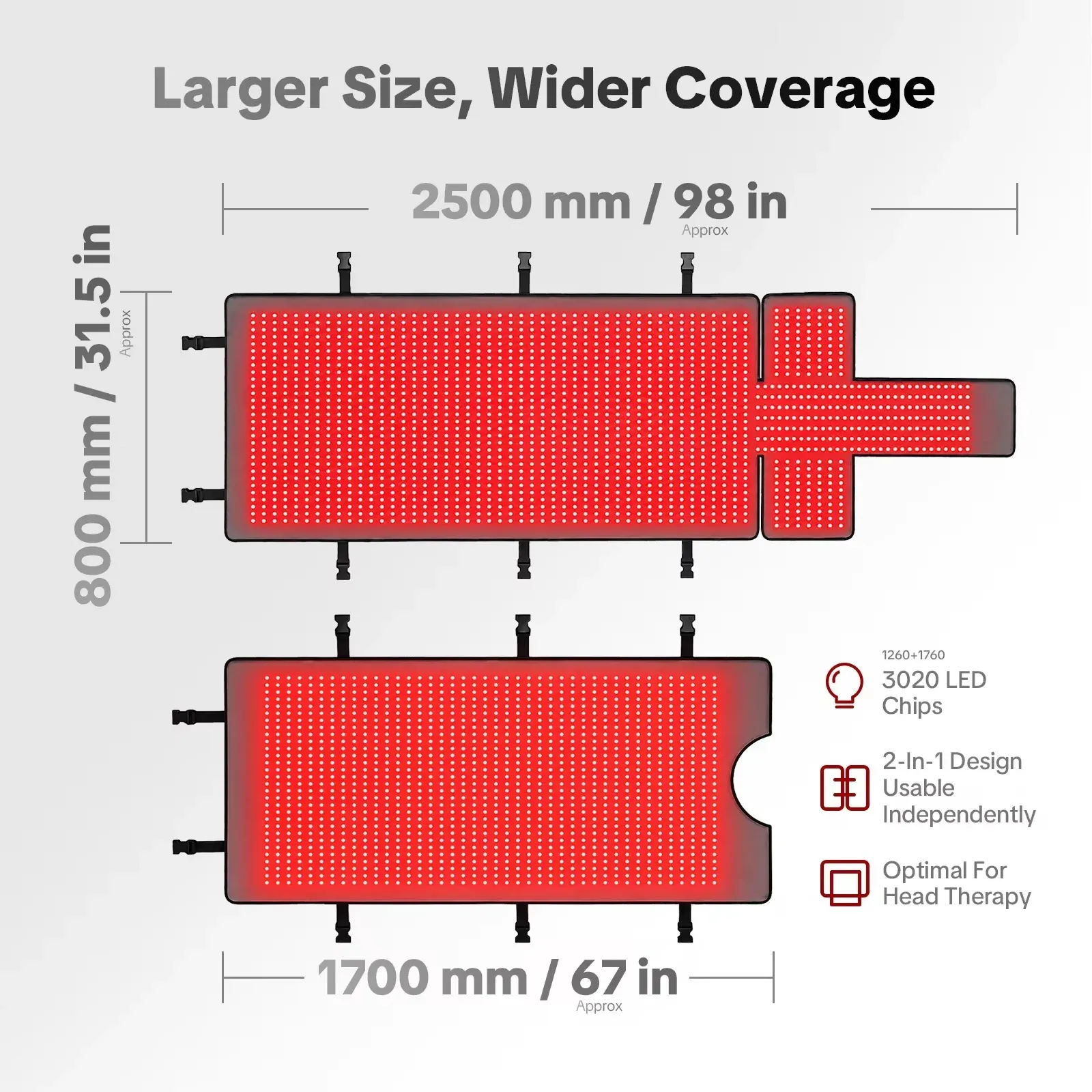
The LuxReda Extra Large Red Light Therapy Mat Blanket is one example of this format. It’s built with a high-density 3020 LED array and combines 660nm red light with 850nm near-infrared light in a foldable, sleeping-bag-style design measuring 98 inches by 32 inches. It includes an adjustable timer (10–90 minutes), pulse mode settings, a waterproof neoprene exterior, and remote control operation, which are the kind of practical features worth checking on any full-body blanket-style device.
A mat may suit you better if:
- You want to combine light exposure with stretching, yoga, or floor exercises.
- You prefer a flatter, firmer surface.
- You’re working with a tighter budget and want a smaller footprint to start.
- You mainly want to target your back or a specific area rather than wrapping the whole body.
If you’re still deciding, think about your actual routine first. A device that fits naturally into how you already relax or recover is far more likely to get used consistently than one that requires extra setup every time.
Making Red Light Therapy Part of Your Routine
Small, consistent habits tend to matter more than any single session. Whether you choose a blanket or a mat, pairing it with a wind-down routine, a stretch session, or simply a few quiet minutes at the end of the day can make it easier to stick with.
Before starting any new home wellness device, it’s worth reviewing the manufacturer’s instructions for session length and frequency. You can compare the full specifications of the LuxReda blanket-style option here if a wrap-around, full-body format sounds like the right fit for your space.
Frequently Asked Questions
Is a red light therapy blanket better than a mat for full-body use?
Blankets generally offer more complete coverage in a single session because they wrap around the body rather than lying flat under one side. Mats can still work well for full-body use if you’re comfortable repositioning partway through.
Can you use a red light therapy blanket every day?
Many people use full-body light therapy devices as part of a regular routine, but session length and frequency should follow the manufacturer’s instructions. Check the product manual for recommended usage limits.
Do red light therapy blankets work as well as flat panels?
Blankets and panels both use LED technology, but they differ in coverage style. A blanket wraps around the body, while a panel is typically used at a set distance in front of it. Each has a different feel and setup, and LED density and wavelength output matter more than the shape alone.
How long should a full-body red light therapy session take?
Session lengths on home devices commonly range from about 10 to 20 minutes, though some devices allow longer settings. Always follow the specific device’s instructions rather than a general rule.
Is red light therapy safe to use at home?
Red and near-infrared LED devices marketed for general wellness are typically considered low risk when used according to the manufacturer’s instructions. If you’re pregnant, taking photosensitizing medication, or managing a medical condition, check with a healthcare provider before starting any new light therapy routine.
What’s the difference between 660nm and 850nm light?
660nm is red light, visible to the eye, and is generally associated with surface-level exposure. 850nm is near-infrared light, just outside the visible spectrum, and is generally understood to reach further into tissue. Many full-body devices use both together.
Does a red light therapy blanket get hot like a tanning bed?
Red and near-infrared LED devices are not UV tanning beds and work on a different principle. Some warmth from the LEDs themselves is normal, but these devices are not designed to tan the skin. Always follow the manufacturer’s guidance and be aware that UV tanning equipment is a separate category with its own FDA-related safety considerations.
Final Thoughts
Take a little time for yourself where you can, and let your wellness routine fit naturally into your day rather than the other way around. Whether you land on a blanket or a mat, the best choice is the one you’ll actually use.
Both red light therapy blankets and mats use the same core technology — red and near-infrared LEDs — so the decision really comes down to how you want to use the device day to day. If full-body coverage with minimal setup is the priority, a blanket-style design tends to fit that use case more naturally. If flexibility and multi-position use matter more to you, a mat might be the better long-term fit for your home wellness routine.
Whichever format you lean toward, take the time to compare wavelength ranges, session timers, dimensions, and storage requirements before buying — those details matter more for day-to-day satisfaction than marketing copy does. If you’re specifically looking for a large-format, foldable option built for full-body sessions, the LuxReda Extra Large Red Light Therapy Mat Blanket is worth adding to your comparison list.
If you’re still comparing your options, I’d recommend starting with those practical factors first and then checking the actual specifications of each device before making a purchase.
Take care of your health, stay healthy, and stay happy. Thank you very much!