A good wellness routine fits your life. It feels comfortable, and you can keep it up. The right equipment makes that much easier.
If you’re shopping for a full spectrum red light therapy panel, you will find plenty of choices and a lot of technical language. This guide breaks it down in plain English. You’ll learn what full-spectrum means, how wavelengths differ, and which features matter for a living room, a gym, or a studio.
The short answer: look first at wavelength coverage, LED and lens quality, adjustable controls, power configuration, and mounting options. Then match those features to your space.
What Is a Full-Spectrum Light Therapy Panel?
A full-spectrum light therapy panel combines several LED wavelengths in one device. Most basic panels stick to one or two red and near-infrared wavelengths. A multi-wavelength light therapy panel covers a wider range.
Why does that matter? Different wavelengths behave differently. Some sit in the visible range, and others sit beyond it. A broader panel gives you more room to adjust your sessions over time.
Wider coverage does not guarantee better results, though. It simply offers more flexibility. If you want a second opinion on how these panels compare, our full-spectrum red light therapy panel guide covers the basics from another angle.
Understanding Different Light Wavelengths
Researchers measure light in nanometers (nm). Red light therapy research usually focuses on the red and near-infrared bands. A dermatology review on photobiomodulation describes red light as roughly 620–700 nm. It places near-infrared above that.
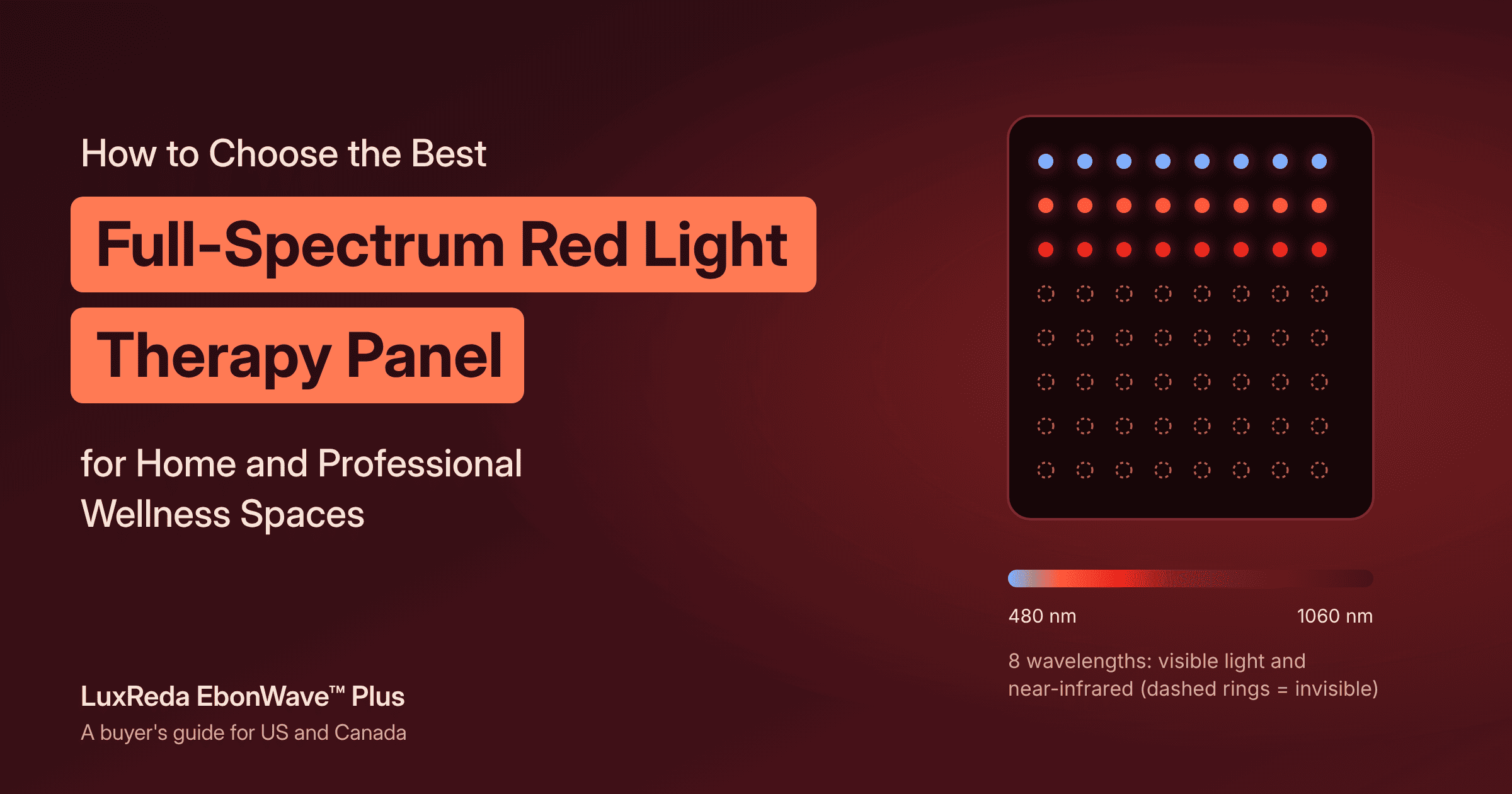
Here is how the eight wavelengths on the EbonWave™ Plus fit into those groups:
| Wavelength | Light type | What to know |
|---|---|---|
| 480nm | Visible (blue-range) | Penetrates less deeply than red or near-infrared |
| 630nm, 660nm | Visible red | The most familiar red light therapy wavelengths |
| 810nm, 850nm | Near-infrared | Invisible to the eye |
| 940nm, 980nm, 1060nm | Longer near-infrared | Invisible to the eye |
The 480nm range is a good example of why you should read carefully. One NIH-hosted review notes that blue light has a lower penetration depth than red or near-infrared. It also says most of the literature focuses on red and near-infrared. A panel can include a wavelength without that wavelength being the main attraction.
Red Light vs. Near-Infrared Light: What’s the Difference?
Visible red light is the glow you can see. Near-infrared light sits just beyond what your eyes detect. Both appear in photobiomodulation research, usually within a 600–1100 nm range. This NIH-hosted review explains that red and near-infrared light travel through tissue better than many other wavelengths.
Here is the practical takeaway for shoppers:
- You can see red light. A red panel looks active when it’s on.
- You can’t see near-infrared light. A panel can look dim and still emit plenty of it.
- Specs matter more than looks. Judge a panel by its published specifications, not its glow.
Researchers are still studying how these wavelengths work, and results vary by device and use. Treat any panel as a wellness tool, not a medical treatment.
7 Important Features to Consider Before Buying
Use this checklist when you compare any premium LED light therapy panel.
Wavelength Options and Spectrum Coverage
Count the wavelengths, then look at how they spread across red and near-infrared. A panel with eight wavelengths offers more variety than a two-wavelength model. Ask yourself whether you will actually use that variety. If you only want 660nm and 850nm, a simpler panel may serve you well.
LED Chip Quality and Optical Lens Design
LED chips drive performance, and lenses shape where the light goes. The EbonWave™ Plus uses premium 42mil Epistar / Harvatek chips. It also uses 30° high-transmission optical lenses. A narrower lens angle concentrates light, while a wider angle spreads it. Ask any seller how the lens affects coverage at your planned distance.
Adjustable Brightness and Pulse Settings
Fixed output limits you. Adjustable brightness lets you start gentle and change settings as you get comfortable. Pulse frequency adds another option. The EbonWave™ Plus offers brightness adjustment, pulse frequency, and a timer. Flicker-free technology is also worth confirming, because visible flicker can be uncomfortable.
Smart Controls and Wireless Remote
Easy controls make a routine easier to keep. If you have to walk up to a wall-mounted panel for every change, you may skip sessions. The EbonWave™ Plus includes a smart control panel and a wireless remote. It also offers 8 preset modes and a customizable mode.
Power Configurations and Performance
Panels often list wattage options. The EbonWave™ Plus comes in 500W, 750W, 1000W, 1500W, and 4500W configurations.
Read those numbers carefully. A configuration label does not equal your actual electricity use. It also does not equal measured optical output. Always ask for irradiance data and the distance it was measured from. Then compare panels using that data.
Installation and Mounting Options
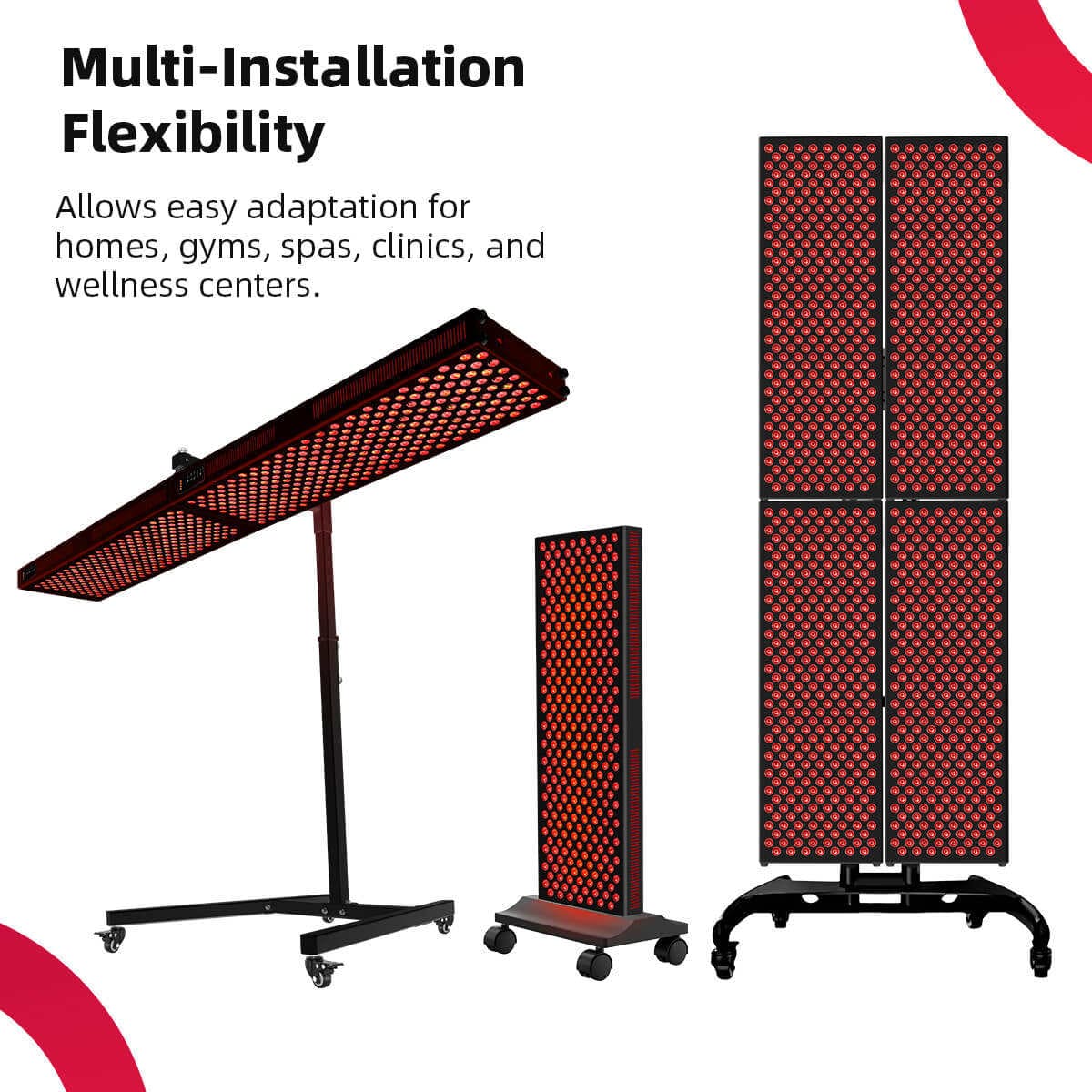
Where you put a panel decides how often you use it. Choose a mount that fits your room:
- Hanging or wall mounting saves floor space.
- A vertical stand works in a dedicated corner.
- A rolling stand moves between rooms or sessions.
The EbonWave™ Plus supports all four options. If you plan to pair a panel with a sauna room, see our red light therapy panel for sauna buying guide for setup considerations.
Modular Design and Multi-Panel Synchronization
A modular light therapy system grows with your needs. You can start with one panel and add more later. Multi-panel synchronization lets several panels work together, which suits gyms and studios. The EbonWave™ Plus supports multi-panel synchronization.
Choosing a Light Panel for Home, Gym, or Wellness Studio
Your space shapes your choice. A few questions help you narrow the field.
For a Home Wellness Room
Think about space, routine, and ease of use. A wall-mounted or rolling setup keeps things tidy. Remote controls help, since you can stay relaxed during a session. Comfort and consistency matter more than the biggest spec sheet. Small, steady habits tend to last longer than ambitious ones.
For a Gym or Recovery Space
Gyms need durability and flexibility. Multiple members may share equipment, so quick setup matters. Multi-panel synchronization and a rolling stand can suit a busy floor. Check your local requirements and ask your insurer about any equipment you add.
For a Professional Wellness Studio
Studios focus on repeatable sessions and a polished room. Look for customizable settings and clear control options. Confirm what the manufacturer offers for commercial use before you buy.
Panel or Mat?
Some readers wonder whether a panel or a mat fits better. It depends on your posture, space, and routine. Our red light therapy panel vs. mat comparison walks through that decision. For a wider view of whole-body options, try our full-body red light therapy device buying guide.
Common Buying Mistakes to Avoid
Experienced buyers tend to avoid the same few traps:
- Buying on wattage alone. Nominal power says little about real output.
- Ignoring lens angle. It changes how light spreads at your distance.
- Skipping the mounting plan. A great panel can sit unused if it won’t fit your room.
- Paying for features you won’t use. Match the spec sheet to your routine.
- Forgetting the manual. Read the usage and eye-protection guidance before your first session.
If you have a health condition, take photosensitizing medication, or feel unsure, talk with a healthcare professional first.
Discover the LuxReda EbonWave™ Plus
The LuxReda EbonWave™ Plus Full-Spectrum Light Panel targets buyers who want flexibility. LuxReda built it for home wellness rooms, fitness studios, and professional spaces.
Here are the specifications from the official product page:
- Wavelengths: 480nm, 630nm, 660nm, 810nm, 850nm, 940nm, 980nm, and 1060nm
- LED chips: Premium 42mil Epistar / Harvatek
- Optics: 30° high-transmission optical lenses
- Power configurations: 500W, 750W, 1000W, 1500W, and 4500W
- Controls: Smart control panel and wireless remote
- Modes: 8 preset modes plus a customizable mode
- Functions: Brightness adjustment, pulse frequency, and timer
- Installation: Hanging, wall mounting, vertical stand, and rolling stand
- Extras: Multi-panel synchronization and flicker-free technology
This panel suits readers who value customization and room to expand. It may be more than you need if you want a basic, single-purpose device. Review the full details on the product page and compare them with your own checklist.
Frequently Asked Questions
What makes a red light therapy panel “full spectrum”?
It combines many LED wavelengths in one device. Most include visible red and near-infrared. Some add other bands. Always check which specific wavelengths a panel lists.
Do I need all eight wavelengths on the EbonWave™ Plus?
No. Many people may focus on a few familiar red and near-infrared wavelengths. The extra range gives you flexibility if your routine changes. Use the manual and your own comfort as guides.
What do the 500W to 4500W options mean?
They describe the panel’s power configuration options. They do not tell you actual electricity use or measured light output. Ask LuxReda for details that fit your setup.
Can I see near-infrared light?
No. Near-infrared sits beyond the visible range. Rely on specifications, not brightness, to judge a panel.
Is the EbonWave™ Plus suitable for a gym or studio?
LuxReda lists multi-panel synchronization, a rolling stand, and wall or hanging mounts. Those options suit shared spaces. Confirm commercial-use terms and local requirements before you buy.
How should I use eye protection with a panel?
Follow the manufacturer’s manual. Avoid staring directly into the LEDs. If you have eye concerns, ask an eye care professional.
Final Thoughts
Choosing a full-spectrum red light therapy panel comes down to fit. Look at wavelengths, chip and lens quality, controls, power, mounting, and expansion options. Then picture how you’ll use it in your own room.
If those needs line up with a customizable, expandable panel, explore the EbonWave™ Plus and compare it with your list. You can also browse our best red light therapy device guide for more options.
Pick something that feels easy to use. Make a little time for yourself, keep your routine simple, and enjoy the calm moments it gives you.
Thank you