A good wellness routine fits your life, not the other way around. For many people, a quiet 20 minutes in a warm, calm space is the best part of the day.
A red light therapy sauna routine is a repeatable plan for pairing light sessions with your home sauna time. You choose when to use the panel, how far to stand from it, and how long each session lasts. This guide walks you through that planning, explains red and near-infrared light in plain terms, and covers the equipment questions that matter in a sauna room. It is for US and Canadian readers who want a practical, realistic setup, not a cure-all.
What a Red Light Therapy Sauna Routine Looks Like
A routine has four parts: a time of day, a session length, a position, and a simple cool-down. Write them down once and repeat them. Consistency matters more than any single session.
Most home routines follow one of three patterns:
- Light first, then heat. You use the panel, then move into the sauna.
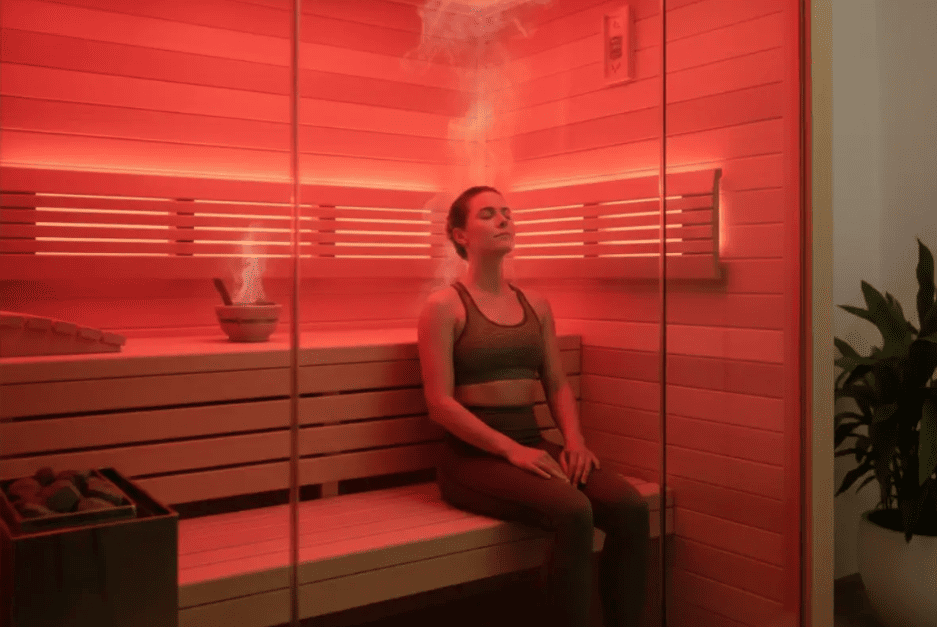
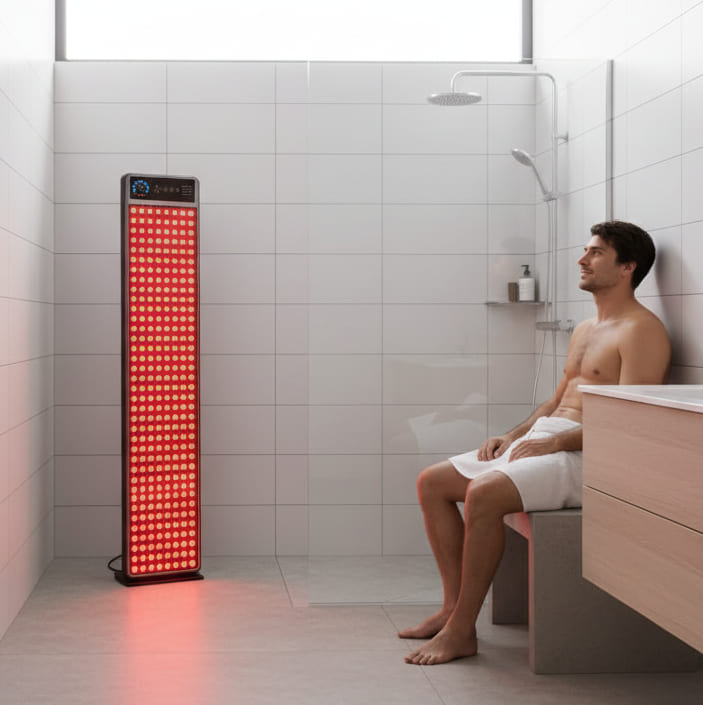
- Light during heat. You stand in front of a sauna-suitable panel while you sit in the warm room.
- Light after heat. You finish your sauna session, rinse off, and then use the panel.
No single order works for everyone. Pick the one that feels comfortable and easy to repeat. Always check your panel’s manual before taking it into a heated room (more on that below).
Red and Near-Infrared Light, Explained Simply
Red light and near-infrared light are both part of the light spectrum. You see red light. You do not see near-infrared light, though you may feel gentle warmth from some devices.
Many home panels use two wavelengths:
- 660nm red light sits in the visible red range. People often use it for skin-focused wellness sessions.
- 850nm near-infrared light sits just beyond the visible range. People often pair it with recovery and comfort routines.
Researchers call this area of study photobiomodulation. A National Institutes of Health-hosted review of photobiomodulation gives a good overview of how scientists describe the process. Research here is still developing. A light panel is a wellness tool, not a medical treatment, so talk with your doctor if you have a health condition.
For a deeper look at how each wavelength is used, read LuxReda’s guide to 660nm vs. 850nm wavelengths.
Planning Your Red Light Therapy Sauna Sessions
Good session planning removes guesswork. You do not need a complicated schedule. You need a few clear decisions.
Choose a Time of Day
Think about how you want to feel afterward. Morning sessions can fit into a wake-up routine. Evening sessions can help you slow down before bed. Some readers like to explore how light fits a bedtime wind-down, and LuxReda’s article on red light therapy and sleep routines covers that topic.
Set Session Length and Frequency
Your panel’s manual should guide session time and distance. Manufacturers know their device’s output, and your routine should follow their instructions. If the manual gives a range, start at the shorter end and see how you feel.
A simple starter plan looks like this:
| Step | What to do | Why it helps |
|---|---|---|
| 1. Prep | Clean, dry skin; remove lotions if the manual suggests it | Keeps the surface clear |
| 2. Position | Stand at the distance the manual recommends | Keeps sessions consistent |
| 3. Time | Follow the manual’s session length | Avoids guessing |
| 4. Hydrate | Drink water before and after | Supports comfort, especially with sauna heat |
| 5. Log | Jot down the date and how you felt | Shows what works over weeks |
Keep a Simple Log
A notes app is enough. Write the date, the time, and one sentence about how the session felt. After a few weeks, you can see what you actually enjoy and adjust.
Small, steady habits often beat big, short-lived plans. Choose a routine you can picture yourself doing on a busy Tuesday.
Setting Up Your Home Sauna Space
Where the panel stands affects how easy the routine feels. Think about the room before you think about the device.
Placement and Space
Check these points before your first session:
- Clear standing space. You should be able to stand or sit at the recommended distance without crowding the panel.
- Stable footing. A standing panel needs a steady base on a level floor.
- Cord management. Keep cords away from water, benches, and walkways.
- Easy access. If setup feels like a chore, you will skip sessions.
LuxReda’s home sauna red light panel setup guide covers placement in more detail.
Heat, Humidity, and Water Ratings
This is where many buyers get confused. An IP65 rating describes protection against dust and water jets. It does not automatically mean a panel is rated for high sauna temperatures. The International Electrotechnical Commission explains IP ratings if you want the technical background.
Before you bring any panel into a hot room, check the manual or ask the seller about the recommended operating temperature. Do not assume. If the documentation does not answer the question, ask before you buy.
Equipment Considerations for a Home Sauna Wellness Routine
Home sauna wellness equipment varies a lot. A few practical questions help you compare options without getting lost in specs.
Questions to Ask Before You Buy
- Does the maker state a working temperature range for the panel?
- Does it list its wavelengths clearly?
- Does the panel stand on its own, or does it need a wall mount?
- Does it fit your room’s dimensions?
- What do the instructions say about distance and session length?
- Does the seller publish warranty and support details?
Watch for Marketing Shortcuts
Be careful with numbers that appear without context. A large LED count alone does not tell you how a panel performs. Look for clear manufacturer information, and treat dramatic claims with caution. For a wider comparison of what to check, see LuxReda’s red light therapy panel for sauna buying guide.
Where the LuxReda Full Spectrum Red Light Therapy Sauna Panel Fits
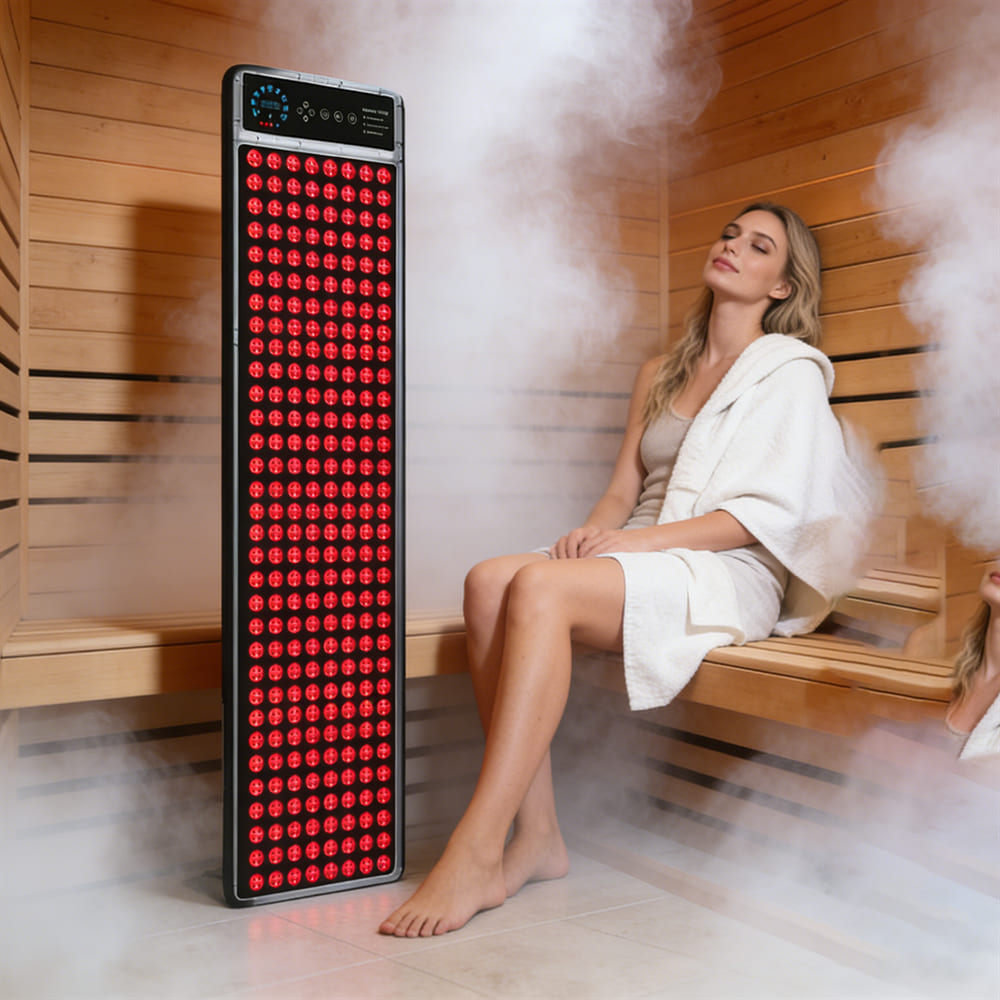
The LuxReda Full Spectrum Red Light Therapy Sauna Panel is a standing panel. It combines red and near-infrared wavelengths and has an IP65 waterproof design. LuxReda made it for home sauna rooms, wellness spaces, and personal recovery areas.
Here is how those features connect to a routine:
- Standing format. You can place it where your session happens, without drilling into a wall.
- Red and near-infrared wavelengths. One panel covers both light types discussed above.
- IP65 design. It suits damp, steamy home environments better than a basic indoor panel. Still confirm temperature guidance on the product page or in the manual.
Readers who want the full list of details can review the product page directly. Check the page for current specifications, pricing, and availability, because those details can change.
A panel only helps if you use it. Place it where you will actually walk past it, not in a storage corner.
Safety Basics for Any Light and Sauna Routine
Safety makes a routine sustainable. Keep these habits in mind:
- Follow the manufacturer’s instructions. Time, distance, and temperature guidance come first.
- Protect your eyes. Many manufacturers recommend eye protection with bright light panels. Check your manual.
- Listen to your body. Stop if you feel dizzy, overheated, or uncomfortable.
- Stay hydrated. Sauna heat makes water breaks important.
- Check with your doctor. Do this if you are pregnant, take medications, or have a medical condition.
Red Light Is Not UV Tanning
Red and near-infrared panels are different from indoor tanning equipment. Tanning beds use ultraviolet light, and UV exposure carries real skin risks. The FDA’s tanning resources explain those risks clearly. LuxReda’s comparison of red light therapy vs. tanning beds explains the differences in plain language.
Frequently Asked Questions
Follow the manual for your specific panel. Many people start with a few sessions per week and adjust based on comfort and schedule. Consistency matters more than frequency.
All three orders are common. Choose the one that feels best, and confirm that your panel is suitable for use inside a heated room before using it during a sauna session.
Not by itself. IP65 describes dust and water protection. Temperature limits come from the manufacturer’s documentation, so check them before use.
Red light is visible. Near-infrared is not. Many panels combine both so one session covers two wavelength ranges.
Often yes, if the manual allows it. Many people use panels in a bedroom, gym corner, or recovery space. Follow the manufacturer’s guidance for each location.
No. Treat it as a wellness routine. Talk with a healthcare professional about any health concern.
Conclusion: Start Small and Keep It Enjoyable
A red light therapy sauna routine works best when it stays simple. Pick a time, follow your panel’s manual, keep a short log, and adjust as you learn what feels good. If you want a standing panel for a home sauna space, explore the LuxReda Full Spectrum Red Light Therapy Sauna Panel and check its current details.
Your wellness time should feel calm, not complicated. Drink some water, take a few slow breaths, and enjoy the quiet. Small, steady habits you actually look forward to tend to last.
Thank you