
A good recovery routine should feel easy to keep. After a hard workout or a long day at a desk, most of us want a simple way to slow down and look after our bodies.
A red light therapy blanket for full body recovery can fit that routine at home. The choice comes down to five things: wavelengths, LED coverage and density, irradiance, treatment area, and timer and mode controls. Build quality and body fit matter too. This guide covers each one in plain language. It also shows how the LuxReda FlexiTherm Elite™ measures up on the details LuxReda publishes. If you want the wider picture first, our full-body red light therapy device buying guide compares device types.
What Is a Full-Body Red Light Therapy Blanket?
A full-body red light therapy blanket is a flexible fabric mat with LEDs built in. You lie on it, or sometimes under it, while it gives off red and near-infrared light. Some brands call it a red light therapy mat. Others use “blanket mat” because the same product can serve both roles.
It differs from a rigid panel, which usually treats one area at a time from a distance. It also differs from a sleeping-bag-style pod that surrounds your body. A blanket sits in the middle. It covers a large area, folds away, and works well in a bedroom or living room.
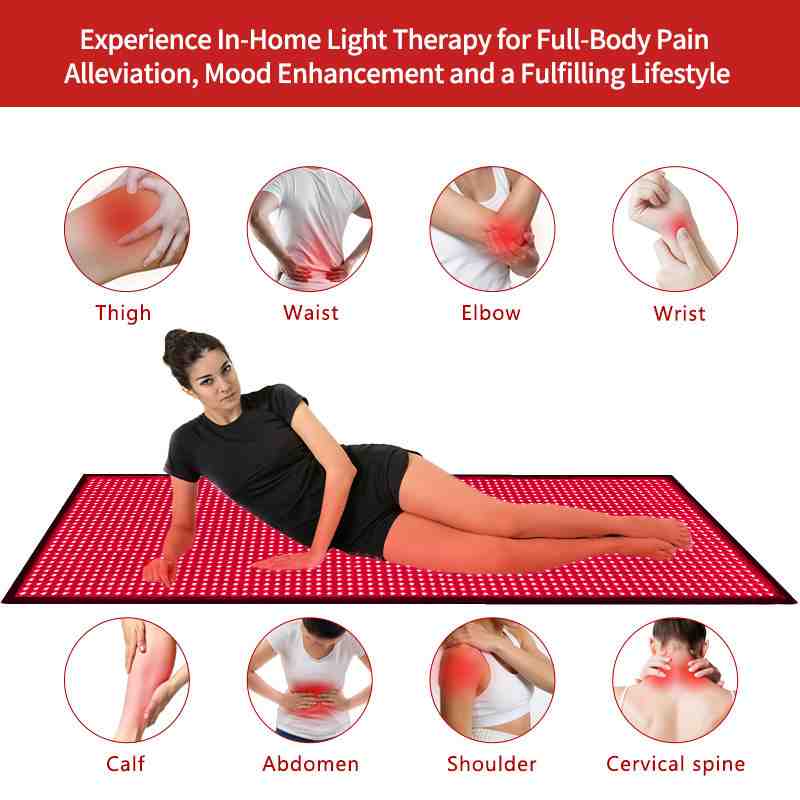
How Red and Near-Infrared Light Are Used in Home Wellness
Researchers call this approach photobiomodulation. It uses red and near-infrared light, and scientists study it for its effects on pain, inflammation and tissue healing. Home devices borrow the same light ranges for wellness routines. nih
Keep expectations realistic. Research continues, and results differ from person to person. Consumer wellness devices support routines. They do not replace medical care.
Scientists have also looked at how this light interacts with exercise. One review notes that it may act as a pre-conditioning step and can interact with muscle exercise. That interest explains why many people pair light sessions with stretching, yoga or post-workout downtime. nih
660nm vs. 850nm: Why Wavelengths Matter
Wavelength describes the color of the light, measured in nanometers (nm). Most quality blankets use two wavelengths because each one plays a different role.
| Wavelength | What it is | How people typically use it |
|---|---|---|
| 660nm | Visible red light | Surface-level wellness routines, skin-facing use |
| 850nm | Near-infrared, invisible to the eye | Deeper-reaching light for muscle and joint areas |
Scientists chose the red and near-infrared range for a practical reason. Light in this range travels through tissue more easily because tissue scatters and absorbs it less. The same source notes that the gap between 700 and 780 nm works poorly. So specific numbers matter more than a vague “infrared” label. nih
Here is a practical tip. You cannot see 850nm light, so you cannot confirm it by looking at the blanket. Rely on the manufacturer’s published specifications. If a listing skips wavelength numbers, treat that as a warning sign.
What Makes a Red Light Therapy Blanket Suitable for Full-Body Use?
“Full body” only helps you if the blanket actually fits your body. Think about how you will use it.
Size and Body Fit
Measure your height and shoulder width before you shop. Then compare those numbers with the blanket’s dimensions. A mat shorter than your height will not cover you from head to toe when you lie flat. That is not a flaw. It just means you may move or reposition during a session.
Comfort and Surface
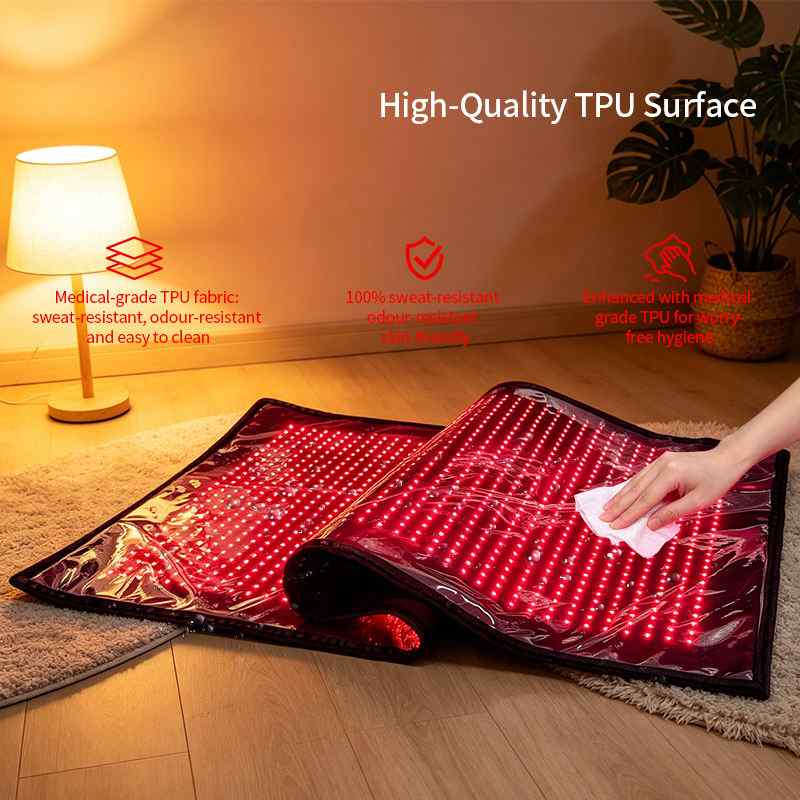
You will spend real time lying on this device, so the fabric matters. A soft, flexible surface makes it easier to relax, stretch or meditate during a session. A stiff or scratchy surface makes the routine harder to keep.
Plug, Cord and Setup
Check that the plug matches your country. US and Canadian buyers need a North American plug. Also think about where you will use it. A bed, yoga mat or carpeted floor near an outlet works best.
A comfortable setup helps you show up consistently. Consistency usually matters more than any single spec.
5 Specifications to Check Before Buying
Use this list as a shopping checklist. It works for any brand.
1. Wavelengths
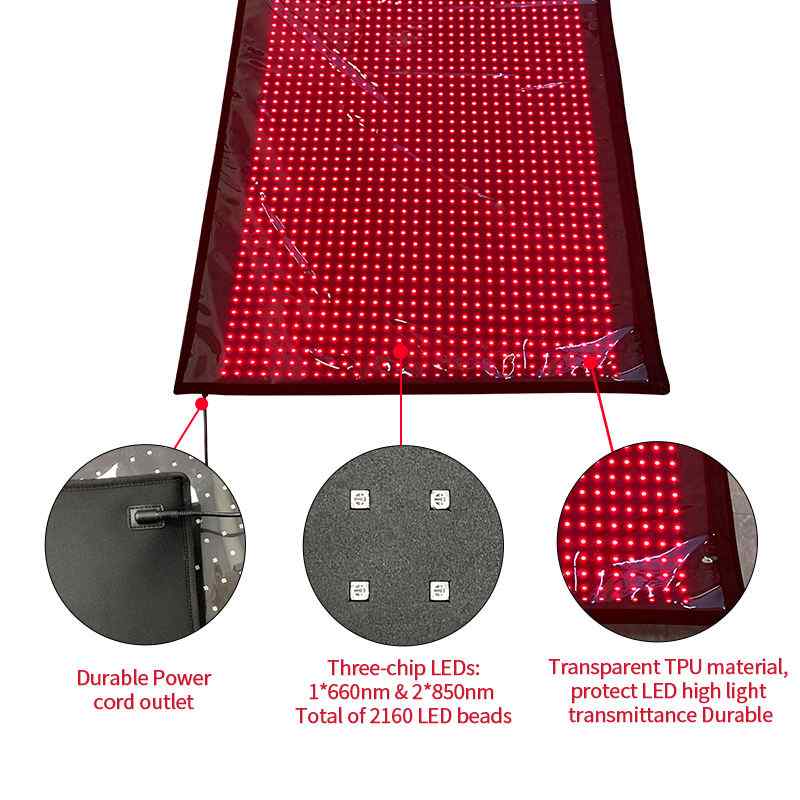
Look for exact numbers. Dual-wavelength devices that pair 660nm red with 850nm near-infrared are common for full-body recovery blankets. Confirm the listing names both.
2. LED Coverage and Density
LED density describes how many LEDs sit in a given area. A higher count can mean more even coverage. Still, count alone does not tell the whole story. LED size, spacing and power output all change how much light reaches your body.
A common mistake is to compare LED counts across brands as if they were equal. They are not. Ask how the LEDs spread across the full mat, not just the center.
3. Irradiance
Irradiance measures how much light energy lands on a surface, usually in milliwatts per square centimeter (mW/cm²). It shapes how much light your body actually receives. Published research describes a very wide range of values. One review lists power densities from about 5 mW/cm² up to 5 W/cm² in low-level light work. nih
That range is huge, so a listing with no irradiance figure leaves you guessing. If a seller does share a number, ask about the measuring distance. A reading taken at the surface differs from one taken six inches away.
4. Treatment Area
Treatment area is the part of your body the light covers in one position. Compare it with your own frame. A larger area lets you cover your back, legs and shoulders together. A smaller one means more repositioning.
5. Timer and Operating Modes
A built-in timer helps you keep sessions consistent without watching the clock. Modes, such as red only or combined light, give you flexibility. Confirm the listing describes these controls clearly. Follow the manufacturer’s session guidance rather than guessing.
Blanket Design vs. Traditional Red Light Therapy Panels
Neither format wins in every case. The right pick depends on how you plan to use it.
| Feature | Blanket / Mat | Panel |
|---|---|---|
| Body coverage | Large area at once | One section at a time |
| Setup | Lay flat and lie down | Mount or stand at a distance |
| Storage | Folds up | Needs wall or floor space |
| Best for | Full-body, relaxed sessions | Targeted areas |
| Numbers to compare | Contact-distance specs | Distance-dependent specs |
Panels often advertise high output figures. Those numbers are not directly comparable to a blanket, because panels usually work from a distance. For a deeper look, read our red light therapy mat vs. panel comparison. If you are choosing between formats, our blanket vs. mat guide covers that too.
How a Full-Body Blanket Can Fit Into a Home Recovery Routine
The best routine is one you will actually repeat. A blanket suits that goal because you can use it while you rest.
Here are a few realistic ways people fit one into a week:
- After a workout: Lie down and let your body slow down.
- During stretching or yoga: Use the mat as your floor surface.
- In the evening: Build a calm wind-down habit away from screens.
- On rest days: Keep the routine going even when you skip the gym.
Small, steady habits often do more for how you feel than occasional big efforts. Pair your session with slow breathing or gentle stretching. Use it to give yourself ten quiet minutes.
For a step-by-step walkthrough, see our guide on how to use a red light therapy mat. For recovery-specific background, read our article on red light therapy blankets and muscle recovery.
LuxReda FlexiTherm Elite™ Red Light Therapy Blanket Mat
Now let’s apply the checklist to a real product. The LuxReda FlexiTherm Elite™ Red Light Therapy Blanket Mat is a full-body option in LuxReda’s lineup. The details below come straight from its product page.
What the Product Page Lists
| Specification | Details |
|---|---|
| Model | FlexiTherm Elite™ |
| Product type | Red light therapy blanket mat |
| Technology | LED red light therapy |
| Wavelengths | 660nm / 850nm |
| Size | 160 x 80 cm (about 63 x 31.5 in) |
| Design | 2-in-1 blanket and mat |
| Material | Premium fabric |
| Plug type | US plug |
| Package size | 95 x 30 x 30 cm |
| Gross weight | 10 kg (about 22 lb) |
LuxReda describes the design as covering the back, legs, arms, shoulders and core. The page also lists a foldable, portable design for easy storage. It positions the mat for use after workouts, yoga and Pilates sessions.
What the Page Does Not List
Be aware of what the page leaves out. It does not publish the LED count, irradiance, timer or mode details, certifications, or warranty terms. Ask about these before you buy, and use the LuxReda contact page to reach the team. You can also browse the wider red light therapy device collection to compare options.
Who May Prefer a Full-Body Red Light Therapy Blanket?
A blanket format may suit you if you:
- Want to cover a large area in one session
- Prefer lying down to standing in front of a panel
- Need a device that folds away in a small home
- Like pairing wellness time with stretching or relaxation
A panel may suit you better if you only want to target one small area. Also consider your space and how often you want to set up the device.
Safety First
Talk with a healthcare provider before you start if you are pregnant, take medication that affects light sensitivity, or manage a health condition. Follow the manual for eye protection and session limits. Stop if your skin feels uncomfortable.
Red Light Is Not UV Tanning
Red and near-infrared LEDs are different from UV tanning devices. The FlexiTherm Elite™ page does not present it as a tanning product. UV is a separate matter. The FDA warns that UV exposure from the sun or indoor tanning beds can cause skin cancer, skin burns, early skin aging and eye damage. The agency also says there is limited evidence for the claim that artificial tanning is safer. Read the FDA’s tanning safety information for details. Our article on red light therapy vs. tanning beds explains how the two technologies differ. fdafda
Red Light Therapy Blanket FAQs
Check five things: exact wavelengths, LED coverage and density, irradiance, treatment area, and timer and modes. Then confirm the size fits your body and the fabric feels comfortable.
Neither is better in every case. Blankets cover more of your body at once and store easily. Panels usually target one area from a distance. Choose based on your space and goals.
Many full-body blankets use both because red and near-infrared light behave differently. A dual-wavelength device gives you both options in one session. The FlexiTherm Elite™ lists 660nm and 850nm.
Follow the manufacturer’s instructions. The FlexiTherm Elite™ product page does not list a session time, so ask LuxReda or check the manual that ships with the device.
No. Red and near-infrared LEDs are not UV tanning lamps. If you use UV tanning products, follow the manufacturer’s instructions and FDA guidance, and remember UV carries real health risks.
That depends on the device and your health. Check the manufacturer’s guidance and ask a healthcare provider if you have any medical concerns.
Final Considerations Before Choosing a Home Device
Start with the specs that matter: wavelengths, coverage, irradiance, treatment area and controls. Then match them to your body, your space and your routine. If a listing skips key numbers, ask the seller before you buy.
The next step is simple. Write down your top three needs, then compare devices against them. If the FlexiTherm Elite™ looks like a fit, review the full product page and send LuxReda your questions.
Look after yourself in small ways. Choose habits that feel comfortable and easy to repeat. A few calm minutes each day can be a good place to begin.
Thank you