If you train hard, you already know that recovery matters as much as the workout itself. Stretching, hydration, sleep, and a little extra self-care after exercise all add up over time. That’s part of why more people are looking at a red light therapy blanket for muscle recovery as a way to support their post-workout routine at home.
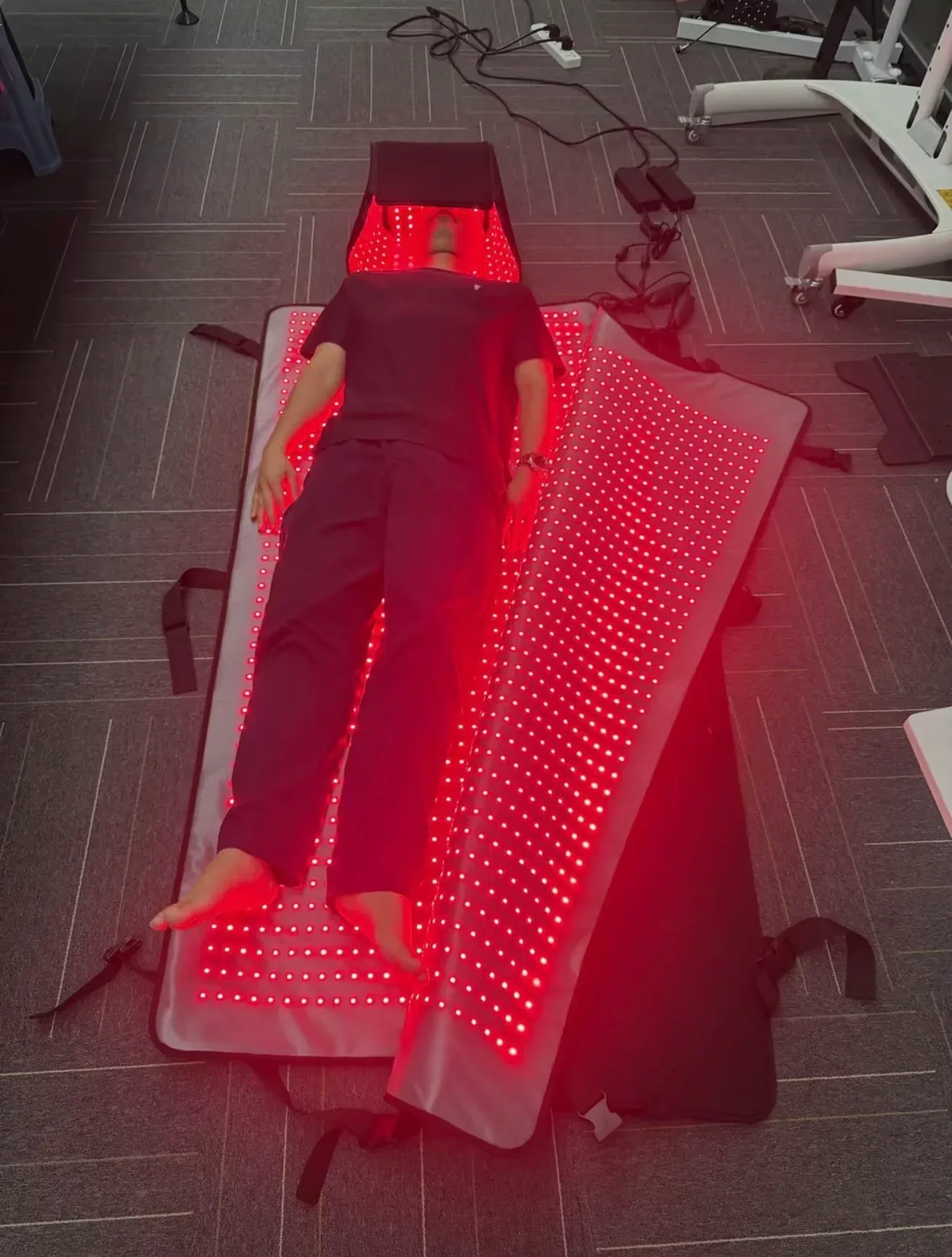
This guide explains what the science says about red and near-infrared light for muscle soreness, why 660nm and 850nm wavelengths keep coming up, and what to think about before choosing a full-body device. We’ll also look at how a full-body option like LuxReda’s Extra Large Full Body Red Light Therapy Mat Blanket fits into that picture — without overstating what any device can do.
What Red Light Therapy Actually Does for Muscle Recovery
Red light therapy, also called photobiomodulation, uses specific wavelengths of red and near-infrared light delivered through LEDs. Unlike UV light, this type of light doesn’t harm skin cells. Your cells absorb it through structures that include the mitochondria, which produce cellular energy.
Scientists believe this light exposure may briefly support mitochondrial activity. Researchers have studied photobiomodulation for exercise-induced muscle fatigue and post-workout soreness for this reason. A review of photobiomodulation research in human muscle tissue points out that scientists have examined both pre-exercise and post-exercise light exposure for their possible effects on sports performance and recovery.
The limits here deserve a clear mention. This field remains an area of active research, not settled science. Effects vary by study, wavelength, dose, and individual. Think of red light therapy as one possible addition to a recovery routine, not a guaranteed fix for soreness or fatigue.
660nm and 850nm Red Light Therapy: Why Wavelength Matters
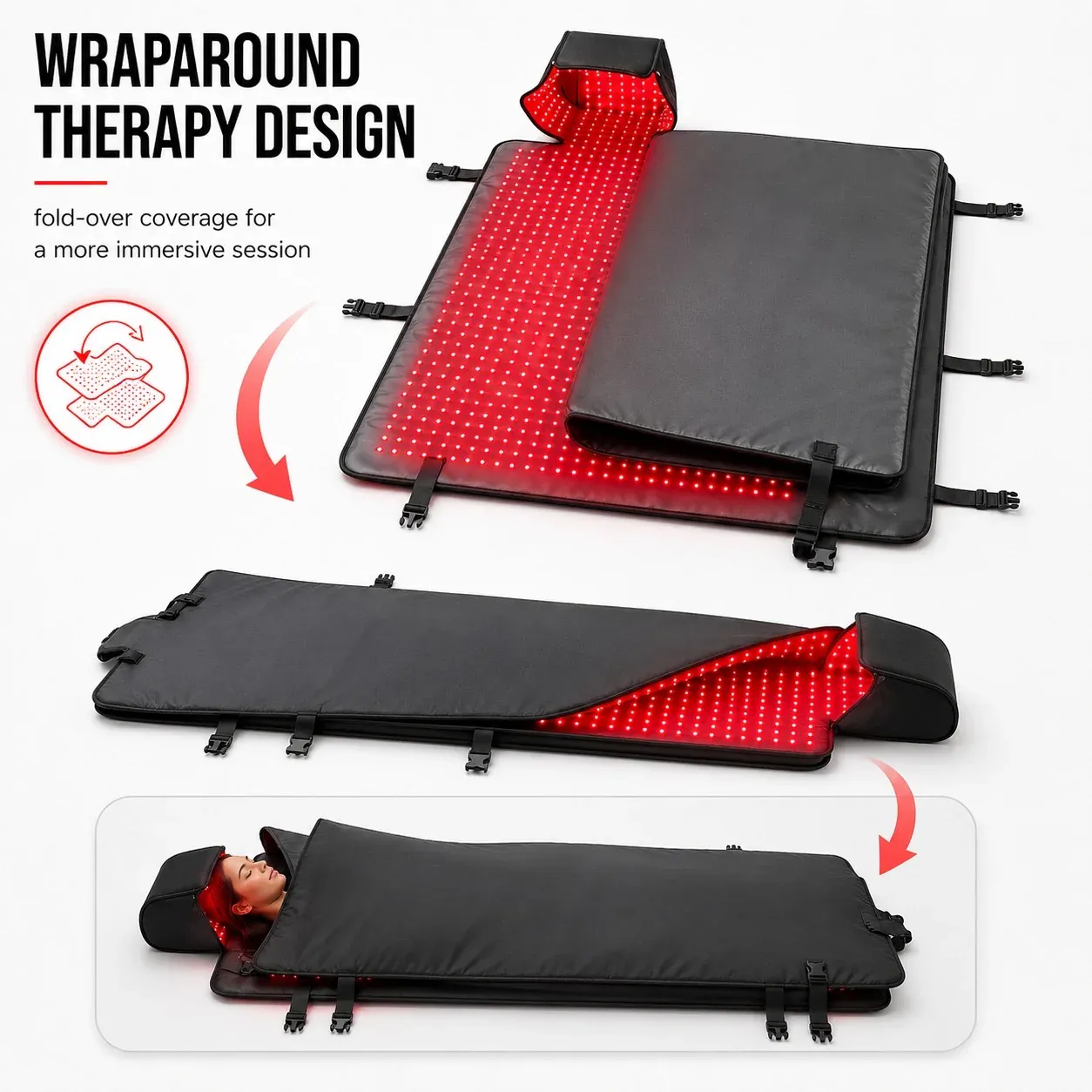
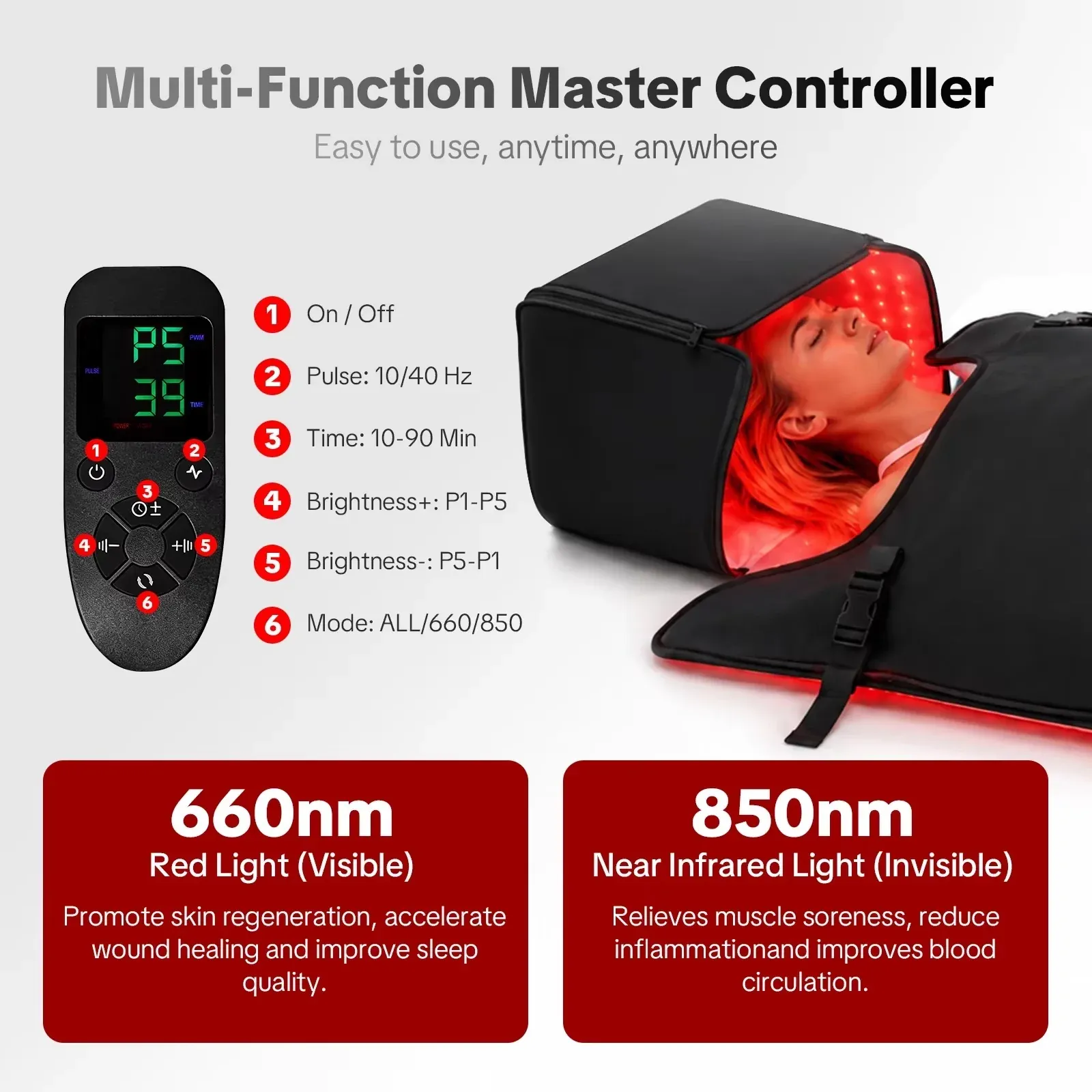
Most full-body devices, LuxReda’s blanket included, combine two wavelength ranges:
- 660nm (visible red light) — research links this range to more surface-level tissue, including skin.
- 850nm (near-infrared light) — invisible to the eye, and generally thought to reach deeper into tissue, including muscle.
You’ll often see manufacturers list “660nm and 850nm red light therapy” together for this reason. Pairing the two wavelengths lets a session address both surface-level and deeper tissue at once, which matters more for a full-body blanket than for a small spot device aimed at one joint.
Wavelength is only one variable, though. Session duration, distance from the light source, and consistent use all shape what a person actually experiences.
Full-Body Blanket vs. Localized Panel or Handheld Device
Not everyone needs the same setup. A small panel or wrap might cover your needs if soreness sits in one shoulder or a knee. A blanket-style device makes more sense if you’re dealing with full-body training fatigue instead.
| Factor | Full-Body Blanket | Panel or Handheld Device |
|---|---|---|
| Coverage | Whole body in one session | One area at a time |
| Best for | General post-workout recovery, full-body training days | Targeted soreness (knee, shoulder, lower back) |
| Session style | Lie down, hands-free | Often requires holding or repositioning |
| Storage | Foldable, but larger | Compact |
| Typical use | Post-workout, evening wind-down | Quick, targeted sessions |
LuxReda’s guide on red light therapy blankets versus mats for full-body home use walks through the practical differences in more detail, if you want a deeper side-by-side comparison.
Choosing a full-body red light therapy blanket over a panel usually comes down to convenience. You can wrap up, close your eyes, and let a session run while you decompress after a workout. That convenience is part of why so many people fold this into an evening wind-down rather than treat it as a separate chore.
What the Research Says About Red Light Therapy After Workouts
Researchers have studied delayed onset muscle soreness, or DOMS, more than almost any other area connected to red light therapy for exercise recovery. A narrative review on photobiomodulation and DOMS linked phototherapy to functional recovery measures like jump performance and reported soreness after intense exercise, though results across studies don’t always agree.
Other research has looked at whether photobiomodulation affects markers of oxidative stress and inflammation tied to muscle fatigue. Findings look promising in some studies but not all, and study designs vary widely in wavelength, dose, and timing.
A few honest takeaways from the current research:
- Photobiomodulation shows potential for supporting recovery after intense exercise, but it isn’t a proven treatment for any medical condition.
- Results depend heavily on light dose, wavelength, and session timing relative to exercise.
- Human trials remain relatively small, and researchers still need larger, more consistent studies.
- Red light therapy works best as one part of a broader recovery routine, not a replacement for sleep, hydration, and mobility work.
Choosing a Full-Body Red Light Therapy Blanket: What to Look For
A few practical factors matter more than marketing claims when you’re comparing options:
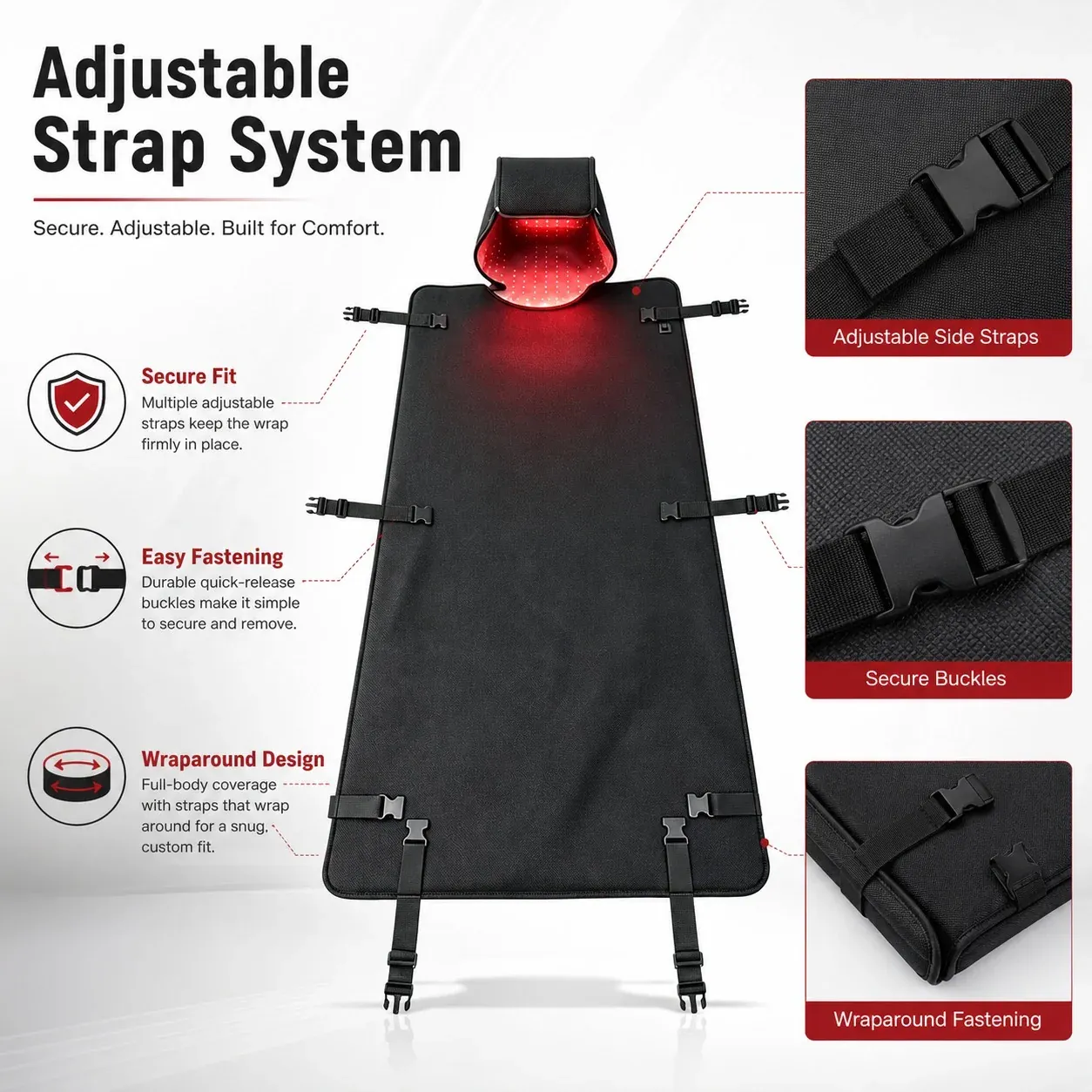
Wavelength combination. Look for a device that clearly states its wavelengths, ideally in the 660nm and 850nm range used in most published research.
Coverage area. A blanket-style device should cover your torso and limbs well enough that you don’t have to reposition constantly mid-session.
Session controls. Adjustable timers and intensity settings let you build a routine that fits your schedule and comfort level, rather than a one-size-fits-all session.
Material and comfort. Since you’ll lie in it, the interior material affects comfort during longer sessions, and an easy-to-wipe surface helps after a sweaty workout.
Manufacturer documentation. Reputable brands publish their wavelength, coverage area, and safety guidance clearly rather than leaving buyers to guess.
LuxReda designed the Extra Large Full Body Red Light Therapy Mat Blanket as a full-body, dual-wavelength option for this kind of at-home use. LuxReda’s full-body red light therapy device buying guide covers additional selection factors worth reading before you commit to a specific style of device, if you’re still deciding between formats.
Making time for a recovery routine, even a short one, is a small habit that can make workouts feel more sustainable over the long run.
How to Use a Red Light Therapy Blanket Safely for Post-Workout Recovery
The FDA typically regulates red light therapy devices intended for general wellness use under its general wellness policy for low-risk devices, which covers products meant to support a healthy lifestyle rather than diagnose or treat disease. That distinction matters: these devices aren’t a substitute for medical care, so treat any product that claims to cure or treat a specific condition with caution.
A few general safety points to keep in mind:
- Follow the session length and intensity guidance the manufacturer provides.
- Keep skin clean and dry before a session for even light exposure.
- Follow any eye protection guidance in a product’s instructions, especially at higher intensities.
- Stop use and check with a healthcare provider if you notice unusual skin irritation.
- Talk with a doctor before starting any light therapy routine if you’re pregnant, have a photosensitivity condition, or take medication that increases light sensitivity.
This same safety mindset extends to home wellness equipment generally, including UV tanning devices. Indoor tanning and UV exposure carry their own separate risks, and they don’t work the same way as red light therapy. Understanding which category a device falls into, and following its manufacturer instructions and applicable FDA guidance, matters no matter which device you choose.
Frequently Asked Questions
It depends on your needs. A blanket covers more of the body at once, which suits general post-workout recovery. A panel or targeted device may work better if soreness stays in one area.
Session lengths vary by device and manufacturer guidance, often ranging from about 10 to 30 minutes. Follow the specific instructions that come with your device rather than a generic number.
No. Current research treats photobiomodulation as a potential complement to recovery, not a replacement for sleep, hydration, mobility work, or rest days.
No. Red light therapy uses specific LED wavelengths without much heat, while infrared saunas rely mainly on heat to warm the body. Some people use both, but each works through a different mechanism.
Manufacturers often market these devices as general wellness products, a low-risk category the FDA doesn’t actively regulate for premarket approval as long as the product avoids disease-treatment claims. Check how a specific product is marketed before you assume what that means for you.
A Practical Next Step
A red light therapy blanket for muscle recovery isn’t a miracle fix, but it can add real value to a post-workout routine when you use it consistently and keep your expectations realistic. Pay attention to wavelength, coverage, and manufacturer guidance rather than bold claims, and let the rest of your recovery habits — sleep, water, and movement — do their share of the work too.
Whatever routine you build, the goal stays the same: recover well, stay consistent, and give your body room to bounce back between workouts. LuxReda’s red light therapy blanket guide makes a good next stop for more detail before you decide, if a full-body option sounds like a fit for your space and routine.
Thanks