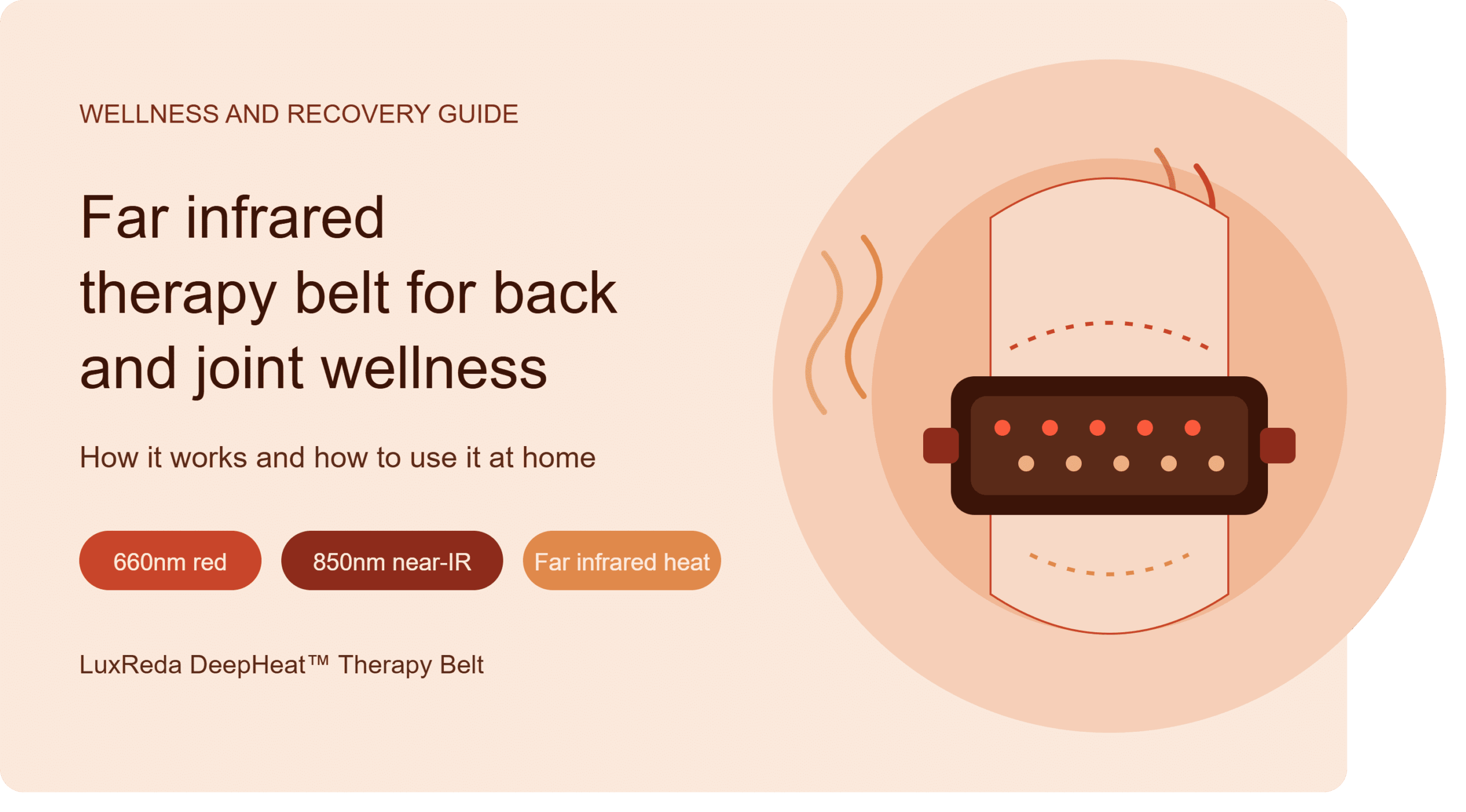
Many of us spend long days at a desk, in the car, or on our feet. A little warmth and downtime at the end of the day can feel very good. That is why wearable wellness tools are getting so much attention.
A far infrared therapy belt is a wearable wrap that combines gentle heat with red and near-infrared light. You strap it around your waist, lower back, or another area, then relax while it runs. This guide explains how the technology works and how to use a belt at home. It also covers what to check before you buy. It is written for wellness and recovery support, not medical treatment.
What Is a Far Infrared Therapy Belt?
A far infrared therapy belt is a flexible, wearable pad. It usually has a warming element and LEDs that emit specific light wavelengths. Some people call it an infrared therapy belt or a red light therapy belt. Product names vary, and features differ from brand to brand.
Most belts share a few traits:
- They wrap around the waist, back, hips, or another area.
- They combine heat with light, or offer light only.
- They run on a controller with simple modes.
- They suit short sessions at home.
The appeal is convenience. You can wear one while you read, stretch gently, or sit on the couch.
How Far Infrared Heat and Red/Near-Infrared Light Differ
These two features sound similar, but they do different jobs. Understanding the difference helps you compare products fairly.
Far Infrared Heat
Far infrared heat is a warming feeling. It works much like a heating pad, and many people find that warmth relaxing. Think of it as the comfort layer of the belt.
Red and Near-Infrared Light
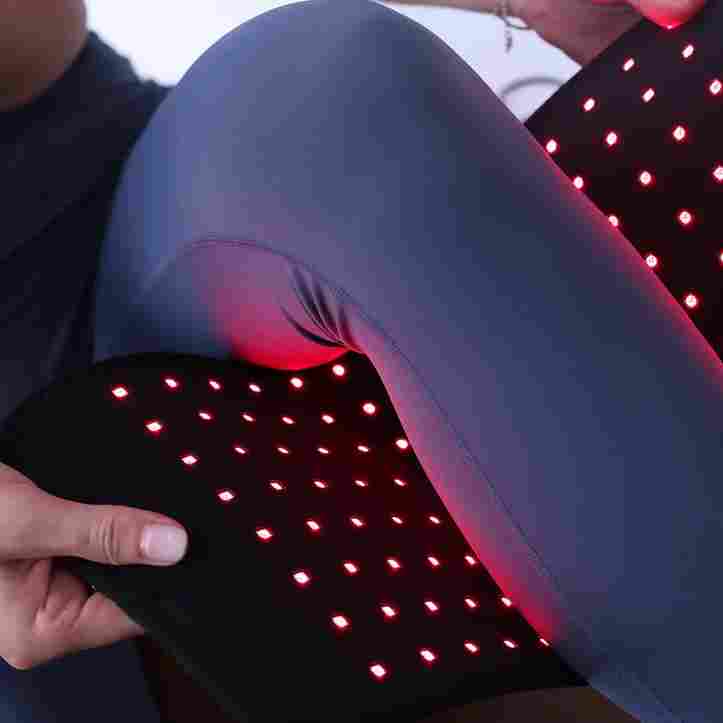
Red and near-infrared light are specific LED wavelengths. Researchers call this approach photobiomodulation. Photobiomodulation most commonly uses red light around 630–660 nm and near-infrared light around 830–850 nm, and the two differ mainly in how deeply they reach tissue. Research in this field is still developing, and it is not a guarantee for any one person. PubMed Central
A simple way to remember it:
| Feature | What you notice | Role in the belt |
|---|---|---|
| Far infrared heat | Gentle warmth | Comfort and relaxation |
| 660nm red light | Visible red glow | Light-based wellness feature |
| 850nm near-infrared | Invisible to the eye | Light-based wellness feature |
Because near-infrared light is invisible, you may not see it working. Some belts also feel only mildly warm. Neither is a flaw. It is simply how the light behaves.

Why 660nm + 850nm Are Used in Light Therapy
Many wellness devices pair these two wavelengths. Red light at 660nm is generally described as working nearer the surface. Near-infrared light at 850nm is generally described as reaching deeper.
One review of light-based skin research notes that there is no agreement on the single best wavelength, though most studies use wavelengths from about 630 nm to 950 nm. So a dual-wavelength belt is a common, reasonable design choice. It is not a proven formula for every goal. PubMed Central
Pairing the two wavelengths lets one belt cover both ends of the commonly used range. That is a practical reason shoppers look for 660nm and 850nm together.
Potential Uses of a Wearable Infrared Therapy Belt
People reach for a belt for everyday comfort and routine recovery. Here are common ways to use one. None of these is a medical claim.
Back and Waist Wellness
The lower back carries a lot of daily load. Sitting, lifting, and standing all add up. A belt lets you give that area some warmth and attention while you rest.
Muscle Relaxation
Warmth often helps muscles feel looser. Many people use an infrared belt for muscle recovery after a long day, then follow with light stretching.
Joint Comfort
Some people wrap a belt around a hip, knee, or another area when stiffness bothers them. Shoppers often search for infrared therapy for joint stiffness. A belt may add comfort, but it does not replace advice from your doctor.
Post-Workout Recovery
After exercise, a short session can become part of a cool-down routine. Pair it with water, stretching, and good sleep. Small habits like these support recovery more than any single device.
Everyday Relaxation
Not every session needs a goal. Ten quiet minutes with gentle warmth can help you slow down. Self-care does not have to be complicated.
How to Use an Infrared Therapy Belt at Home
Start simple. A good routine feels easy enough to repeat.
- Read the manual first. Follow the manufacturer’s session times and safety notes.
- Choose your area. Place the belt on clean, dry skin or as the instructions direct.
- Secure it comfortably. It should feel snug, never tight.
- Start low. Use a lower setting or shorter session at first.
- Pick a mode. Try steady light, pulse mode, or a dimmed setting if available.
- Stay aware. Stop if you feel too warm, uncomfortable, or unwell.
- Repeat consistently. A regular routine tends to feel better than occasional long sessions.
Common Mistakes to Avoid
- Falling asleep with a heat-producing device on
- Using it over broken or irritated skin
- Skipping the manual
- Expecting instant results
- Ignoring pain that keeps getting worse
If you are pregnant, have a medical condition, use an implanted device, or take medications that affect heat sensitivity, ask your doctor first. Persistent or severe pain deserves a professional opinion.
What to Look for When Buying a Far Infrared Therapy Belt
A belt should fit your body and your habits. Use this checklist when you compare options.
- Wavelengths: Check whether the belt lists exact wavelengths, such as 660nm and 850nm.
- Heat: Confirm whether it includes far infrared heat or light only.
- Coverage: Compare the pad size with the area you want to cover.
- Comfort and fit: Look for an adjustable design that stays put without pinching.
- Controls: Simple modes, such as pulse and dimming, are easier to use consistently.
- Portability: Think about whether you will move it between rooms or take it with you.
- Power: Check the listed wattage and how it connects.
- Clear instructions: Good brands explain session times and safety plainly.
Also read the wording carefully. Be wary of any product that promises to cure or treat a condition. Authoritative guidance on choosing light therapy products stresses that the science is early, and the exact way this light works is still under investigation. Honest marketing matches that reality. PubMed Central
Far Infrared Therapy Belt vs. Full-Body Red Light Therapy Mat
A belt and a mat solve different problems. Neither is better for everyone.
| Therapy belt | Full-body mat | |
|---|---|---|
| Coverage | Targeted area | Larger area |
| Portability | High | Lower |
| Setup | Quick wrap | Lay out and lie down |
| Best for | Back, waist, and specific spots | Whole-body routines |
Choose a belt if you want a focused, easy option. Choose a mat if you want broader coverage. To compare in depth, read LuxReda’s guide on how to use a red light therapy mat and the mat vs. panel comparison. If full-body coverage appeals to you, the full-body red light therapy device buying guide explains the main options.
Why Choose a Portable Wearable Design?
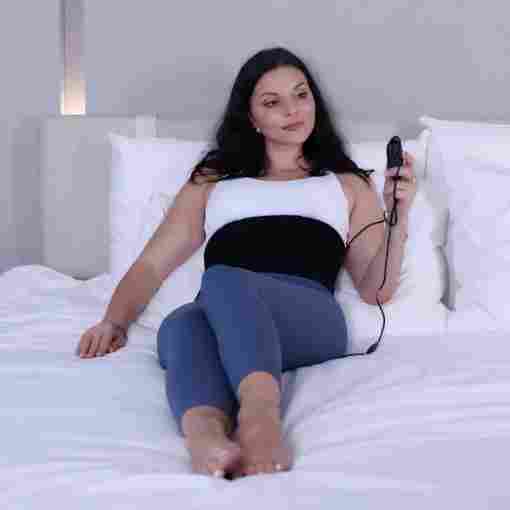
The best wellness habit is the one you actually keep. A portable belt removes a lot of friction. You do not need to clear floor space or schedule a long block of time.
You can wear one while you unwind on the sofa. You can also slip one into a bag for a trip. That kind of flexibility helps a routine stick, and a routine that sticks is what makes any wellness tool worthwhile.
If your goal is recovery after workouts, the red light therapy blanket for muscle recovery article shows how a larger format differs from a wearable belt.
LuxReda DeepHeat™ Therapy Belt: Features and Specifications
The LuxReda DeepHeat™ Therapy Belt is a targeted, wearable option in this category. LuxReda describes it as combining far infrared heat with 660nm and 850nm light. It lists back, waist, joint, muscle soreness, and recovery uses.
Here are the specifications:
| Feature | Detail |
|---|---|
| Wavelengths | 660nm + 850nm |
| Heat | Far infrared heat |
| Size | 16 × 8 inches |
| Power consumption | 25W |
| Wavelength ratio | 1:2 |
| Modes | Pulse and dimming |
| Design | Adjustable and portable |
Who it may suit: People who want a compact wrap for the back or waist. It may also suit anyone who likes simple controls for a home recovery routine.
Things to consider: At 16 × 8 inches, it targets one area at a time. For whole-body coverage, a mat or blanket fits better. Compare the details on the LuxReda DeepHeat™ Therapy Belt product page before you decide.
Looking at other formats? LuxReda also covers laser therapy devices for pain relief and the best far infrared sauna blanket for home use.
Frequently Asked Questions
People use one for everyday comfort, muscle relaxation, and recovery routines. It is a wellness tool, not a medical treatment.
Infrared heat feels warm, like a heating pad. Red and near-infrared light are LED wavelengths that you generally feel little or nothing from.
Many people wear one around the lower back or waist for comfort and relaxation. Results vary, and it does not replace medical care for ongoing back pain.
They are light wavelengths in nanometers. 660nm is visible red light. 850nm is near-infrared light that the eye cannot see.
Follow the manufacturer’s manual. Starting with shorter sessions is a common, cautious approach.
Do not fall asleep with a heat-producing device unless the manufacturer says it is safe.
A belt suits targeted areas and portability. A mat suits fuller coverage. Your goals and space decide the better fit.
Anyone who is pregnant, has a health condition, uses an implanted device, or has persistent pain should check with a doctor.
Final Considerations Before Choosing an Infrared Therapy Belt
A far infrared therapy belt works best as one part of a broader routine. Compare wavelengths, coverage, controls, comfort, and portability. Then choose the belt you will realistically use. Start with short sessions and read the manual.
Your next step is simple. List the area you want to focus on and how often you will use the belt. Then compare products against that list.
Give yourself a little time each day to slow down. Stay active, drink water, and rest well. Wellness habits do not need to be big to be worth keeping.
Thank you