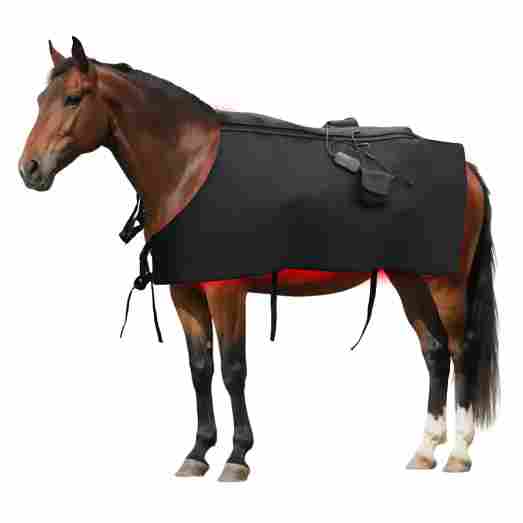
Caring for a horse is its own kind of daily wellness ritual. Between grooming, turnout, and training, most horse owners are always looking for small, practical ways to support recovery and comfort. Red light therapy for horses has become one of the more talked-about additions to that routine. It’s non-invasive, easy to use in the barn, and fits naturally alongside grooming and stretching.
This guide explains what red light therapy is. It also covers how owners commonly use equine red light therapy, and what to look for when choosing a horse red light therapy device. We’ll also look at where a purpose-built pad, like the LuxReda EquiRed™ Portable Therapy Pad, fits into that decision.
What Is Red Light Therapy for Horses?
Red light therapy applies specific wavelengths of visible red and near-infrared light directly to the skin. Researchers often call this category of light exposure photobiomodulation in both humans and animals. Scientists have studied it for decades, looking at cellular activity and tissue-level processes. Interest in low-power red and near-infrared light sources has grown across both human and veterinary wellness fields, and reviews of the underlying photobiomodulation research continue to track how these effects work at the cellular level.
Two wavelengths come up constantly in this space:
- 660nm red light — visible red light that generally affects more surface-level tissue.
- 850nm near-infrared light — invisible to the eye and generally reaches a bit deeper into tissue.
Manufacturers often describe devices that combine both as 660nm red light therapy for horses and 850nm near-infrared therapy for horses. These devices aim to cover more than one layer of tissue in a single session.
It’s worth being clear about scope here. Red light therapy is not a medical treatment, and it does not diagnose, cure, or replace veterinary care. Think of it as a supportive part of an equine wellness routine, not a substitute for a veterinarian’s evaluation of lameness, injury, or illness.
Why Horse Owners Are Adding Equine Light Therapy to Their Routine
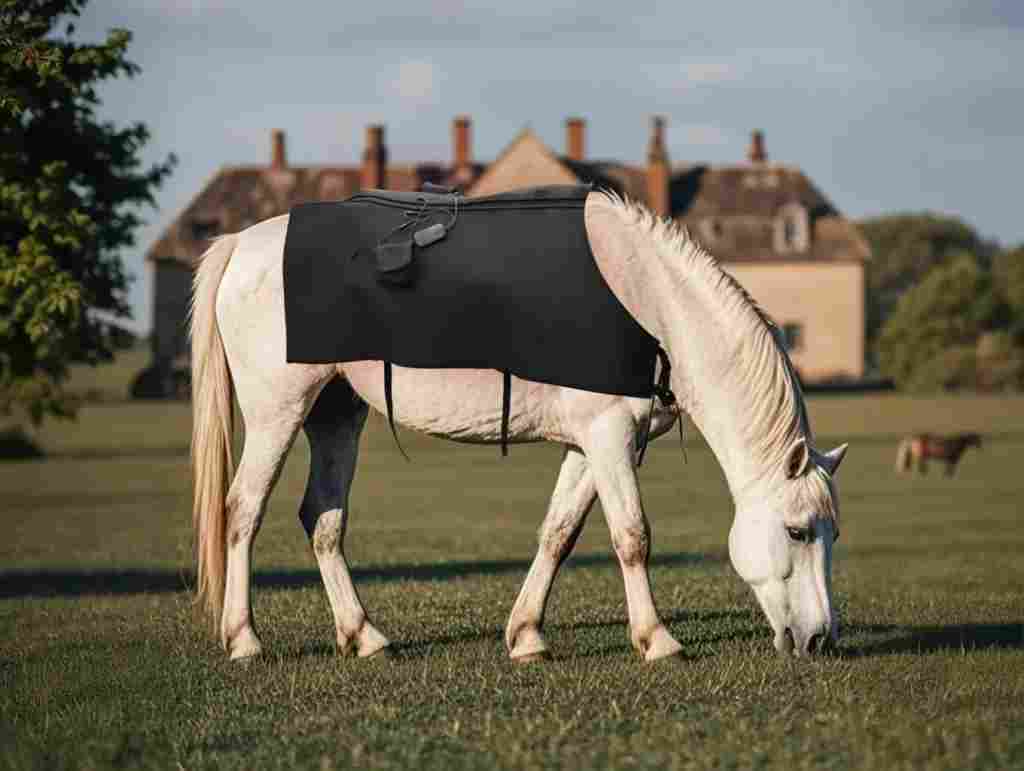
Interest in equine red light therapy tends to come from three groups. Performance riders manage training loads, trainers oversee multiple horses, and owners of older or retired horses want to support day-to-day comfort.
A few reasons this category has grown:
- It’s non-invasive and doesn’t require sedation or clipping.
- Sessions are short, often in the 10–20 minute range depending on the device.
- Many pads are cordless, so they work in a stall, a trailer, or at a show.
- It pairs easily with an existing grooming or cool-down routine.
Think of it the same way you’d think of a foam roller or a warm-up stretch before a workout. It’s a small, consistent habit rather than a dramatic fix, and consistency usually matters more than intensity.
Common Situations Where Owners Use It
- Before a ride, as part of a warm-up routine on major muscle groups.
- After training or competition, once the horse has cooled down.
- During periods of lighter work, such as recovery from a demanding show season.
- As part of an older horse’s general comfort and mobility routine.
Red Light Therapy for Horse Muscle Recovery and Joint Support
Two of the most searched topics in this space are red light therapy for horse muscle recovery and red light therapy for horse joints. It helps to separate the two, since owners often use a pad differently for each.
Muscle-focused use typically targets larger areas like the back, shoulders, hindquarters, and hamstring region. Owners often apply it after exercise, once the horse has settled and cooled down. It becomes part of a broader recovery routine that also includes hydration, turnout, and rest.
Joint-focused use usually targets smaller, more defined areas such as the knees, hocks, or fetlocks. These areas have less soft tissue between the light source and the joint. A flexible, wrap-style pad that maintains skin contact tends to work better here than a flat panel.
Here’s a simple way to think about targeting by area:
| Area | Typical Use Case | Pad Style That Fits Best |
|---|---|---|
| Back and shoulders | Pre-training prep, post-exercise recovery | Larger, flexible wrap or pad |
| Hindquarters | Post-training recovery | Larger, flexible wrap or pad |
| Legs (cannon, knee, fetlock) | Joint stiffness, targeted comfort | Contoured or adjustable wrap |
| Hocks | Post-exercise, older horse maintenance | Adjustable, snug-fitting wrap |
If you already know how people use red and near-infrared light for similar goals, the underlying concept translates directly to horses. LuxReda covers those fundamentals in more depth in its guide to how red light therapy supports muscle recovery. It’s a useful companion read if you want the broader science before applying it to a horse’s routine.
Pre-Training Preparation vs. Post-Exercise Recovery
Timing matters more than people expect. Owners generally use a portable red light therapy for horses device in one of two windows, and each window serves a different purpose.
Pre-training use is about preparation. Some owners apply light therapy to major muscle groups before tacking up. They treat it as part of a broader warm-up alongside walking and light stretching.
Post-exercise use is about winding down. After a training session or competition, once your horse has cooled out properly, many owners reach for a horse recovery therapy routine. This often includes light therapy on the areas that worked hardest.
A few practical tips for either window:
- Keep the coat and skin reasonably clean before application for better skin contact.
- Start with shorter sessions and observe how your horse responds.
- Stay consistent — a few short sessions a week tend to matter more than one long, occasional session.
- Always follow the manufacturer’s instructions for session length and frequency.
How to Choose a Red Light Therapy Pad for Horses
Manufacturers don’t build every red light therapy pad for horses the same way. The differences matter more in a barn setting than they might for home use on a person. Here’s what actually affects day-to-day usability.
Wavelength Combination
Look for a device that includes both 660nm and 850nm light rather than a single wavelength. This gives you flexibility to target surface tissue and slightly deeper tissue in the same session.
Portability and Power Source
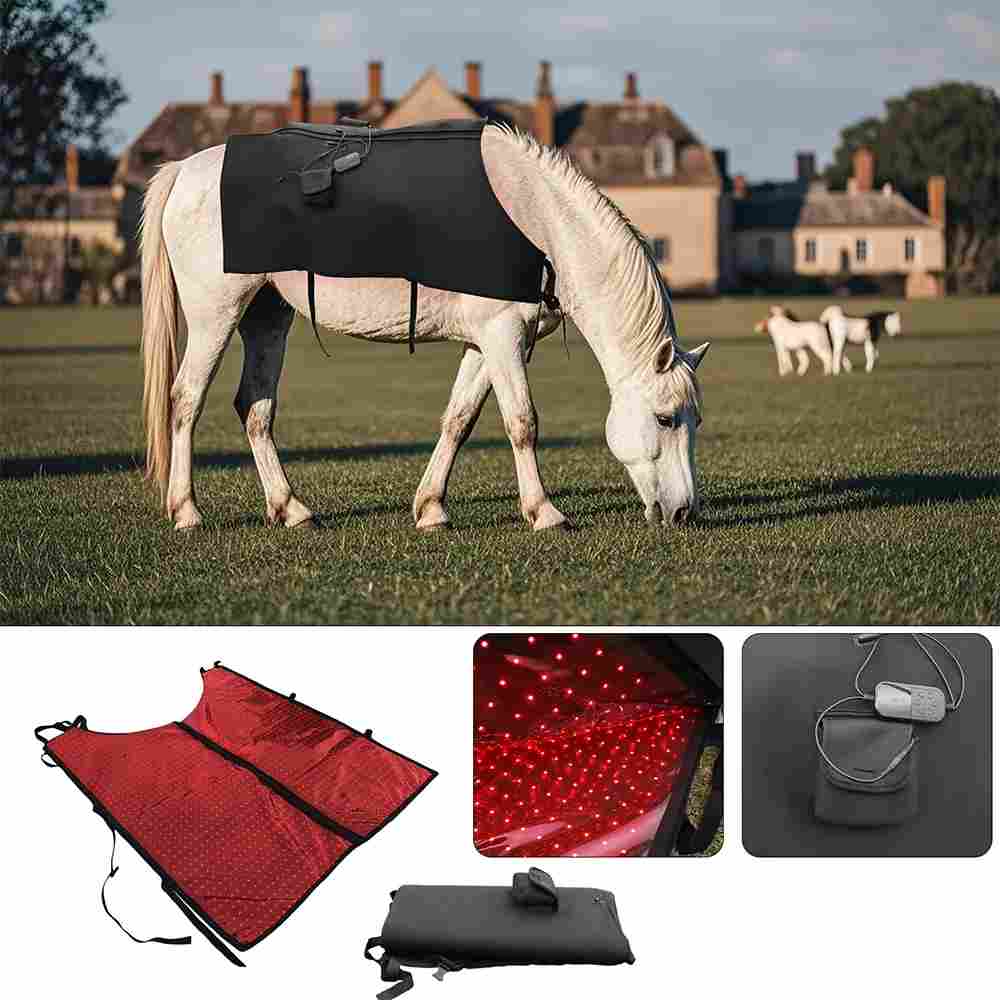
Barns don’t always have a convenient outlet near the stall or crossties. A rechargeable, cordless device removes that limitation and travels easily to shows or trailers.
Fit and Flexibility
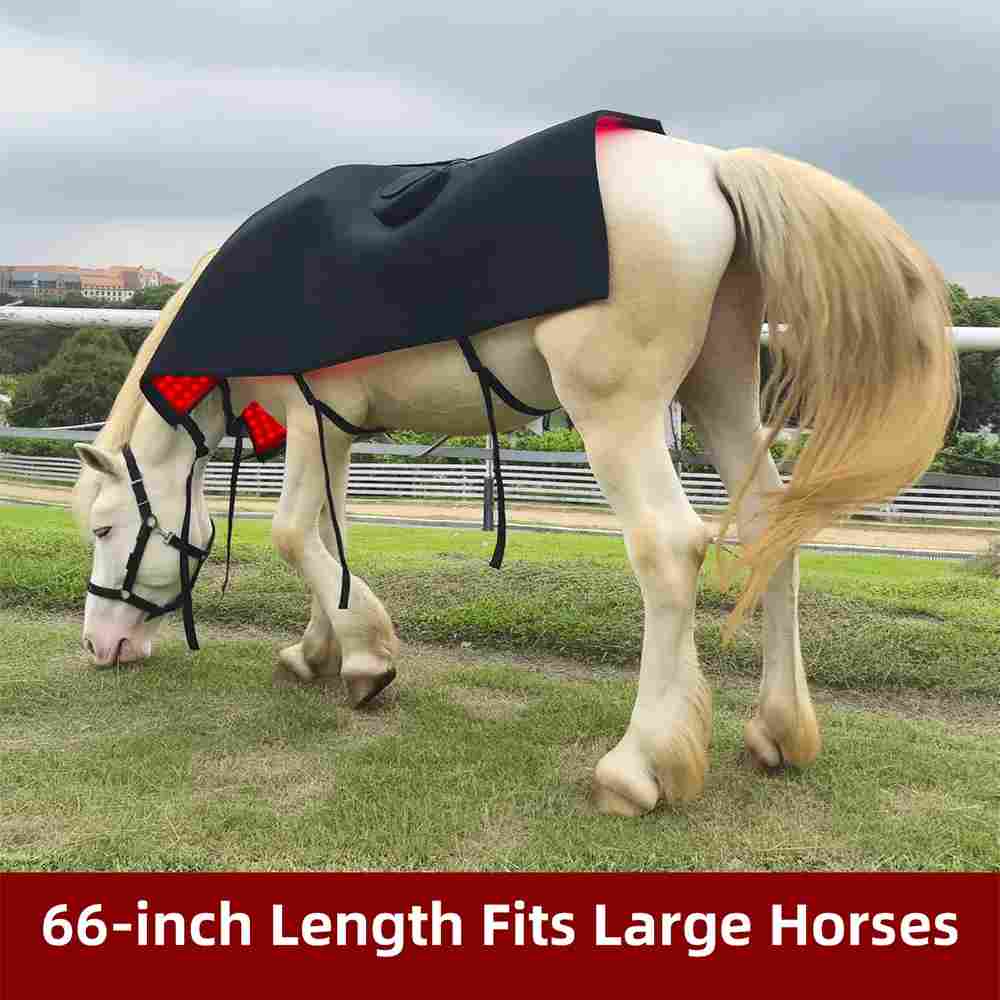
A flat panel works fine for flat surfaces, but a horse’s body isn’t flat. A flexible, wrap-around design can contour to the back, shoulder, or leg. This keeps the light source in closer, more consistent contact with the skin, and that matters more than raw light output on paper.
Coverage Area
Consider whether you mainly need to cover large muscle groups (back, shoulders) or smaller, more defined areas (legs, joints). Some owners eventually want both, so it’s worth planning for that from the start.
Ease of Use for Your Routine
A complicated strap-on device, or one that needs two people to use safely, is less likely to become a consistent habit. Simpler is usually better for daily or near-daily use.
Where the LuxReda EquiRed™ Fits In
LuxReda built the EquiRed™ Portable Therapy Pad for Horses around the two wavelengths covered throughout this guide: 660nm red light and 850nm near-infrared light. It uses a flexible, wrap-around design meant to sit against areas such as the back, shoulders, legs, and joints. It also runs on a rechargeable battery, so it isn’t tied to a barn outlet.
That combination — dual wavelength, flexible fit, and cordless operation — lines up with the selection factors above. Those factors are coverage flexibility, contact quality, and ease of use in a real barn setting. It’s worth exploring if you’re comparing horse red light therapy device choices and want something built specifically for equine use rather than adapted from a human product.
As with any red light or near-infrared device, follow the included instructions for session length. Check in with your veterinarian first if your horse has an existing injury, a skin condition, or is currently under treatment for anything.
Getting Started: A Simple Routine to Try
If you’re new to stable therapy routines like this, start simple:
- Pick one or two target areas based on your horse’s workload (back and hindquarters are common starting points).
- Use it 3–4 times a week rather than daily at first, and see how your horse responds.
- Pair sessions with grooming time, since your horse is already standing calmly.
- Keep a short note of what areas you treated and when, so you can spot patterns over time.
Small, steady habits tend to hold up better than big changes all at once — for horses and for the people who care for them. If you want a broader refresher on how red and near-infrared light therapy works, check two LuxReda resources before adapting a routine for your horse. The complete guide to red light therapy and the walkthrough on using a red light therapy mat both cover session basics that apply here too.
Frequently Asked Questions
Owners typically use it to support a horse’s recovery and wellness routine, often around exercise, by applying red and near-infrared light to muscles or joints. It is not a treatment for injury or disease and doesn’t replace veterinary diagnosis or care.
Devices designed specifically for equine use are generally low-risk when you follow the manufacturer’s instructions. That said, always check with your veterinarian first if your horse has an open wound, active infection, or a diagnosed condition.
This depends entirely on the specific device. Always follow the manufacturer’s stated session length rather than guessing. Start on the shorter end when you try a new device for the first time.
Many owners use it both ways. They apply it briefly before riding as part of a warm-up, and again after exercise once the horse has cooled down. There’s no single correct approach; it depends on your horse’s routine and how they respond.
Common areas include the back, shoulders, hindquarters, legs, and joints such as the knee or hock. A flexible wrap-style pad generally adapts better to curved or narrower areas than a flat panel.
You don’t need a prescription for a general wellness device like this. But it’s always a good idea to loop in your veterinarian, especially if your horse has an existing injury or health condition. The American Association of Equine Practitioners is a useful resource for finding a qualified equine vet if you don’t already have one.
Final Thoughts
Red light therapy for horses isn’t a dramatic fix, and that’s fine. It’s a small, consistent addition to a horse’s care routine. It fits alongside grooming, stretching, and good training habits rather than replacing any of them.
Whether you’re preparing for a competition season or supporting an older horse’s comfort, choosing the right device matters. It comes down to fit, flexibility, and how easily it becomes part of your daily barn routine.
Take care of the animals who depend on you, and don’t forget to build a little wellness into your own routine too. A calmer, more comfortable horse usually makes for a calmer, happier rider.
Thank you