A sauna session already feels like a reset button for the day. So it’s easy to see why more home sauna owners now want to combine that heat with red and near-infrared light. But before you set a panel down on a bench, ask one question first: is this panel actually built for the heat and moisture inside your sauna?
That question matters more than most buying guides let on. A red light therapy panel for sauna use has to survive conditions a standard indoor panel was never designed for. This guide walks through what separates a sauna-ready panel from a regular one, which specifications actually matter, and how to compare options without getting distracted by wattage claims. The LuxReda SA200 will come up as one example of a sauna-rated panel, but the goal here is to help you evaluate any product with confidence.
What Is a Red Light Therapy Panel for a Sauna?
A sauna heats the air (or, with infrared saunas, heats your body directly) using heating elements or infrared emitters. That’s a completely separate system from a red light therapy panel.
A red and near-infrared LED panel, by contrast, emits specific wavelengths of visible red and invisible near-infrared light. It doesn’t generate the ambient heat of a sauna session. So when people talk about a sauna red light therapy panel, they mean an LED panel engineered to keep working reliably while sitting inside that hot, sometimes humid environment.
Can You Put a Red Light Therapy Panel Inside a Sauna?
Not every panel, no. Manufacturers build most red light therapy panels sold for bedrooms or home gyms for dry, temperature-controlled indoor spaces. As a result, their internal electronics, seals, and housings can’t handle sustained heat or moisture exposure.
Because of this, a panel needs a specific operating-temperature rating and a moisture/dust protection rating before it belongs inside a sauna or steam room. Skipping this step is the single most common mistake sauna owners make when shopping for a red light therapy sauna panel.
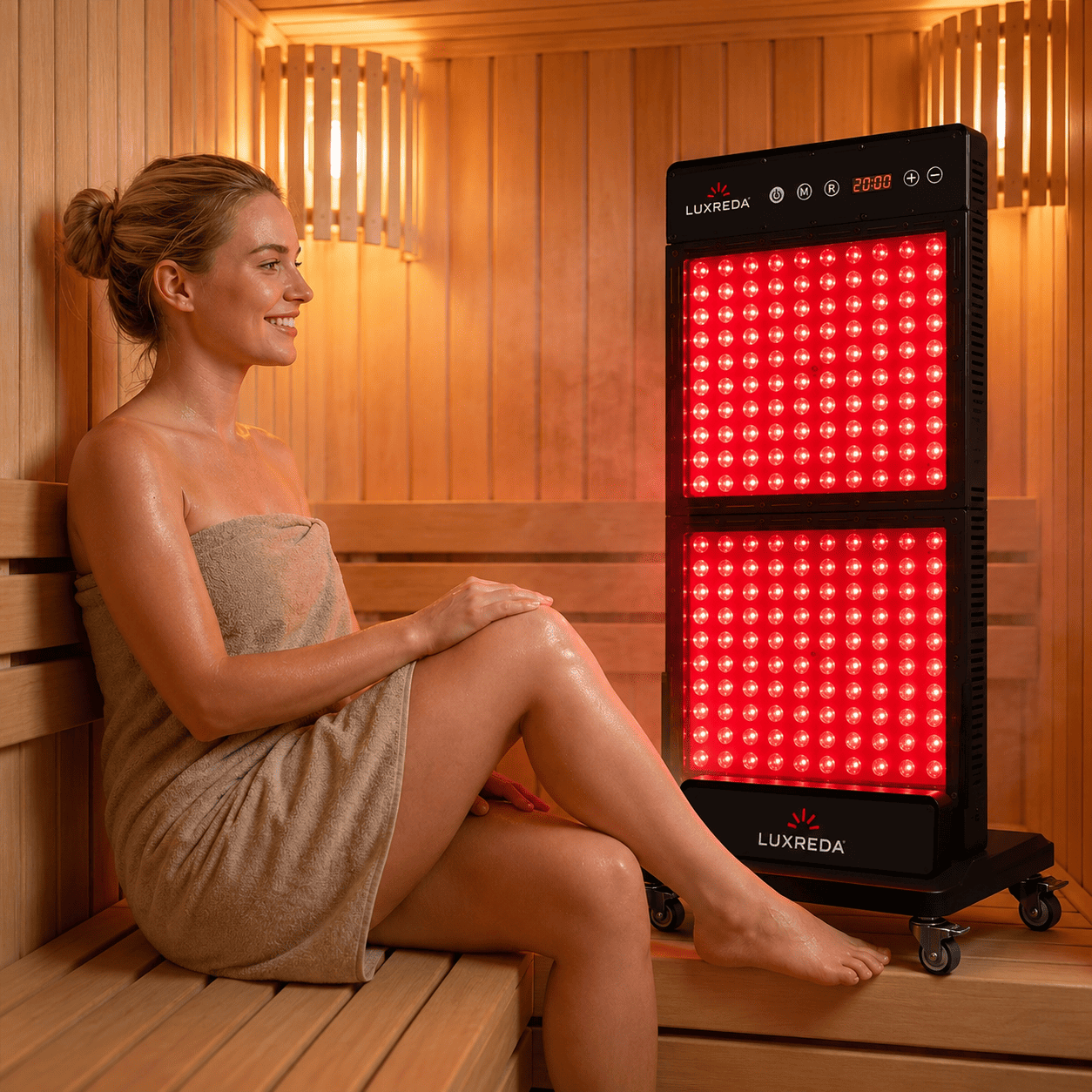
What Should You Look for in a Sauna Red Light Therapy Panel?
Here’s what actually separates a sauna-compatible panel from a standard one.
1. Sauna Temperature Rating
First, check the manufacturer’s stated maximum operating temperature. Dry saunas commonly run between 150°F and 195°F (roughly 65°C to 90°C), and infrared saunas typically run cooler, closer to 120°F to 150°F. Without a clear temperature rating for your sauna type, buying a panel becomes a guessing game rather than an informed purchase.
2. Humidity and IP Rating
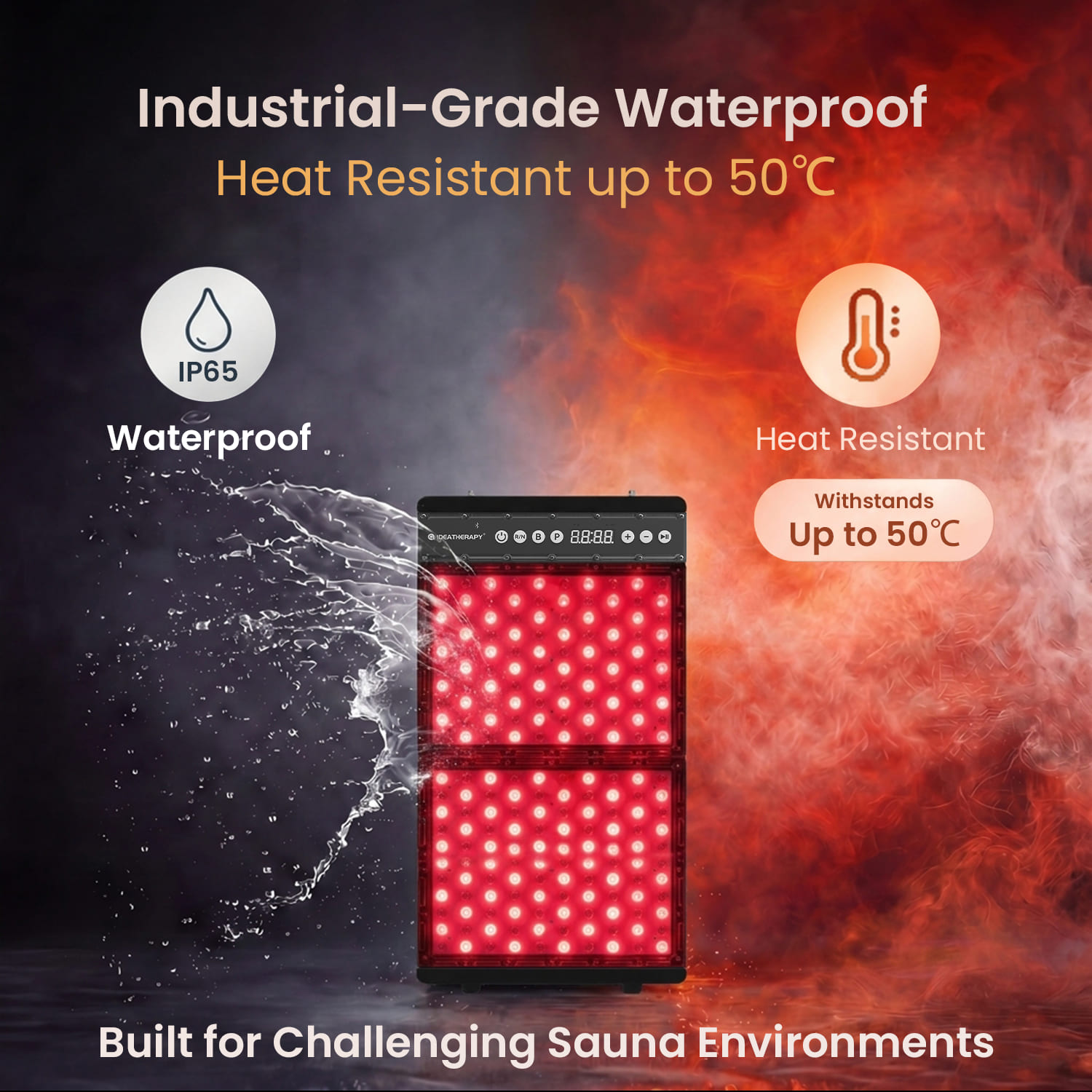
An IP rating (Ingress Protection rating) tells you how well a device resists dust and water. The first digit covers dust, and the second covers moisture. A higher second digit means better protection against steam, condensation, and splashing, which matters directly for a sauna red light therapy panel intended for steam rooms or humid dry saunas.
3. Wavelengths
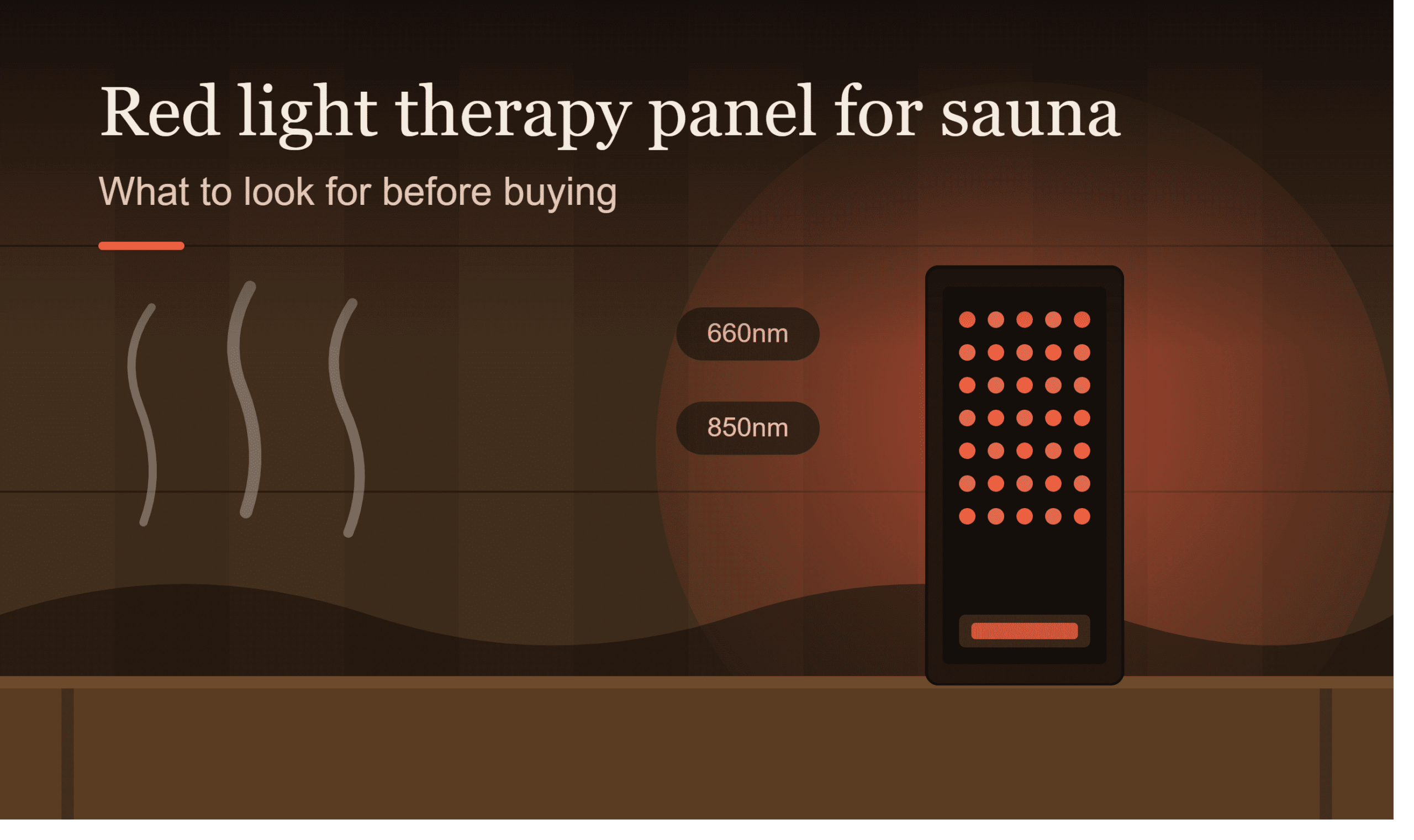
Manufacturers most commonly use red light in the roughly 630nm–670nm range and near-infrared light in the 810nm–1060nm range for home light therapy devices. In fact, peer-reviewed photobiomodulation research has generally examined light in the red to near-infrared range, roughly 630 to 1000 nanometers, using LED or laser sources. Because of that, it’s worth looking for a panel that discloses its exact wavelengths rather than vague marketing terms like “full spectrum.”
4. Number of LEDs and Coverage
A higher LED count doesn’t automatically mean better performance. For instance, two panels with the same LED count can cover very different areas depending on panel size, LED spacing, and driver quality. So pay attention to the panel’s physical dimensions and intended coverage area, not just the LED number on the spec sheet.
5. Irradiance
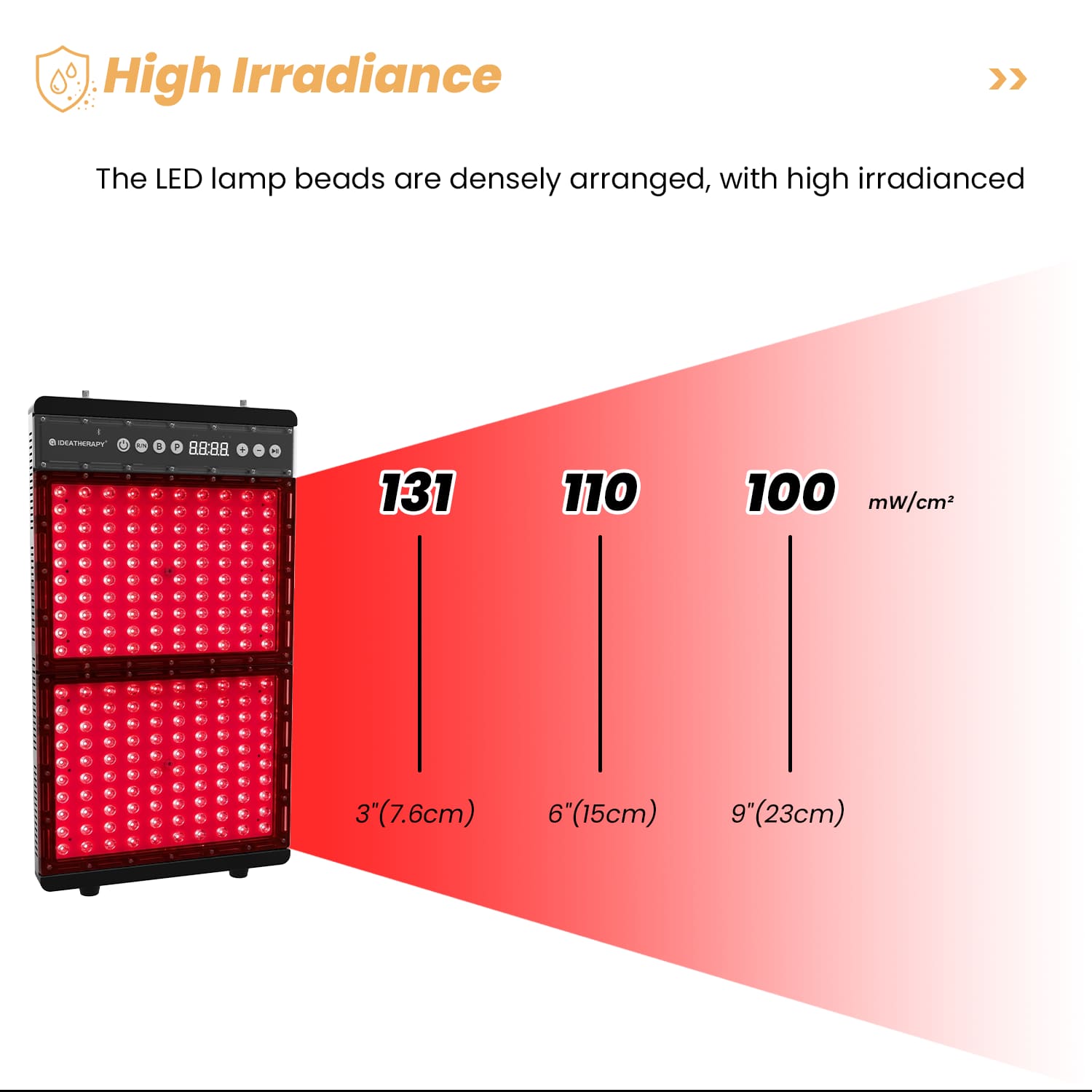
Irradiance measures how much light energy actually reaches your skin at a given distance, and sellers usually express it in mW/cm². It’s a far more useful comparison point than wattage, because wattage measures electrical draw rather than the light your body receives. In other words, two panels can draw the same power yet deliver very different irradiance at the same distance.
6. Adjustable Intensity
Dimming lets you scale the light output to your preference, session length, or how close you’re sitting to the panel. This kind of flexibility fits naturally into a personal wellness routine, since not every session calls for the same intensity.
7. Beam Angle
Beam angle affects how light spreads across a room or bench area. A narrower beam angle concentrates light more tightly, while a wider angle spreads coverage across a larger surface. Neither option is universally “better” — it depends on your sauna’s layout and how far you’ll sit from the panel.
8. Overheat Protection
This feature matters more here than in almost any other light therapy category. After all, a panel running inside a hot sauna already operates in elevated ambient heat. Built-in overheat protection helps the unit shut down or throttle output before that heat stresses internal components beyond their design limits.
9. Remote and App Controls
Reaching into a 150°F sauna to adjust settings isn’t practical or comfortable. That’s why wireless remote or app control matters: it lets you change intensity or wavelength from outside the sauna, which turns out to be a small but genuinely useful convenience once you’re actually using the panel.
10. Warranty and Electrical Compatibility
U.S. and Canadian households run on 120V standard outlets, so confirm the panel’s input voltage range covers that. Also check the warranty length and what it covers, since electrical components exposed to heat and humidity generally benefit from a warranty that reflects real manufacturer confidence in that specific use case.
Red Light Therapy Panel vs. Sauna Heat
These two technologies solve different problems, so you shouldn’t treat them as substitutes for each other. Sauna heat raises core and skin temperature through convection, conduction, or infrared heating elements. A red and near-infrared LED panel, on the other hand, emits specific light wavelengths without functioning as a primary heat source. Some people use both together as part of a wellness routine, but one still doesn’t replace the other’s function.
If you’re weighing a full-body option instead of a standing panel, it’s worth comparing a red light therapy mat against a standing panel to see which format suits your space better.
Red Light Therapy Panel for Dry Sauna vs. Infrared Sauna vs. Steam Room
| Environment | Typical Heat | Typical Humidity | Panel Requirements | Safety Considerations |
|---|---|---|---|---|
| Dry sauna | Up to ~195°F (90°C) | Low (often under 20%) | High temperature rating, dust/moisture resistance | Confirm manufacturer’s max-temperature spec before installing |
| Infrared sauna | ~120–150°F (49–65°C) | Low to moderate | Panel rated for sustained moderate heat | Check clearance from infrared emitters and heating elements |
| Steam room | Up to ~120°F (49°C) | High (often 80%+) | High IP rating for water/steam exposure | Electrical connections must follow manufacturer wet-location guidance |
How to Choose a Sauna Red Light Therapy Panel for Home Use
Before buying, ask the seller or check the spec sheet for:
- What is the maximum operating temperature, and does it match my sauna type?
- What is the IP rating, and is it appropriate for steam or high humidity?
- Which exact wavelengths does the panel emit?
- What irradiance does the panel deliver, and at what distance?
- Does the panel include overheat protection?
- Can I control it remotely without opening the sauna door?
- Is the input voltage compatible with U.S. or Canadian outlets?
- What does the warranty actually cover for a sauna-installed device?
Why the LuxReda SA200 Is Designed for Sauna Use
The LuxReda Sauna Red Light Therapy Panel SA200 offers one example of a panel LuxReda built specifically around these considerations, based on its published product specifications.
Published Specifications
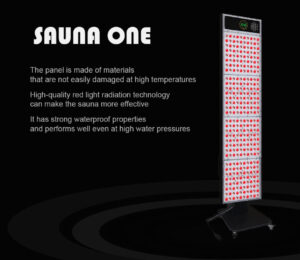
According to LuxReda’s product page, the SA200 includes 200 LEDs across 8 selectable wavelengths — 630nm, 650nm, 660nm, 670nm, 810nm, 830nm, 850nm, and 1060nm. It also carries an IP65 rating for water and dust resistance, along with 1–100% adjustable dimming and a 30° beam angle. In addition, the panel includes built-in overheat protection, plus app control and a 2.4G wireless remote, so you can change settings without opening the sauna door.
Environment Ratings, Voltage, and Warranty
LuxReda designed the panel for dry sauna environments up to 65°C with humidity at or below 20%, and for steam-room environments up to 50°C with humidity at or below 80%. It runs on a 100–240V input, which covers standard U.S. and Canadian household voltage, and it comes with a 3-year warranty.
If you’re comparing multiple sauna-compatible options rather than one specific panel, LuxReda’s broader infrared sauna panel buying guide covers additional considerations for infrared sauna setups specifically.
How to Set Up a Red Light Therapy Panel in a Home Sauna
- Confirm compatibility first. Match the panel’s temperature and humidity rating to your actual sauna type before purchase.
- Follow the manufacturer’s installation instructions. Mounting height, distance, and orientation affect both safety and light exposure.
- Respect the stated temperature and humidity limits. Don’t assume a panel rated for dry saunas will perform the same way in a steam room.
- Position the panel as directed. Manufacturer guidance usually accounts for beam angle and coverage area.
- Keep wiring compliant. Electrical connections in wet or humid locations carry real risk, because wet skin has much lower electrical resistance than dry skin, which allows more current to pass through the body. So always follow your product’s wiring instructions and applicable local electrical code.
- Start with the recommended session settings, then adjust intensity gradually as you get familiar with the panel.
Common Mistakes When Buying a Sauna Red Light Therapy Panel
- Buying a standard indoor panel and assuming it will hold up in sauna heat
- Choosing based on wattage alone instead of irradiance and coverage
- Overlooking the humidity rating for steam rooms
- Not confirming the exact wavelengths offered
- Skipping irradiance information entirely
- Assuming every infrared sauna model works the same way
- Ignoring the manufacturer’s safety and installation instructions
Frequently Asked Questions
Only if the panel carries a specific rating for the temperature and humidity of your sauna. A standard indoor panel isn’t designed for that environment.
Generally, a stated operating-temperature range, an appropriate IP rating for moisture and dust, and built-in overheat protection.
Yes, as long as the panel’s temperature rating and clearance requirements match your infrared sauna’s specifications.
Usually not, since most standard panels lack the environmental ratings sauna conditions require.
Red wavelengths typically fall between 630nm and 670nm, while near-infrared wavelengths typically range from 810nm to 1060nm.
Neither is inherently better. They’re simply different wavelengths within the red and near-infrared range, and manufacturers often include several options so users can choose based on preference.
It means the device is dust-tight and protected against low-pressure water jets, which matters directly in a humid or steamy environment.
Very. Irradiance tells you how much light actually reaches the skin, which is a far more meaningful figure than the panel’s wattage draw.
There’s no fixed number. Instead, evaluate LED count alongside panel size and coverage area rather than as a standalone metric.
No. They’re different technologies that serve different functions, so they aren’t interchangeable.
Start with your sauna’s temperature and humidity conditions, then compare wavelength disclosure, irradiance, IP rating, and safety features across products.
Only if it carries a moisture rating suited to steam-room humidity, which typically runs higher than dry sauna environments.
Final Thoughts
Ultimately, choosing a red light therapy panel for sauna use comes down to matching the product’s actual specifications to your sauna’s real conditions, not to marketing language. So check the temperature rating, the IP rating, the disclosed wavelengths, and the safety features before anything else.
Building a home wellness space should feel simple, not stressful. Take the time to compare specs carefully, ask the questions above before you buy, and let your sauna routine become one more small, steady part of taking care of yourself.
Thank you