Small, steady habits often do more for how you feel than big, complicated plans. For many people, a quiet block of time at home is the easiest habit to protect. Red and near-infrared light therapy now fits into that time, but the format choices can feel confusing.
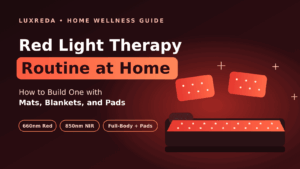
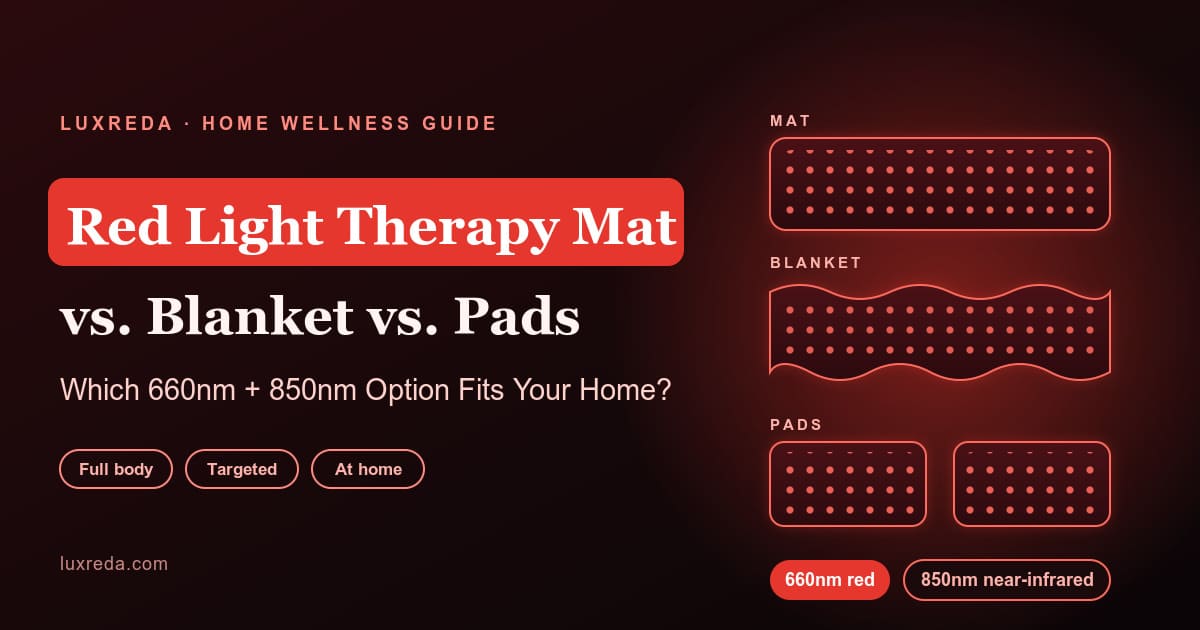
Here is the short answer. A red light therapy mat suits full-body sessions where you lie down and relax. A blanket-style wrap brings the light closer around your body. Pads give you flexible, targeted coverage for one area at a time.
This guide compares all three formats. It explains how 660nm red light and 850nm near-infrared light work together, and it helps you match a format to your space and routine.

What Is the Difference Between a Red Light Therapy Mat, Blanket, and Pads?
Brands use these names loosely, so think about shape, coverage, and how you plan to use the device.
Red Light Therapy Mat
A mat is a flat or foldable surface of LEDs. You lie on it or rest against it. It works well for longer, still sessions on a bed, couch, or yoga mat.
Larger mats can cover your back, torso, and legs together. The tradeoff is space. A full-length mat needs room to unfold and a place to store it.
Red Light Therapy Blanket
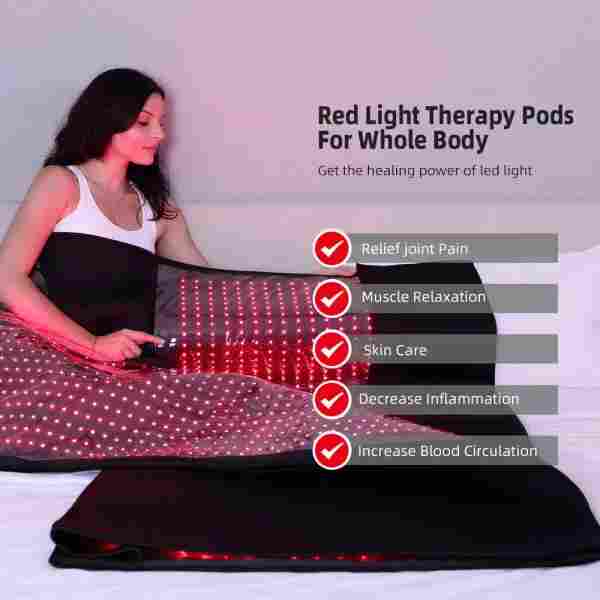
A blanket is a flexible wrap. You can drape it over your body or wrap it around you. Some people find that closeness more comfortable, especially around shoulders and hips.
Check the weight and the feel of the material. A bulky wrap can feel awkward during a long session.
Red Light Therapy Pads
Pads are smaller flexible panels. People place them on one area at a time, such as the lower back, shoulder, or knee. They store easily and travel well.
The tradeoff is coverage. A pad lights a smaller area, so a full-body routine means moving it around.
How 660nm Red Light and 850nm Near-Infrared Light Work Together
Most devices in this category pair two wavelengths. Here is how they differ:
- 660nm is visible red light. You can see it.
- 850nm is near-infrared light. Your eyes cannot see it.
Researchers study this type of light under the name photobiomodulation. A 2025 review from a National Institute on Aging workshop notes that scientists do not fully understand the mechanisms, and that methods vary widely. You can read the details in this NIH-hosted photobiomodulation review. nih
That honesty helps when you shop. Treat any home device as a wellness tool for your routine, not a replacement for medical care.
What a 2:1 Wavelength Ratio Tells You
Dual-wavelength devices blend the two colors in a set proportion. LuxReda lists a 2:1 wavelength ratio for its FlexiRed device.
A ratio shows how a device balances the two wavelengths. It does not show how much light reaches your skin. For that, look for output details such as irradiance. LuxReda’s guide to 660nm vs. 850nm red light therapy mats explains how to compare these specs.
Mat vs. Blanket vs. Pads: Side-by-Side Comparison
| Feature | Mat | Blanket | Pads |
|---|---|---|---|
| Typical coverage | Large area, often full body | Large area, wraps around you | Small, targeted area |
| Best for | Lying down, longer sessions | Wrap-around comfort | One area at a time |
| Setup | Needs flat space | Drapes or wraps | Easy to position |
| Portability | Moderate, needs storage room | Moderate, flexible | Highest |
| Check before buying | Size, surface, cord length | Weight, material feel | Strap or fit, coverage size |
Every device is different, so treat this table as a starting point. Always confirm details on the manufacturer’s product page.
Who Each Format Suits
- Choose a mat if you want a simple, lie-down routine and have floor or bed space.
- Choose a blanket if you prefer a wrap that follows your body’s shape.
- Choose pads if you focus on one area, travel often, or have limited storage.
Some people mix formats. For example, you might use a larger surface at home and a small pad on the road. LuxReda’s comparison of a red light therapy blanket vs. mat for full-body home use goes deeper on the first two formats.
How to Choose the Right Red Light Therapy Format for Your Home
A good choice starts with your routine, not a spec sheet.
Start With How You Will Actually Use It
Picture a normal week. Will you lie down in the evening? Do you want to treat one spot after a workout? Do you plan to bring the device on trips?
Your answers point toward a format. A routine you enjoy is one you keep, so pick something that feels comfortable in your home.
Check Space, Storage, and Power
Measure the spot where you plan to use the device. Think about where it will live between sessions. A closet shelf, under-bed space, or a bag all work for different sizes.
Also check the power setup. Look at the cord length, the controller, and whether the device suits your outlet.
Look at the Controls
Adjustable dimming lets you change intensity. A pulse mode adds another way to vary a session. Neither feature makes a device better by default. They simply give you more control over comfort.
Avoid Common Buying Mistakes
- Choosing by LED count alone. Count does not show how much light reaches you.
- Ignoring size. A mat that is too small or too large for your space will sit unused.
- Skipping the fine print. Confirm what the box includes and what the warranty covers.
- Expecting medical results. Wellness devices do not diagnose, treat, cure, or prevent disease.
For a longer checklist, see LuxReda’s full-body red light therapy device buying guide.
Where the LuxReda FlexiRed Therapy Mat, Blanket & Pads Fits
Some shoppers want one device instead of three. The LuxReda FlexiRed Therapy Mat, Blanket & Pads targets that need. LuxReda presents it as a 3-in-1 option for full-body and targeted wellness routines.
Here is what LuxReda lists for it:
- Dual-wavelength technology: 660nm red light and 850nm near-infrared light
- 2:1 wavelength ratio
- Flexible design that supports both full-body and targeted use
- Adjustable dimming for intensity control
- Pulse mode for session variety
- Portable design for convenient home use
What to Confirm on the Product Page
Before you buy any light therapy device, check the details yourself. On the FlexiRed page, look for:
- Dimensions and how the mat, blanket, and pad formats work together
- What the package includes
- Power and cord details
- Warranty and return information
This keeps your decision grounded in verified facts, not assumptions.
Safety and Practical Tips for At-Home Red Light Therapy
Good habits make any routine more comfortable. These tips apply to most home devices.
- Follow the manufacturer’s instructions. Use the session lengths and distances they recommend.
- Protect your eyes. Bright red light can feel intense. Follow the manual’s eye guidance.
- Stay comfortable. Stop if anything feels uncomfortable.
- Talk to a professional when needed. Ask a healthcare provider first if you are pregnant, take medications, or manage a health condition.
- Keep the device clean and stored properly. Check the care instructions in the manual.
Red and near-infrared light therapy is not the same as indoor tanning, which uses ultraviolet light. Do not treat them as interchangeable. Follow FDA guidance on indoor tanning if you use a tanning product.
Regulation matters here too. FDA describes general wellness products as products that support a healthy lifestyle, not products meant to diagnose, treat, cure, or prevent a specific disease. You can read the agency’s General Wellness policy for low-risk devices for context on how claims work. northeastern
New to this? LuxReda’s guide on how to use a red light therapy mat walks through setup and session basics.
Frequently Asked Questions
Neither is better for everyone. A mat suits lie-down sessions. A blanket wraps around you. Choose the one that fits your space and comfort.
Pads work well for focused, one-area sessions. They are smaller and easier to store. They cover less skin, so they suit targeted use more than full-body routines.
They are wavelengths of light, measured in nanometers. 660nm is visible red light. 850nm is near-infrared light that you cannot see. Many devices combine the two.
It can be, if you want both full-body and targeted options from one purchase. Check the product page for size, included parts, and how each format works.
Follow the manufacturer’s guidance for your specific device. Session length varies by product. If you have health questions, ask a healthcare provider.
No. Home light therapy devices are wellness products. They do not diagnose, treat, cure, or prevent any disease or condition.
Choosing Your Red Light Therapy Mat, Blanket, or Pads
The right format comes down to your space, your routine, and how much coverage you want. A mat fits full-body sessions. A blanket offers a wrap-around feel. Pads handle targeted areas and travel.
If you want one flexible option, review the LuxReda FlexiRed product page and confirm the specs that matter to you.
Take a few quiet minutes for yourself this week. Stay curious, keep your habits simple, and choose tools that feel good in your everyday life. Wellness works best when it fits the way you actually live.
Thank you