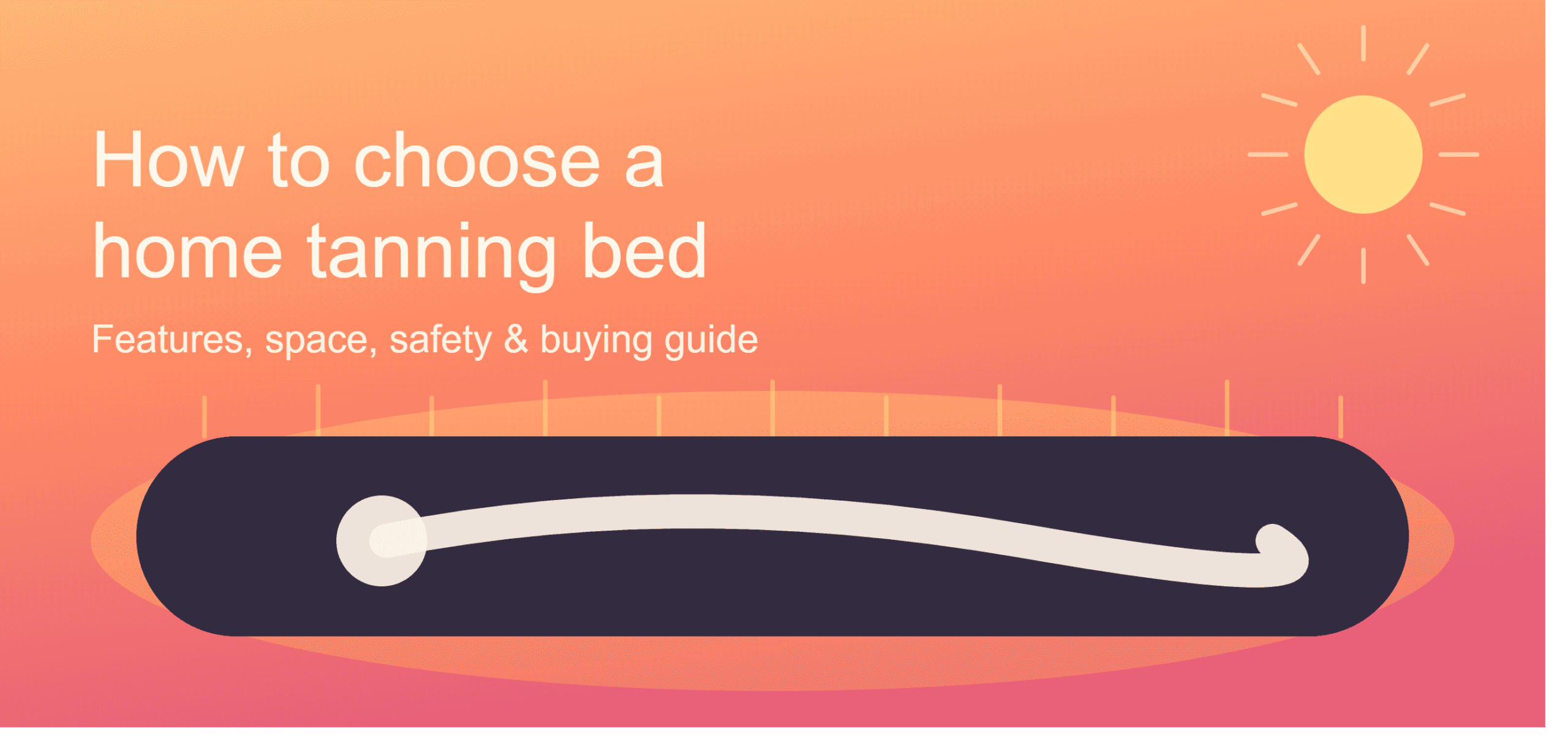
Getting ready for beach season or just wanting a little color before a big event shouldn’t mean rearranging your whole week around salon hours. A home tanning bed brings that convenience into your own space, so you can fit a session into your routine the way you’d fit in a workout or a bit of quiet time for yourself. This guide walks through what actually matters when you’re comparing options — room size, bed design, safety, setup, and cost — so you can make a decision that fits your home and your lifestyle.
Choosing indoor tanning equipment for home use is a bigger decision than picking a salon package. You’re thinking about square footage, electrical capacity, upkeep, and how the bed will fit into daily life. This article covers all of it, plus the safety context every buyer should understand before making a purchase.
What to Consider Before Buying a Home Tanning Bed
Before you compare specific products, it helps to answer a few practical questions. These factors shape everything else in your decision.
Room size and layout. A full-size tanning bed needs more than just floor space for the unit itself. You also need clearance to open the canopy, walk around the bed, and exit comfortably. If your space is tight, a stand-up or 360-degree design may fit better than a traditional lay-down unit. For a closer look at exact measurements to plan around, LuxReda’s guide on home tanning bed room size breaks down typical clearance needs room by room.
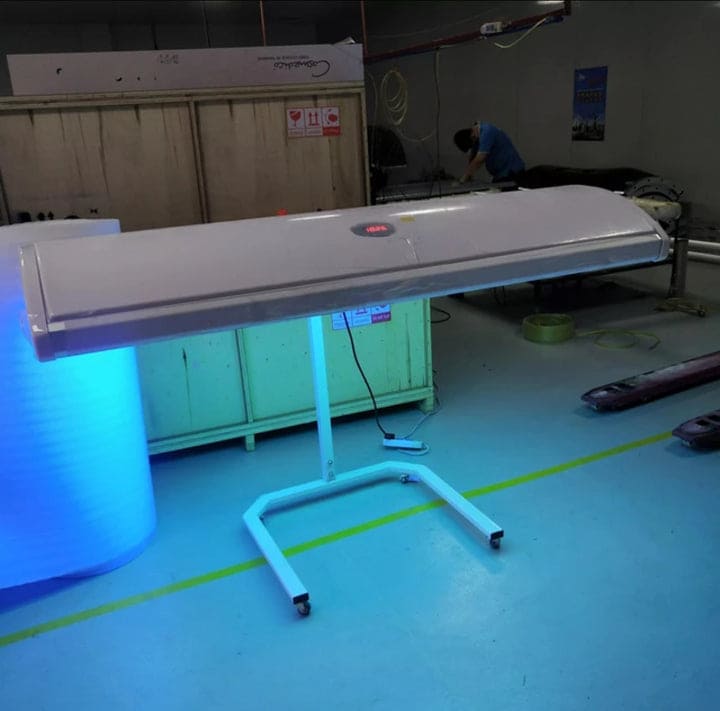
Bed design and body coverage. Traditional lay-down beds use lamps positioned above and below the body. Newer 360-degree tanning bed designs surround the body more evenly, which can reduce the need to reposition during a session. Stand-up units take a smaller footprint but work differently than a lay-down design.
Electrical requirements. Many residential tanning beds run on standard household outlets, but higher-wattage units may need a dedicated circuit. This is one detail worth confirming with the manufacturer before you buy, not after delivery day.
Setup and delivery logistics. Some beds arrive assembled; others need professional installation because of their weight and size. Ask about delivery access, doorway width, and whether the seller offers white-glove setup.
Maintenance and upkeep. Regular cleaning, lamp replacement schedules, and ventilation checks all factor into the real cost of ownership over time.
Budget, both upfront and ongoing. Home tanning bed cost varies widely depending on lamp count, design, and features. Factor in electricity use and eventual lamp replacement, not just the sticker price.
Home Tanning Bed Room Size and Space Requirements
Space is usually the first practical wall people hit. A standard lay-down tanning bed for home use typically needs a room with enough length to accommodate the bed itself plus room to open the canopy fully — often 8 to 10 feet in one direction, depending on the model.
If your home doesn’t have a dedicated room that size, you have a few paths forward:
- Foldable tanning bed models that collapse for storage between uses
- Stand-up tanning bed designs, which trade a lay-down position for a smaller footprint
- 360-degree tanning bed for small spaces, which some manufacturers design with a more compact frame while still aiming for full-body coverage
Ceiling height matters too, especially for stand-up units. Measure twice before you shop — a bed that looks compact in photos can still be too tall or too wide for a finished basement with low ceilings or narrow stairwells.
Think about ventilation as well. Tanning bed ventilation keeps the room comfortable during a session and helps manage heat generated by the lamps. A room with a window, fan, or existing HVAC vent will feel more comfortable than a sealed closet space.
Bed Types: Lay-Down, Stand-Up, and 360-Degree Designs
Not all home tanning systems work the same way, and the differences matter more than they might seem at first glance.
Lay-Down Beds
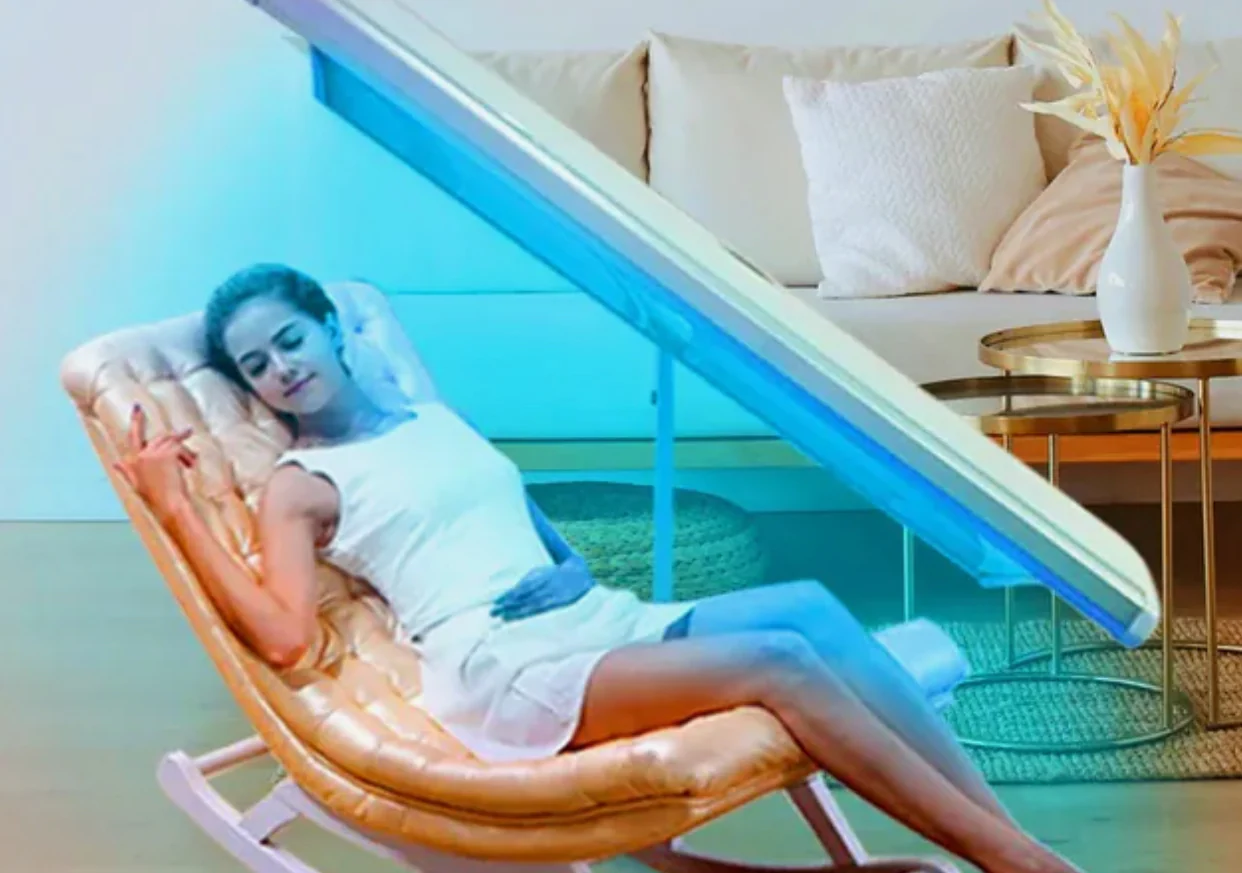
This is the classic tanning bed format — a horizontal bed with a canopy that lowers over the body. Lay-down beds tend to offer a relaxed, comfortable session, which fits naturally into a wind-down evening routine for people who like to combine tanning time with a bit of quiet relaxation.
Stand-Up Beds
Stand-up units position lamps around the body while the user stands. These take up less floor space than a lay-down bed but require enough ceiling height and a slightly different room shape.
360-Degree and Contact-Free Designs
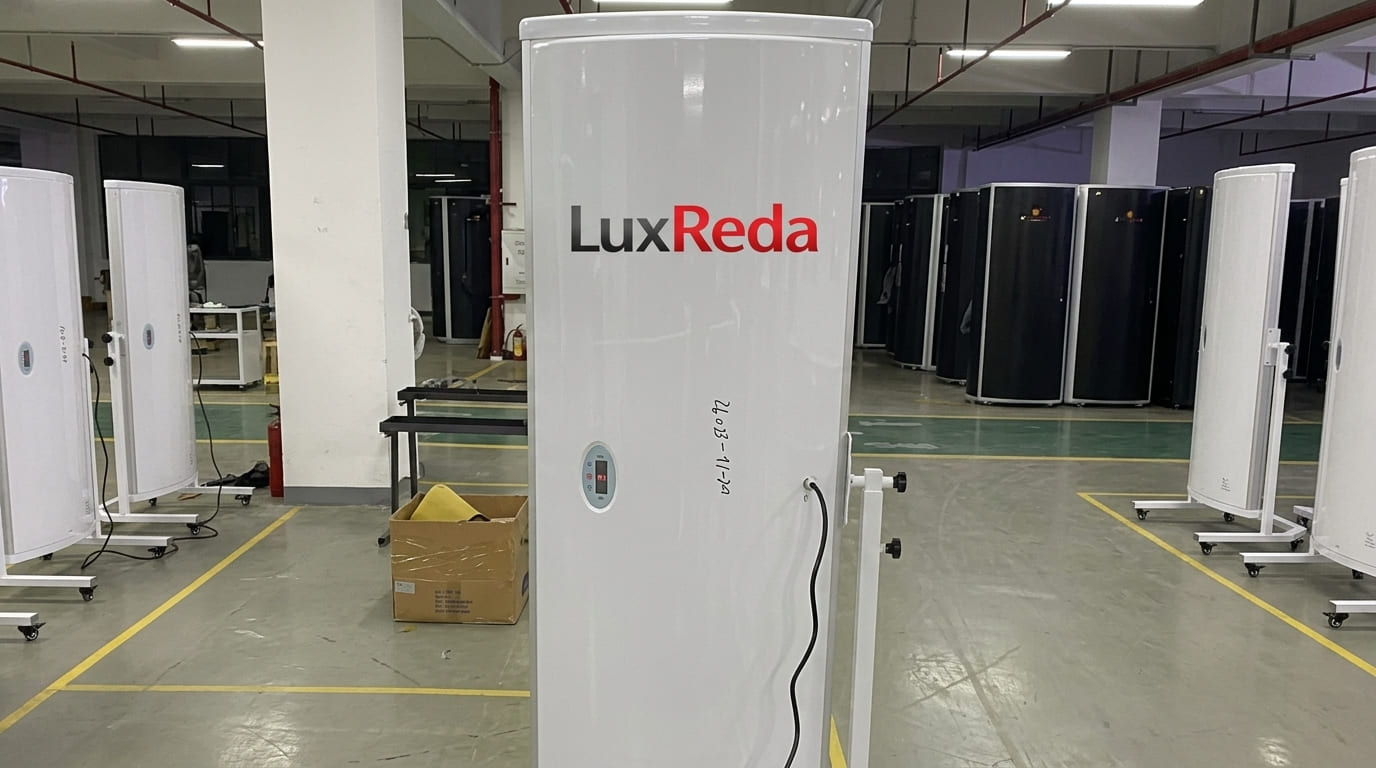
A 360-degree tanning bed aims to surround the body with lamp coverage from multiple angles rather than relying only on lamps above and below. Some designs also market themselves as “contact-free,” meaning the body doesn’t rest directly against a canopy surface during the session. LuxReda’s 360° Premium Home Contact-Free Tanning Bed is one example of this category, built for residential use rather than a commercial salon setting. For full specifications, dimensions, and current features, the product page is the accurate source to check before buying.
If you’re weighing a specific model against others on the market, LuxReda’s best tanning bed for home use comparison walks through how different home tanning systems stack up on coverage, footprint, and design.
Home Tanning Bed Features Worth Comparing
Once you’ve narrowed down bed type and space, compare features side by side. A simple table makes this easier than scrolling through spec sheets one at a time.
| Feature | Why It Matters |
|---|---|
| Lamp coverage/positioning | Affects how evenly the body tans without repositioning |
| Timer and auto shut-off | Helps limit session length to what’s set |
| Ventilation/cooling | Keeps the session more comfortable |
| Foldable or fixed frame | Determines storage flexibility in smaller homes |
| Control panel accessibility | Ease of adjusting settings mid-session |
| Weight and delivery requirements | Impacts whether you need help with setup |
Not every feature matters equally to every buyer. Someone converting a spare bedroom into a dedicated tanning space has different priorities than someone squeezing a unit into a shared basement gym area. Take stock of your actual routine — how often you’d realistically use it, and where it fits into your week — before deciding which features are worth paying more for.
Home Tanning Bed Setup and Electrical Requirements
Setup is where many first-time buyers get surprised. Here’s what to plan for.
Doorway and hallway width. Measure the path from your front door to the final room, not just the room itself. Tanning beds are bulky, and a tight stairwell turn can stop delivery before it starts.
Power supply. Check the voltage and amperage the unit requires. Some residential systems run on a standard household circuit, while others draw enough power to need a dedicated circuit. An electrician can confirm what your home currently supports.
Flooring. A hard, level, and stable surface is generally recommended for tanning equipment. Carpeted rooms may need a solid base pad underneath.
Professional installation. Larger, heavier units often benefit from professional assembly, both for safety and to avoid voiding a warranty through improper setup.
Taking the time to plan this out ahead of delivery day makes the whole experience smoother — and it’s a good moment to think about how the space itself will feel. A tidy, well-ventilated room with good lighting and a comfortable temperature makes the whole tanning routine feel more like a moment of self-care than a chore.
Home Tanning Bed Safety: What the FDA and Health Canada Say
This is the section every buyer should read carefully, regardless of which model they’re considering.
Indoor tanning devices use UVA and UVB radiation to produce a tan. The U.S. Food and Drug Administration classifies sunlamp products, including tanning beds, as medical devices and has stated that UV exposure from these devices carries real risks — including skin cancer, burns, premature skin aging, and eye damage. You can read the FDA’s current guidance on sunlamp products and tanning equipment directly on their site.
Health Canada takes a similarly direct stance: there is no safe way to tan, whether from the sun or from tanning equipment, and the agency advises against using tanning equipment altogether, while offering precautions for people who choose to use it anyway.
Because of this, LuxReda does not describe UV tanning as “safe” or “risk-free,” and neither should any responsible buying guide. What a home tanning bed does offer is convenience and privacy compared with salon visits — not a health claim.
A few practical safety habits apply regardless of which unit you choose:
- Always use UV protective eyewear designed for tanning use — never sunglasses or goggles rated for other purposes
- Follow the manufacturer’s recommended session length and don’t exceed it
- Keep skin moisturized, since UV exposure can dry skin over time
- Check your skin periodically for any changes, and talk to a dermatologist about your personal risk factors
- Never allow minors to use the device, consistent with FDA and most state guidance
If you’re weighing UV tanning against non-UV alternatives for your wellness routine, LuxReda’s comparison of red light therapy vs. tanning beds explains how the two technologies differ, since they work on entirely different principles and serve different purposes.
Home Tanning Bed Cost and Long-Term Value
Home tanning bed cost depends heavily on design complexity, lamp count, and coverage technology. Beyond the upfront price, factor in:
- Electricity usage per session, which varies by wattage
- Lamp replacement, since UV lamps lose intensity and need periodic swapping
- Maintenance supplies, like cleaning products designed for acrylic or canopy surfaces
- Space conversion costs, if you need to prep a room with flooring, ventilation, or electrical work
Compared with an ongoing salon membership, a home unit shifts costs from a recurring monthly fee to a larger upfront investment plus lower ongoing costs. Whether that trade-off makes sense depends on how often you’d actually use it and how much you value the privacy and flexibility of tanning at home.

Frequently Asked Questions
Most lay-down beds need a room roughly 8 to 10 feet in one direction to allow the canopy to open fully, plus walking clearance. Stand-up and some 360-degree designs may need less floor space but more ceiling height.
Some run on standard household circuits, while others require a dedicated circuit due to higher wattage. Always confirm the specific electrical requirements with the manufacturer before purchase.
It depends on your priorities. A 360-degree design aims for more even coverage without repositioning, while a traditional lay-down bed offers a familiar, relaxed session format. Neither design changes the underlying UV exposure risks.
Lamp lifespan varies by model and usage frequency. Check your specific unit’s manual, since UV output can decline before a lamp visibly burns out.
Follow the manufacturer’s instructions and recommended session times closely, since no one is present to flag overexposure the way a salon attendant might. Review the FDA and Health Canada guidance linked above before your first session.
Final Thoughts
Choosing a home tanning bed comes down to matching the right design to your space, your electrical setup, and your routine — while going in with clear eyes about what UV tanning does and doesn’t offer from a safety standpoint. Take your time with the room measurements, ask the manufacturer the electrical questions upfront, and read the safety guidance before your first session, not after.
Whatever you choose, building a little self-care into your week is worth doing thoughtfully. Take care of your skin, ask questions before you buy, and make sure any wellness routine you build actually fits comfortably into your life. If you’re ready to compare specific models, LuxReda’s 360° Premium Home Contact-Free Tanning Bed product page has the full current specifications to review.
Thank you