As you know, health is wealth. Taking care of your health today is one of the best investments you can make for a happier and better life.
If you’re shopping for a home tanning bed and trying to figure out whether it will actually fit in your house, here’s the short answer: most residential tanning beds need roughly a 7 to 8-foot by 4 to 5-foot footprint for the unit itself, plus extra clearance on at least one side for the canopy to lift and for you to get on and off comfortably. The exact home tanning bed room size you’ll need depends on the model’s folded and open dimensions, the ceiling height in the room, and how you plan to store the unit between sessions.
That’s the quick version. The rest of this guide walks through how to measure your space properly, what tends to trip people up during installation, and how a compact, foldable design like the LuxReda 360° Home Tanning Bed compares to a bulkier traditional lay-down unit.
Why Room Size Matters More Than People Expect
A tanning bed isn’t like a treadmill you can push into a corner when you’re done. Most units have a canopy or clamshell top that needs to swing open, a base that’s longer than a typical bed frame, and — depending on the design — a swivel mechanism that requires clearance on more than one side.
Buyers who skip this step often run into one of two problems:
- The bed technically fits in the room, but the canopy can’t open fully without hitting a wall, sloped ceiling, or light fixture.
- There’s enough floor space when the unit is set up, but no reasonable way to store it without permanently giving up the room.
Measuring first avoids both headaches, and it’s a five-minute job.
How to Measure Your Room for a Tanning Bed
Before you buy a tanning bed for home use, take these measurements in the room you’re considering:
- Floor footprint. Measure the length and width of the space where the bed will sit, including at least 18–24 inches of clearance on the access side so you can get in and out without squeezing past furniture.
- Ceiling height. Stand-up or 360-degree models that pivot between horizontal and vertical positions need enough vertical clearance for the frame to rotate without the canopy grazing the ceiling.
- Doorway and hallway width. This is the step people forget. A tanning bed may arrive mostly assembled, and if the packaged crate or the assembled frame is wider than your doorway, you’ll be dealing with a return or a disassembly job before it ever reaches the room.
- Outlet location. Note where the nearest wall outlet is and whether it’s on a shared circuit with other large appliances. More on this below.
- Storage plan. If the room doubles as a bedroom, home gym, or guest room, measure the space you’d need to fold and tuck the unit away — under a bed frame, in a closet, or against a wall.
Tanning Bed Dimensions: What to Compare
Manufacturers list dimensions differently — some give you the folded footprint, others the fully open size, and some only give overall height and width. When comparing tanning bed dimensions across brands, ask for (or look up) all three:
| Measurement | Why it matters |
|---|---|
| Folded/storage size | Determines whether it fits in a closet, under furniture, or against a wall |
| Open/operating size | Determines the room footprint you actually need during a session |
| Overall height | Matters most for vertical or 360-degree units that pivot upright |
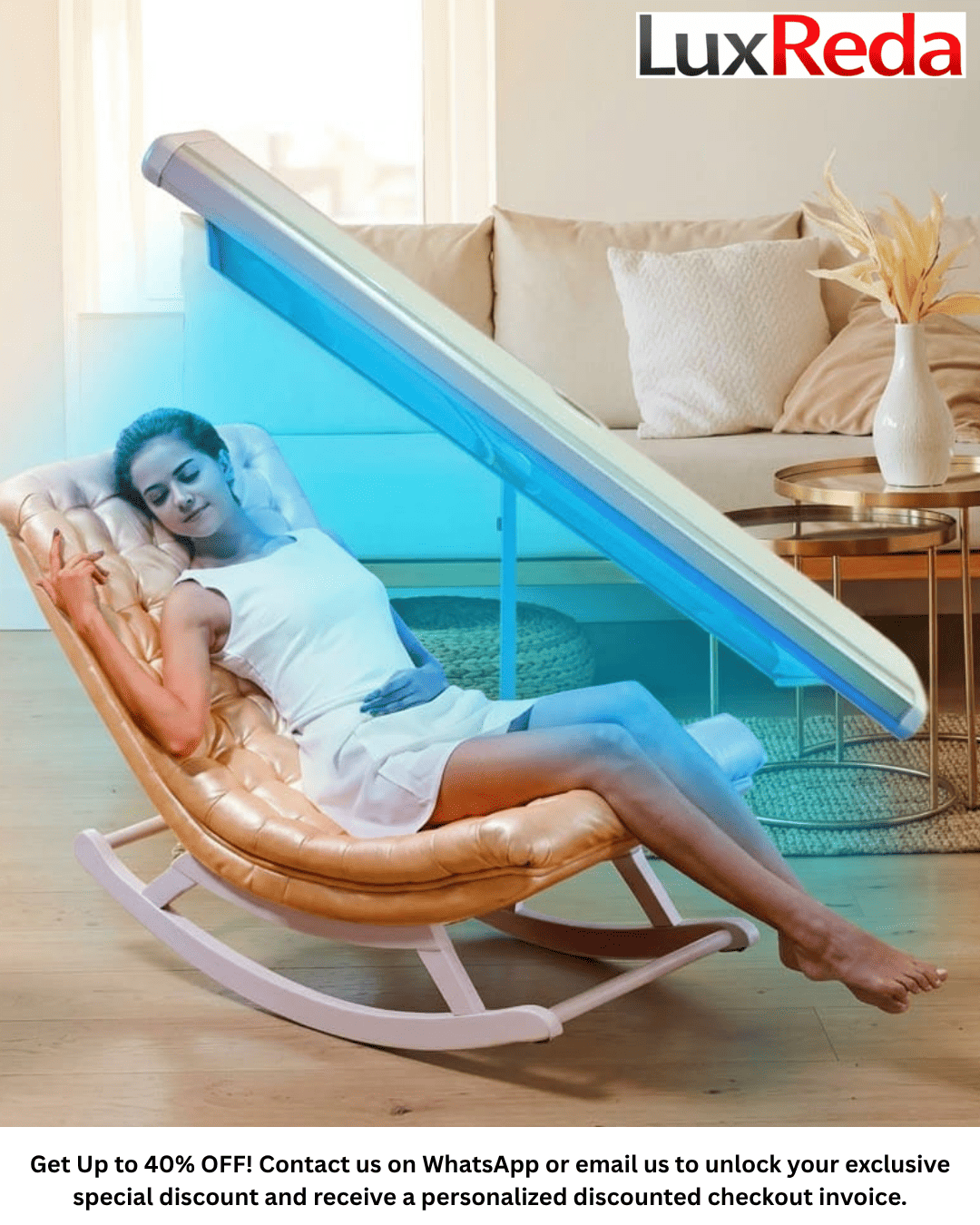
As a specific example, the LuxReda 360° Home Tanning Bed is listed at 73 inches in height and 34 inches in width, with a foldable canopy and portable frame designed so it can be stored beneath furniture or in a compact storage area when not in use. That’s a useful reference point if you’re mentally comparing units: a premium home tanning bed with a folding design generally asks for less dedicated square footage than a fixed, non-folding lay-down unit of similar tanning capacity.
Lay-Down vs. 360-Degree Home Tanning Beds: Space Considerations
Not all residential tanning beds have the same footprint requirements, and the layout style affects both the room size and how the space gets used day to day.
Traditional lay-down beds are typically the longest single dimension you’ll deal with — often 80 inches or more — because the canopy and base need to accommodate someone lying at full length. They tend to be fixed in place once assembled, which means the room they occupy is essentially off-limits for other furniture.
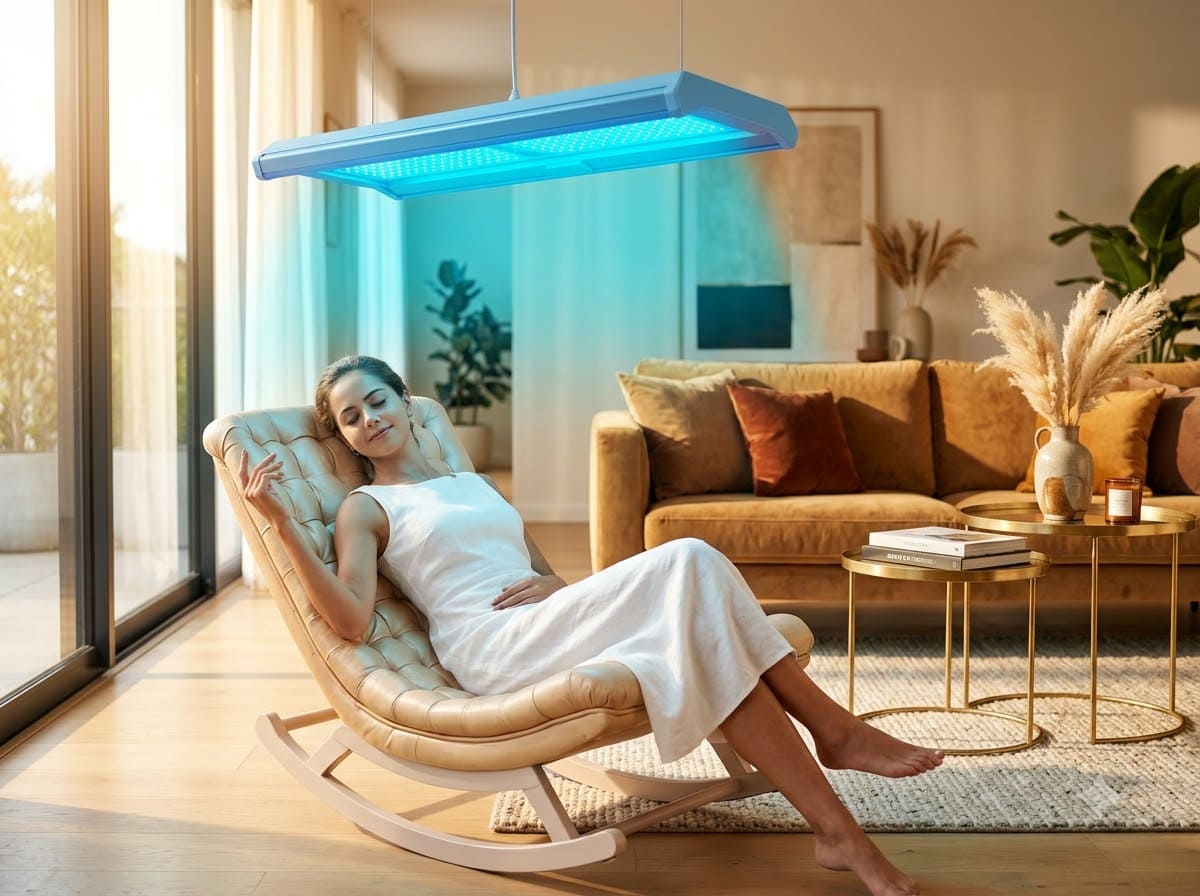
360-degree or swivel-frame units, like LuxReda’s design, are built to shift between horizontal (lay-down) and vertical (stand-up) positions. In the vertical position, the floor footprint shrinks significantly since the frame occupies height rather than length. This can make a 360-degree home tanning system a better fit for a smaller bonus room, finished basement corner, or a room that needs to serve double duty, since the unit can be folded and moved out of the way rather than permanently anchoring the space.
If your room is on the tighter side, ask specifically whether a model folds flat and how much clearance the folding mechanism needs — a gas-shock-assisted canopy, for instance, needs a bit of overhead space to lift smoothly, even in a compact footprint.
Home Tanning Bed Installation: Electrical and Setup Requirements
Space isn’t the only planning factor — home tanning bed electrical requirements deserve equal attention before delivery day.
Most residential units, including the LuxReda 360°, are built to run on standard 110V or 220V household outlets, but the total wattage still matters. A bed with twelve 100-watt lamps, for example, draws a combined 1,200 watts, which is enough that many electricians recommend a dedicated circuit rather than sharing an outlet with other high-draw devices. A dedicated circuit means the appliance has its own breaker and wiring, so it isn’t competing with a space heater, hair dryer, or other equipment on the same line — the same logic used for large kitchen or laundry appliances. If you’re unsure whether your room’s wiring can handle it, a licensed electrician can check the panel and outlet in a single visit.
A few other home tanning bed installation basics worth confirming ahead of time:
- Pre-assembly level. Some units, including LuxReda’s, arrive around 95% pre-assembled, which cuts down on setup time but doesn’t eliminate the need to check doorway clearance for the crate.
- Delivery timeline. Custom or specialty tanning equipment often ships on a longer timeline than standard furniture — confirm the expected delivery window before you commit a room to the purpose.
- Ventilation. A closed room with a running tanning bed can warm up quickly. A window, vent, or the unit’s built-in cooling fans (where equipped) helps keep the session comfortable.
Home vs. Salon: Is the Space Trade-Off Worth It?
Giving up part of a room is the real cost of owning a home tanning bed, so it’s worth weighing against the alternative.
| Factor | Home Tanning Bed | Salon/Commercial Tanning |
|---|---|---|
| Space commitment | Dedicated room or storage area required | None — space is the salon’s problem |
| Scheduling | Tan on your own timeline | Limited to salon hours and appointment slots |
| Privacy | Fully private | Shared facility |
| Ongoing cost | Electricity, lamp replacement, maintenance | Per-session or membership fees |
| Upfront cost | Higher initial investment | Little to none |
For someone who tans occasionally, a salon’s flexibility might outweigh the convenience. But for regular users who value not driving to an appointment, a residential tanning bed that folds away when it’s not in use — rather than a large fixed unit — tends to be the more livable long-term choice, especially in homes without a spare room to dedicate entirely to the purpose.
Tanning Bed Maintenance and Long-Term Space Use
Once it’s installed, a home tanning bed does need a bit of ongoing care, and that has a small space footprint of its own:
- Acrylic and lamp cleaning. Wipe-downs after use help keep the surface hygienic and the lamps performing consistently — set aside a shelf or small cabinet nearby for cleaning supplies rather than storing them elsewhere in the house.
- Lamp replacement. Tanning lamps have a finite lifespan and will eventually need swapping; keep the manufacturer’s replacement lamp specifications on hand so you order the correct type.
- Timer and controls. Built-in session timers (commonly around 20 minutes on residential units) help prevent overexposure by shutting the unit off automatically — a feature worth testing periodically to confirm it’s working correctly.
None of this requires much square footage, but it’s worth factoring into your storage plan so the room doesn’t end up cluttered with supplies in addition to the bed itself.
A Note on UV Safety
Indoor UV tanning is not risk-free, regardless of whether it happens at a salon or at home. According to the FDA, exposure to UV radiation from sunlamp products can contribute to skin damage, premature aging, and eye injury, and the agency requires warning labels stating that these products should not be used by anyone under 18. Always wear protective UV eyewear during sessions — it’s not included with most units, LuxReda’s included — follow the manufacturer’s recommended session length and frequency, and review the FDA’s guidance on sunlamp products before starting a home tanning routine. If you have questions about UV exposure and your individual health history, talk to a physician or dermatologist first.
Frequently Asked Questions
How much floor space does a home tanning bed actually need? Most residential units need roughly a 7–8 foot by 4–5 foot footprint when open, plus 18–24 inches of clearance on the access side. Folding, 360-degree designs can need less permanent floor space since they can be stored upright or tucked away between sessions.
Can a tanning bed fit in a small bedroom or basement corner? Often, yes — particularly with a foldable or swivel-frame design that doesn’t require a dedicated, fixed footprint. Measure ceiling height carefully if the unit pivots into a vertical position, since that’s where clearance issues most often show up.
Do home tanning beds need special electrical wiring? Many run on standard 110V–220V household outlets, but higher-wattage units are often better suited to a dedicated circuit rather than sharing a line with other appliances. A licensed electrician can confirm what your specific room and panel can support.
How long does delivery and setup take for a residential tanning bed? This varies by manufacturer and model. Some units, like the LuxReda 360°, arrive largely pre-assembled to simplify setup, but overall delivery timelines for specialty tanning equipment can run longer than standard furniture — confirm the estimated window with the seller before you finalize room plans.
Is a foldable home tanning bed less effective than a fixed lay-down model? Folding and fixed designs are different form factors rather than a strict trade-off in effectiveness. Choosing between them usually comes down to lamp configuration and coverage, and how the space needs to be used day to day, rather than the folding mechanism itself.
Getting the Space Right Before You Buy
Planning your home tanning bed room size before you order saves you from the worst-case scenario: a unit that arrives, doesn’t clear the doorway, or can’t fully open in the room you picked. Measure your floor footprint, ceiling height, and doorway width, confirm your outlet situation, and decide upfront whether the unit needs to fold away or can stay permanently set up.
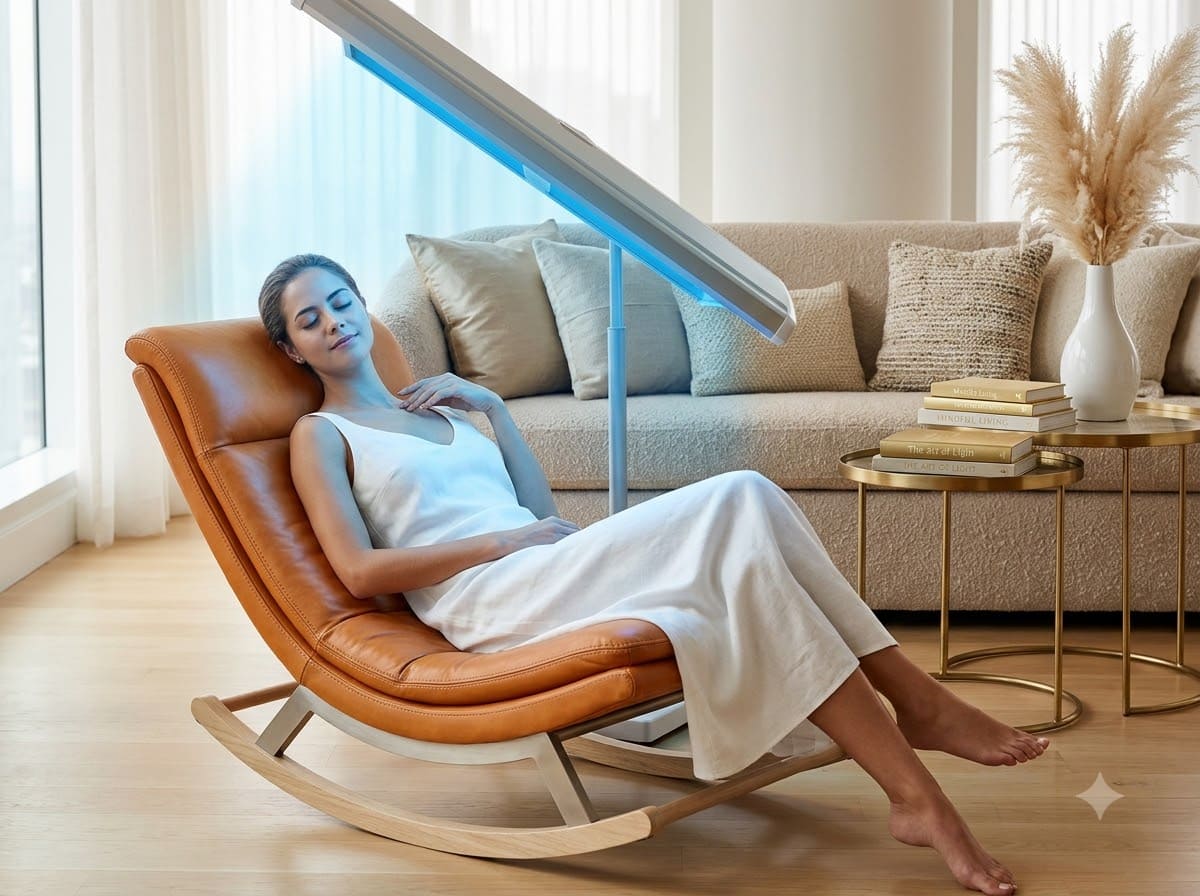
If you’re comparing options, take a look at the LuxReda 360° Home Tanning Bed — its foldable, swivel-frame design and listed 73” x 34” dimensions make it a reasonable starting point for measuring against your own room before you commit to a purchase.
I hope this information helps you find the right product for your needs. One of life’s most important goals is maintaining a healthy body and a healthy lifestyle. Take the time to eat well, live well, and think positively. You can also consider using this product as part of your wellness routine to support your overall well-being and enhance your wellness experience.
Thank you very much.