Settling into a quiet, warm-lit space for a few minutes can be one of the easiest ways to build a little self-care into a busy week. If you’ve just brought home a full-body red light therapy pod — or you’re deciding how to use one you already own — the details matter more than most people expect. Distance, timing, and frequency all affect how consistent your sessions feel.
This guide walks through exactly how to use a full-body red light therapy pod: how to prepare, where to position yourself, how long to stay in, and how often to use it. Along the way, we’ll explain what the 660nm and 850nm wavelengths actually do, and where a dual-wavelength option like the LuxReda RedLux™ Full Body Therapy Pod fits into a home setup.
How to Prepare for a Full-Body Red Light Therapy Session
Good habits before you even step into the pod make a real difference in how your session goes.
Clean, dry, bare skin works best. Lotions, sunscreen, and heavy makeup can sit on top of the skin and interfere with how light reaches it. Most full-body pods work by direct light exposure, so clothing over the treatment area will block it. Removing jewelry and glasses is also a good habit, since metal and lenses can reflect or scatter light unpredictably.
Eye protection deserves attention. The American Academy of Dermatology notes that at-home LED devices are generally considered low-risk for the skin, but it’s still smart to avoid staring directly into bright LEDs for extended periods.Most at-home devices contain light emitting diodes, which are considered safe for home use. If your pod includes eye protection or a recommendation to keep eyes closed, follow that guidance every time. aad
Pick a consistent time of day. Some people prefer a session before a workout to feel warmed up. Others use it in the evening to wind down. Either approach works — consistency matters more than the exact hour.
A short checklist before every session:
- Cleanse the skin and remove lotions or sunscreen
- Take off jewelry, watches, and glasses
- Have a towel or light robe ready for after your session
- Set a timer rather than guessing at session length
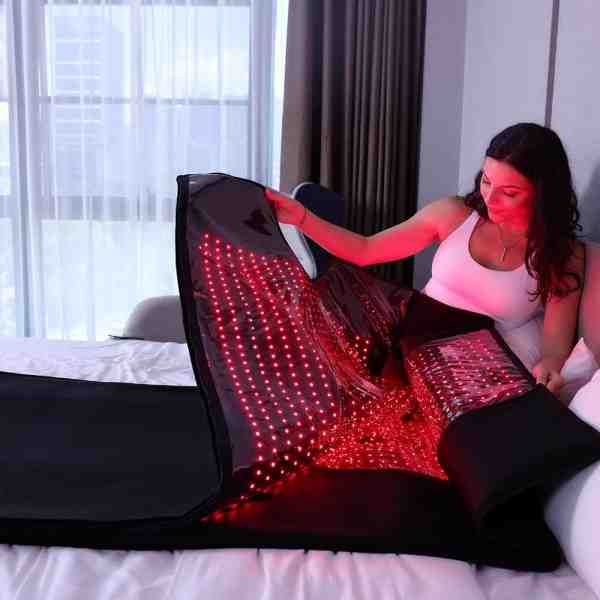
How to Position Yourself in a Red Light Therapy Pod: Distance and Coverage
Full-body pods are designed differently from panels or handheld devices, which is part of why the positioning question comes up so often.
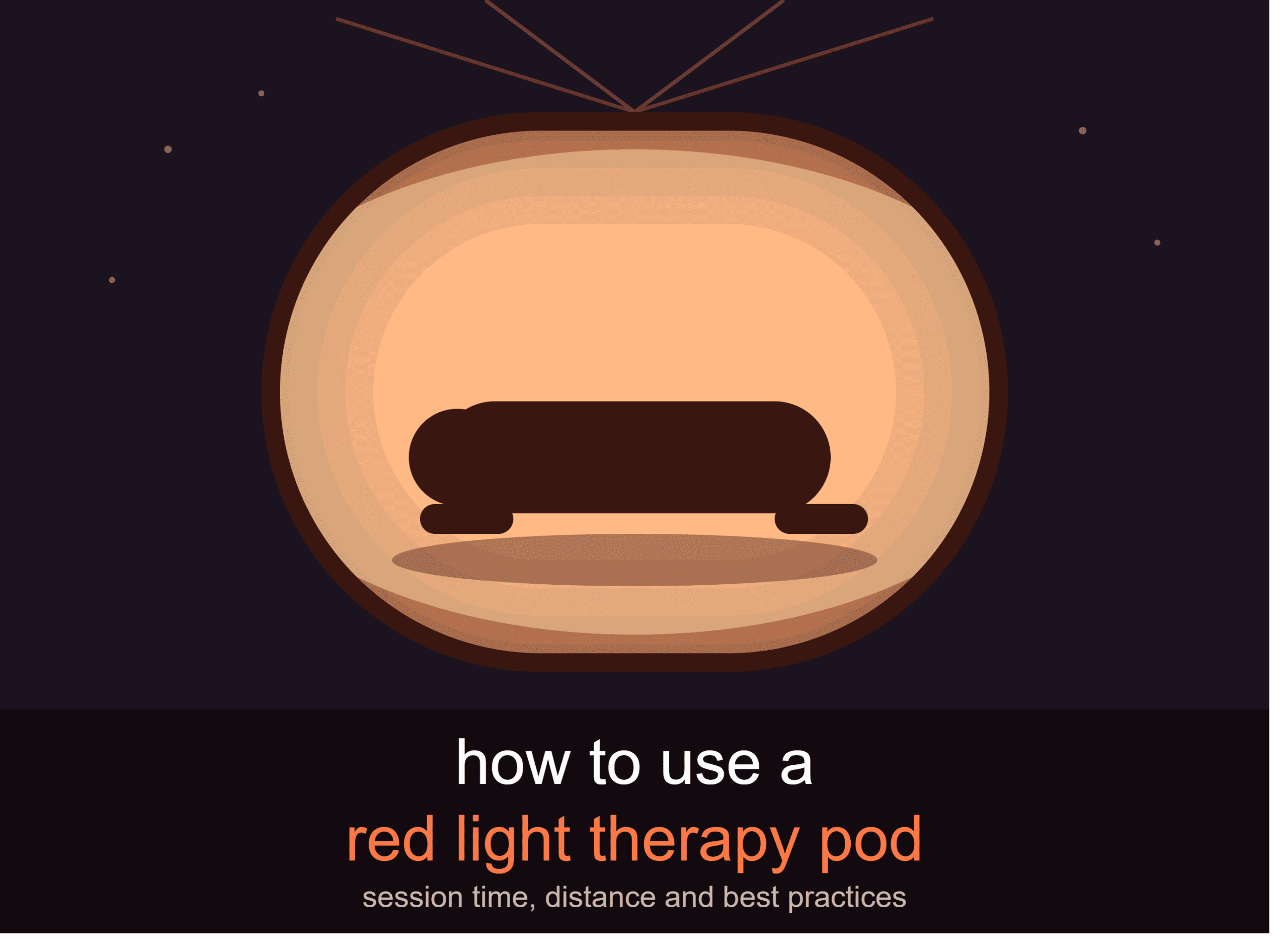
Most pods place LEDs close to the body by design. Unlike a wall-mounted panel where you stand a foot or two away, a full-body pod typically surrounds you, so the light source sits only a few inches from your skin on most sides. This is intentional — closer distance generally means higher irradiance, which is the amount of light energy hitting a given area of skin per second.
Coverage depends on how you lie or sit inside the pod. Try to keep the treatment area as flat and centered as possible so no single spot is angled too far from the light panels. If you’re targeting a specific area, such as your lower back or shoulders, position that area toward the densest part of the LED array.
Rotating positions between sessions can help. Because a pod’s coverage isn’t perfectly even on every side of the body, alternating between lying on your back and your front across different sessions — or turning halfway through, if your pod allows it — can even out exposure over time.
If you’re comparing a full-body pod to other formats before buying, LuxReda’s full-body red light therapy pod buyer’s guide breaks down how pod-style coverage differs from mats and panels.
How Long to Use a Red Light Therapy Pod: Session Time Guidelines
This is usually the first question people ask, and the honest answer is that it depends on the device.
Session time is tied to irradiance, not a universal number. A 2018 review of photobiomodulation research funded in part by the National Institutes of Health explained that a wide range of parameters — wavelength, energy, fluence, power, irradiance, pulse mode, treatment duration, and repetition — all interact, and this complexity has sometimes produced contradictory results across studies. In plain terms: a stronger device needs less time to deliver the same light dose than a weaker one. spiedigitallibrary
Manufacturer instructions should always come first. Because irradiance varies from product to product, the session length printed in your pod’s user manual is the most reliable guide you have. Using a generic “20 minutes for everything” rule can either under-treat with a low-output device or over-treat with a high-output one.
Starting shorter and building up is a reasonable default. Many people new to full-body light therapy start with a brief session to see how their skin responds, then gradually work toward whatever duration their device’s instructions recommend. There’s no need to rush toward the maximum time in your first week.
For anyone using the LuxReda RedLux™ Full Body Therapy Pod specifically, the product page is the accurate source for its recommended session settings — always check it directly rather than assuming the same numbers apply across every LuxReda device.
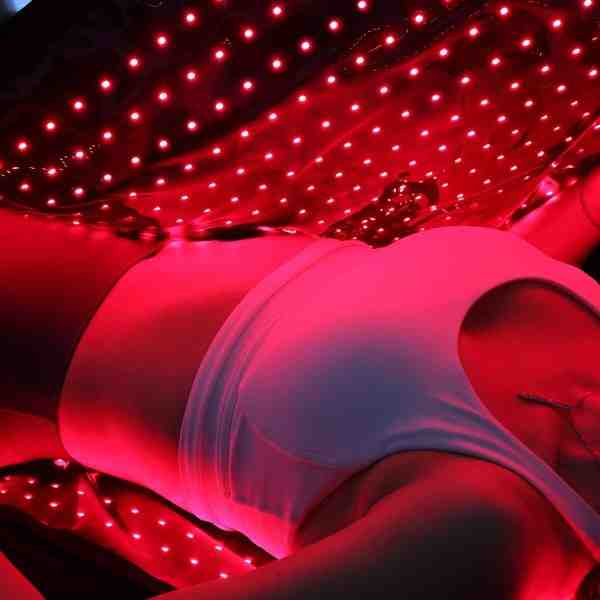
How Often to Use a Full-Body Red Light Therapy Pod
Frequency is the second most common question, right behind duration.
Daily or near-daily use is common in typical at-home routines. Many red light therapy users build sessions into a broader wellness routine, similar to a daily stretch or a short walk. It becomes less about a single big session and more about a habit that fits comfortably into your week.
Rest days aren’t a bad idea either. Some people prefer four to five sessions a week rather than seven, giving the skin a short break between exposures. There’s no single frequency that suits everyone, and personal comfort should guide the decision.
Track how you feel over the first few weeks. Keeping a simple note of session length, frequency, and how you feel afterward can help you notice patterns and settle into a rhythm that actually works for your schedule.
Taking a few minutes for yourself between errands, work, or workouts can turn into a genuinely relaxing part of the day once it becomes routine.
660nm and 850nm Explained: Why Wavelength and Light Dose Matter
Full-body pods that combine 660nm and 850nm light are common because these two wavelengths reach different depths.
660nm sits in the visible red spectrum. It’s generally associated with more surface-level absorption, closer to the skin itself.
850nm is near-infrared and invisible to the eye. It tends to travel further into tissue than visible red light, which is why many full-body devices pair the two wavelengths together rather than using just one.
Light dose is the combination of intensity and time. Researchers commonly describe this using two terms: irradiance (the intensity of light hitting the skin, measured in mW/cm²) and fluence (the total energy delivered over a session, measured in J/cm²). A brighter light for a shorter time can theoretically deliver a similar dose to a dimmer light used longer — but only within the settings your specific device is designed for.
Pulse settings, like 10Hz or 40Hz, change how the light is delivered rather than its wavelength. Continuous mode delivers steady light throughout the session, while pulsed modes cycle the light on and off at set frequencies. Neither is universally “better” — they’re simply different delivery styles, and your device’s instructions will indicate which modes it supports.
The LuxReda RedLux™ Full Body Therapy Pod combines both 660nm and 850nm LEDs, which is the dual-wavelength approach described above. For exact irradiance figures, pulse options, or coverage specifications, refer to the RedLux product listing directly rather than another LuxReda device’s page, since specifications differ across the lineup.
Common Mistakes to Avoid When Using a Red Light Therapy Pod
A few habits quietly reduce how consistent a home routine feels — here’s what to watch for.
Skipping the manual and guessing at settings. It’s tempting to jump straight into a session, but the manual usually explains distance, mode, and timing specifics unique to your device.
Wearing sunscreen or heavy lotion into the pod. These products can sit between the light source and your skin, working against the exposure you’re trying to get.
Expecting instant results. Most people who stick with a routine notice changes gradually rather than after a single session. Patience matters here as much as consistency.
Ignoring eye safety guidance. If your pod’s instructions mention closing your eyes or using provided eyewear, treat that as a standard step, not an optional one.
Comparing your device’s numbers to a different product’s marketing. Irradiance and session times vary widely between brands and even between models from the same brand. What works for one device’s manual won’t necessarily apply to yours.
If you’re still deciding between a pod, a mat, or a panel for full-body use, LuxReda’s full-body red light therapy device buying guide compares the practical differences, and the red light therapy mat vs. panel breakdown can help if flexibility and storage are part of your decision too.
Frequently Asked Questions
Session length depends on your specific device’s irradiance and manufacturer instructions. Always follow the timing guidance printed in your pod’s manual or product page rather than a generic number.
Many people use full-body pods four to seven times a week as part of a regular routine, though your device’s instructions and your own comfort should guide the final frequency.
Most full-body pods work best with clean, bare skin so the light isn’t blocked by fabric. Check your specific pod’s guidance on clothing and eye protection.
660nm is visible red light generally associated with more surface-level absorption, while 850nm near-infrared light tends to reach further into tissue. Many full-body pods use both together.
Daily use is common in at-home routines, though some people prefer a rest day or two each week. There isn’t one frequency that fits every person or every device.
No. Red and near-infrared light therapy uses different wavelengths than UV tanning equipment and works through a different mechanism entirely. If you’re comparing the two, LuxReda’s red light therapy vs. tanning beds article explains the distinction in more detail.
A Simple Routine, Done Consistently
Using a full-body red light therapy pod comes down to a few repeatable habits: prep your skin, position yourself thoughtfully, follow your device’s session guidance, and settle into a frequency that fits your week. None of it needs to be complicated.
Whether you’re using the LuxReda RedLux™ Full Body Therapy Pod or another full-body device, the manufacturer’s instructions are always your best reference for exact timing and settings. Beyond the specifics, though, this can simply be a few quiet minutes you carve out for yourself — a small, steady habit that supports the rest of your self-care routine. Take it one session at a time, and let the routine build naturally.
Thank you