Sore shoulders after a long week. Achy knees after a run. A stiff lower back that won’t quite loosen up. Most of us know that feeling — wanting relief without adding another appointment to the calendar. That’s part of why more people build simple recovery habits into their daily routine, right at home.
A laser therapy device for pain relief is one of the tools showing up in more of those routines. But not every device works the same way. The specs can look confusing if you’ve never shopped for one before.
This guide breaks down what laser therapy actually is. It also covers how people use it for recovery, and what to check before buying a home laser therapy device. We’ll look at where a multi-functional option like LuxReda’s device fits into that picture.
What Is Laser Therapy and How Does It Work?
Laser therapy uses focused light to deliver energy to the skin and the tissue underneath it. Most home and clinical devices in this category use low-level laser therapy (LLLT). People also call it cold laser therapy or photobiomodulation therapy.
Unlike surgical lasers, LLLT devices don’t cut or heat tissue. They emit light at specific wavelengths that pass through the skin at a low intensity. That’s why most sources call the treatment non-invasive.
Two wavelength ranges show up most often in pain-relief devices:
- Red light (roughly 630–660nm): works closer to the skin’s surface and suits smaller, localized spots.
- Near-infrared light (roughly 800–900nm): penetrates deeper, which is why people often pair it with muscle, joint, and soft-tissue treatments.
Many multi-functional devices, including LuxReda’s, combine both ranges. This lets users switch between a focused probe for small areas and a wider probe for larger muscle groups.
The National Center for Complementary and Integrative Health notes that research on low-level laser therapy shows low- to moderate-quality evidence of benefit for certain types of pain.¹ It also notes that researchers still need more high-quality studies. That’s a useful, honest starting point for anyone comparing devices. The technology has a real research base, but it isn’t a guaranteed fix for every condition.
How People Use Laser/Light-Based Therapy for Recovery
Home laser therapy devices are usually part of a broader recovery routine, not a standalone treatment plan. People tend to reach for them:
- After a workout, to support muscle recovery alongside stretching and rest.
- On days when joint discomfort makes normal movement harder.
- As an add-on to physical therapy exercises a provider recommends.
- Before or after activities that put stress on the same muscle group repeatedly, like running or lifting.
Building five or ten quiet minutes into your evening for a recovery session can feel like a small act of self-care. That’s especially true on the days your body is asking for a break. It’s less about a dramatic result and more about consistency.
It’s worth being clear here: laser therapy devices support pain management and physical recovery routines. They are not a substitute for medical diagnosis or treatment, and they don’t cure or prevent any disease.
What to Look for Before Buying a Home Laser Therapy Device
This is where most buyers get stuck, because product listings throw around a lot of technical terms. Here’s what actually matters when you’re comparing options.
Wavelength and Laser Type
Check whether the device uses single-wavelength or dual-wavelength technology. A device that combines a shorter wavelength (around 650nm) with a longer one (around 808nm) generally offers more flexibility. It can address both surface-level areas and deeper muscle or joint regions in one unit.
Also note the laser classification. Many home-use LLLT devices use semiconductor laser diodes rated for consumer use. Clinics typically reserve higher-powered Class IV devices for professional settings.
Treatment Area and Probe Design
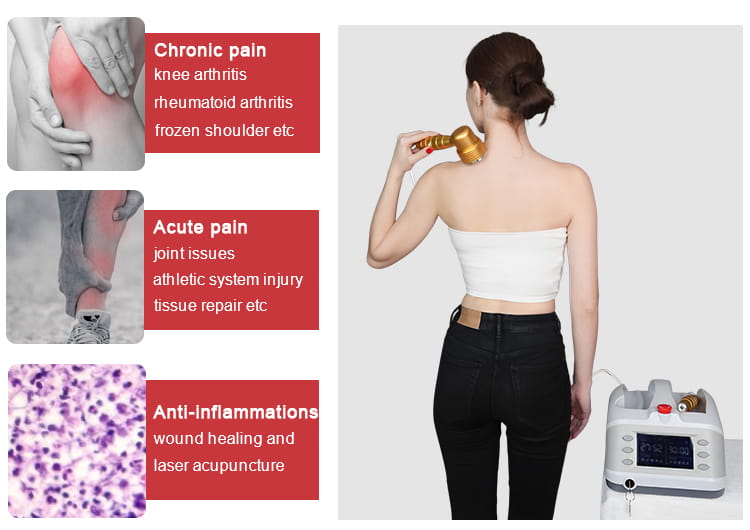
Ask yourself where you plan to use the device most. A small, single-point probe works well for targeted spots like an acupuncture-style point or a small joint. A larger multi-beam probe covers more surface area at once. That matters if you’re treating a knee, shoulder, or the lower back.
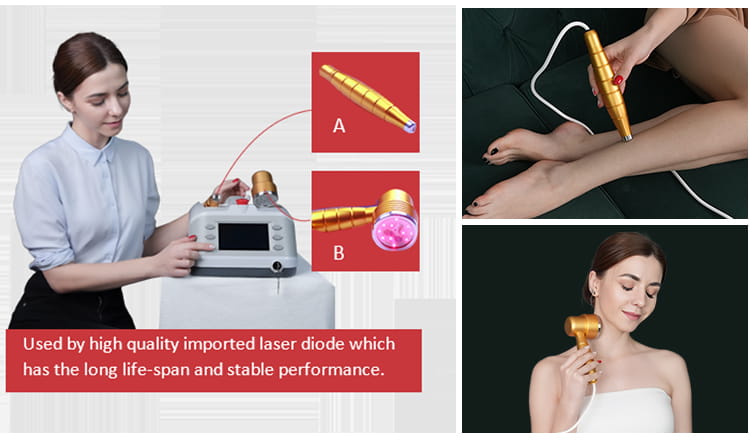
Some multi-functional laser therapy devices include more than one probe type. That lets you switch between precision spot treatment and broader coverage without buying two separate machines.
Portability and Device Design
Do you plan to use the device in more than one room, or bring it along when you travel? If so, weight and cord length matter more than you’d expect. A compact, portable laser therapy device is easier to fit into a daily routine than a bulky, clinic-style unit.
Session Settings and Ease of Use
Look for adjustable treatment time and intensity levels. A device that lets you set sessions from a short 10-minute treatment to a longer 60-minute one gives you more control. You decide how it fits into your day. Multiple power levels also let you start conservatively and adjust as you get more familiar with the device.
Simple controls matter too. If you’re new to at-home therapeutic laser devices, look for a straightforward dial or button layout. Simple controls make it easier to stay consistent.
Build Quality and Intended Application
Finally, check what the manufacturer designed the device to do. A device built to support muscles, joints, and soft tissue works differently than one made only for skin-surface treatment. Matching the device to your actual goal — recovery support versus something else — avoids disappointment later.
Professional Clinic Therapy vs. Convenient At-Home Devices
A physical therapist or chiropractor typically administers clinic-based laser therapy using higher-powered, Class IV equipment. These sessions run on a schedule with professional supervision. They’re usually part of a broader treatment plan that might include manual therapy or exercise.
Manufacturers design at-home laser therapy devices differently. They generally use lower-powered, consumer-safe laser diodes, so you can use them without professional supervision. The tradeoff is convenience. You can use the device on your own schedule instead of booking a clinic visit every time your shoulder feels tight.
Neither option replaces the other. Many people use an at-home device for daily maintenance. They still see a provider for anything that doesn’t improve or gets worse. If you have a diagnosed condition, are pregnant, or take medication that affects light sensitivity, talk to your doctor first. Do this before starting any new light-based therapy routine.
Common Applications: Muscle Soreness, Joint Discomfort, and Rehabilitation Support
People most often use home laser therapy devices for:
| Common Use | What People Typically Report Looking For |
|---|---|
| Muscle soreness after exercise | Support for recovery between training sessions |
| Joint discomfort (knees, shoulders) | A non-invasive option to add to daily routines |
| Neck and back tension | Targeted treatment for tight or sore areas |
| Sports injury rehabilitation | A convenient add-on to a physical therapy plan |
| General soft tissue recovery | A drug-free option alongside rest and stretching |
None of these applications guarantee a specific outcome, and results vary from person to person. The FDA regulates laser products, including therapeutic lasers, under its radiation-emitting product rules.² Manufacturers must meet those safety and labeling standards. Follow the manufacturer’s instructions for treatment time, distance, and eye protection. Doing so is an important part of using any laser device safely at home.
Where the LuxReda Multi-Functional Laser Therapy Device Fits In
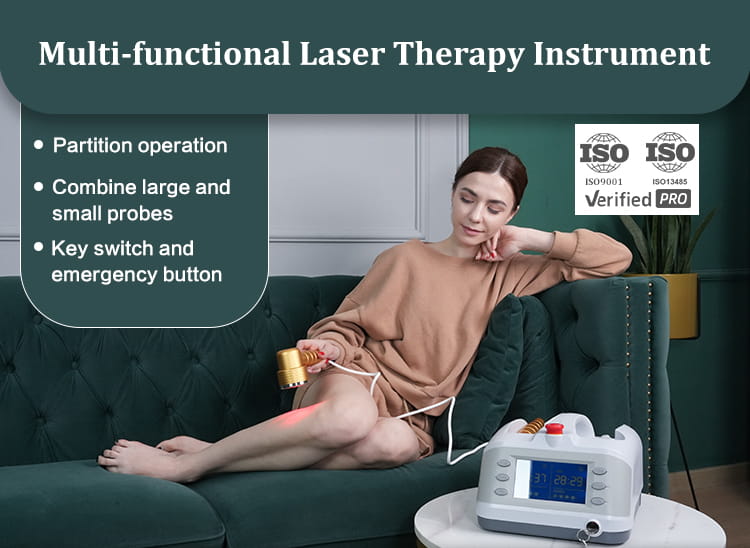
After reading the checklist above, it helps to see how a real product compares. LuxReda built the LuxReda Multi-Functional Laser Therapy Device for Pain Relief & Rehabilitation around dual 650nm and 808nm laser wavelengths, using semiconductor laser diode technology.
The device includes two probe types. One is a focused single-diode probe made for smaller, acupuncture-style treatment points. The other is a wider multi-beam probe made for larger areas like knees, shoulders, and the lower back. You can adjust treatment time from 10 to 60 minutes and choose from six power levels.
That combination — dual wavelengths, two probe styles, and adjustable session settings — gives users flexibility for different treatment areas. Users don’t need separate equipment for spot therapy versus larger muscle groups. LuxReda positions it as a home-use option for people building a recovery routine around rehabilitation support. It’s not a substitute for clinical treatment.
For readers who want to compare formats, LuxReda’s laser therapy devices category page lists the full lineup. It includes higher-powered Class IV options for those researching more intensive equipment. Anyone interested in how cold laser therapy compares to other light-based approaches may find our guide on cold laser therapy for pain relief useful. It offers helpful background reading.
Frequently Asked Questions
No. Clinic-based devices, especially Class IV lasers, typically operate at higher power levels, and professionals supervise their use. Home devices use lower-powered diodes designed for consumer use. That’s part of why people find them more convenient but generally less intensive.
Most home devices offer adjustable session lengths, often somewhere between 10 and 60 minutes. The right length depends on the treatment area and the manufacturer’s instructions.
Many people use these devices as part of a regular recovery routine. Always follow the manufacturer’s guidance on frequency, and never exceed the recommended session time or intensity.
Most people describe low-level laser therapy as painless. Most users report a mild warmth or no sensation at all during a session.
People who are pregnant, have a pacemaker, are undergoing cancer treatment, or have photosensitivity conditions should talk to a doctor first. Do this before using any light-based therapy device. Always avoid pointing the laser directly at the eyes.
They overlap, but they’re not identical. Both use light to support recovery. Laser therapy uses a coherent, focused laser beam, while red light therapy panels typically use LEDs that spread light over a broader surface.

Final Thoughts
Choosing a home laser therapy device comes down to matching the technology to how you actually plan to use it. Pay attention to wavelength, probe design, portability, and session settings before you decide. And remember: at-home devices support your recovery routine — they don’t replace medical care when you need it.
Taking a few minutes for yourself at the end of the day is a habit worth keeping. That might mean stretching, resting, or a short recovery session. If you’re ready to explore your options, take a look at the LuxReda Multi-Functional Laser Therapy Device. See whether it fits the routine you’re building for yourself.
Stay healthy and keep smile. Thank you