A good wellness routine often starts small. A quiet spot at home, a comfortable surface, and a tool you actually enjoy using can make self-care easier to keep up.
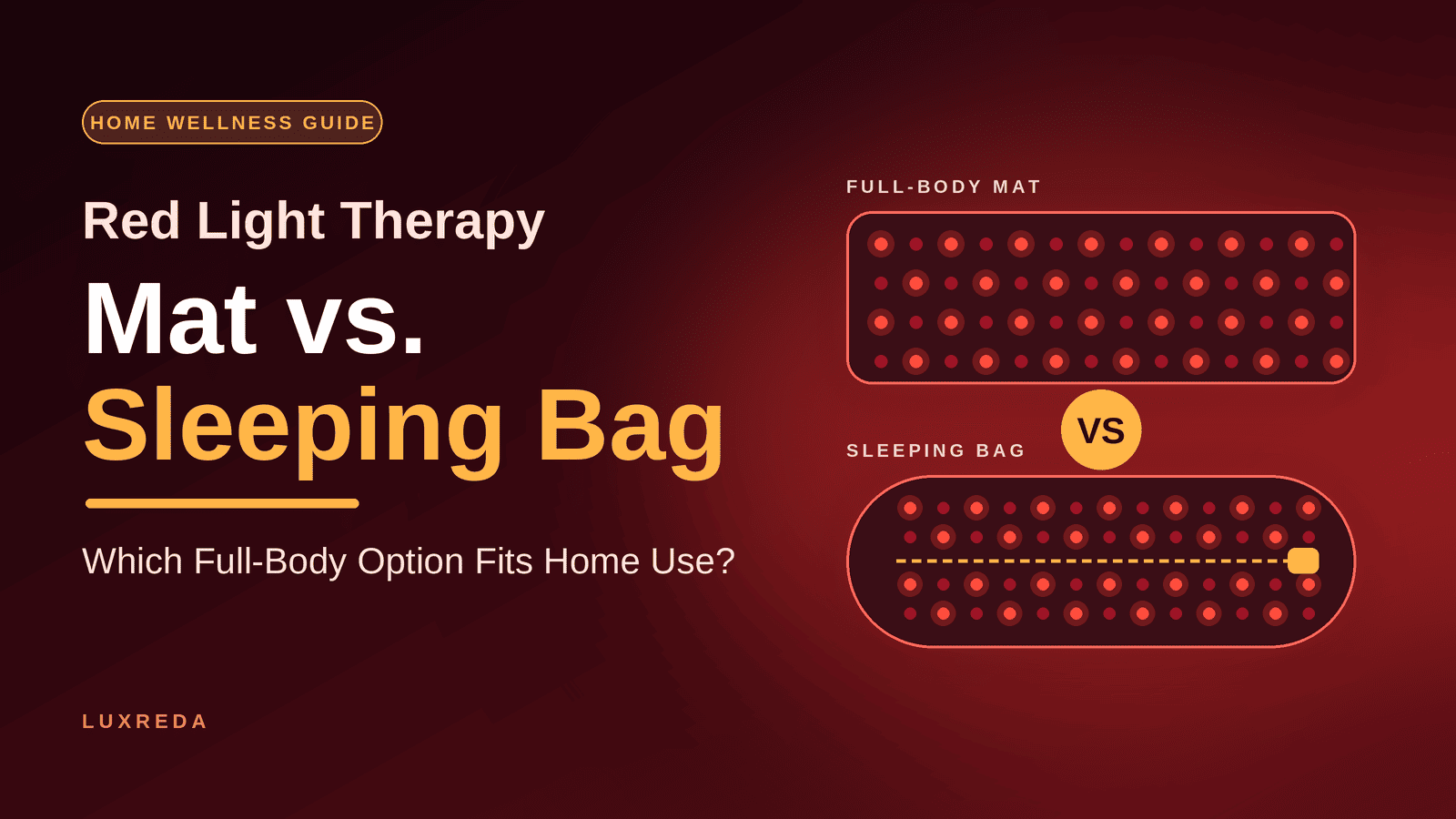
Many shoppers now compare two full-body formats: the flat mat and the enclosed sleeping bag. This red light therapy mat vs sleeping bag guide explains how they differ in coverage, comfort, setup, and storage. It also breaks down 660nm and 850nm light, LED count, and irradiance, so you can read a spec sheet with confidence. For wider background first, start with LuxReda’s full-body red light therapy device buying guide.
The Short Answer: Which Format Is Better?
Neither format wins for everyone. The right choice depends on your space, your routine, and how you like to relax.
A mat may suit you if you:
- Have limited storage space
- Want to lie down and change position easily
- Like a flexible design you can roll or fold away
- Plan to use the device in a bedroom, living room, or home gym
A sleeping bag-style device may suit you if you:
- Like the idea of light surrounding your body
- Have a permanent spot where it can stay set up
- Prefer a more enclosed, cocoon-like experience
Specifications vary a lot between brands in both categories. Always compare the actual numbers, not just the product name.
What Is a Full-Body Red Light Therapy Mat?
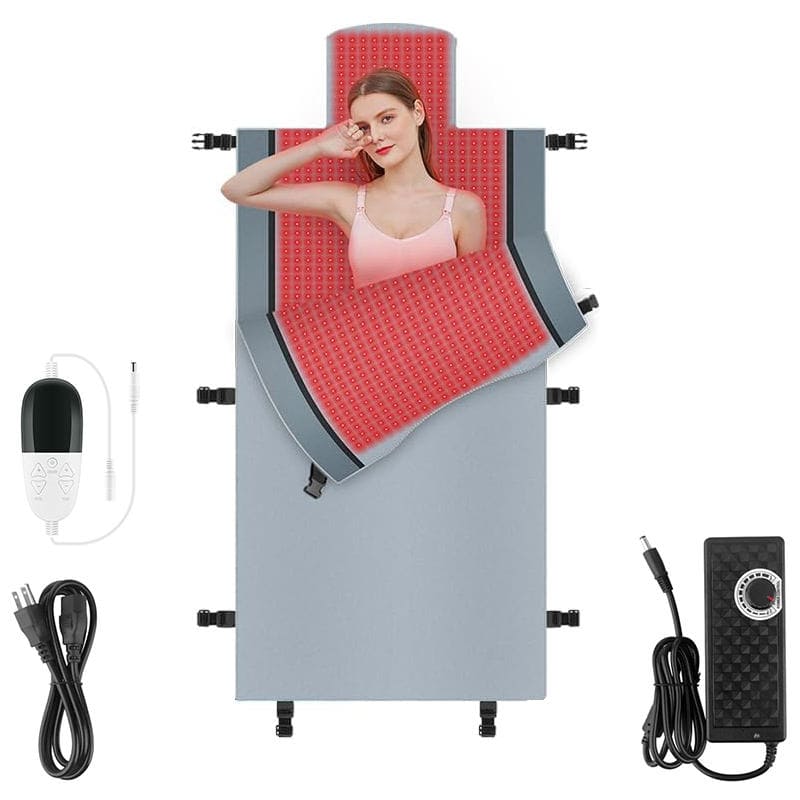
A full-body red light therapy mat is a flexible pad covered with LED beads. You lie on it, or place it over a chair or bed, and the LEDs deliver red and near-infrared light to the area in contact with or near the mat.
Most mats connect to a controller that sets the session mode. The flexible mat design makes them easier to move than rigid panels. Many people keep one rolled up in a closet and bring it out for a session.
Because a mat usually lights one side of the body at a time, you can shift position to expose different areas. That flexibility is a real advantage for home use. It also means that coverage depends partly on how you set up each session.
What Is a Red Light Therapy Sleeping Bag?
A red light therapy sleeping bag, sometimes called a pod-style bag or enclosed blanket, wraps around you. You slide in and zip or close it. LEDs line the inside surfaces, so light can reach several sides of the body at once.
Designs differ, so check each product’s details. Some bags cover the full body, while others stop at the shoulders or neck. Some use thicker padding or heavier outer fabric.
The enclosed shape can feel cozy to some users. Others find it confining or warm. If you have a small room, also check the folded size and weight before you buy.
Mat vs. Sleeping Bag: Side-by-Side Comparison
| Factor | Full-Body Mat | Sleeping Bag-Style Device |
|---|---|---|
| Light delivery | Usually one side at a time | Often surrounds more of the body |
| Position | Lie on it, drape it, or reposition | Slide inside, mostly fixed position |
| Comfort feel | Open and flexible | Enclosed; may feel warm or snug |
| Storage | Typically rolls or folds flat | Often bulkier (varies by model) |
| Room setup | Works on a bed, mat, or floor | Needs room to lay out and enter |
| Ease of changing position | High | Lower |
| Best for | Flexible home routines and smaller spaces | Users who want all-around coverage |
Treat this table as a general guide. Individual products may differ, so confirm each device’s measurements and features.
Coverage and Comfort: What Really Matters at Home
Light Coverage
Full-body light coverage sounds simple, but it depends on how much of the device actually contains LEDs. A large surface does not always mean evenly spread light. Look at the treatment area, the LED layout, and how close the LEDs sit to your skin.
Comfort and Routine
Comfort decides whether you keep using a device. A routine you enjoy beats a perfect plan you skip.
Think about how you will use the device in real life. Will you lie still for a session after work? Will you read or listen to music during it? A flexible mat tends to fit casual routines. An enclosed bag may appeal if you want a defined, cozy ritual.
Room and Surface
Check the surface under your device. A firm, flat area keeps a mat in place. A bed gives extra cushioning. For any format, keep cords and controllers where you will not trip over them.
Understanding 660nm Red and 850nm Near-Infrared Light
Most full-body devices combine two wavelengths. Red light at 660nm sits in the visible range. Near-infrared light at 850nm is invisible to the eye.
Researchers use the term photobiomodulation for red and near-infrared light applied to tissue. A review by Michael Hamblin in AIMS Biophysics notes that many wavelengths in the red (600–700nm) and near-infrared (770–1200nm) ranges have shown positive results in studies. It also explains that how far light travels into tissue depends on wavelength.
In simple terms, red light mostly interacts near the surface. Near-infrared light generally travels deeper. Many manufacturers pair the two for that reason.
Keep the research in perspective. Studies use specific devices, doses, and conditions. Their results do not automatically transfer to every consumer product. For a closer comparison of the two wavelengths, read LuxReda’s guide to 660nm vs. 850nm red light therapy mats.
Specs to Compare Before You Buy
Specification sheets can look intimidating. These four items matter most.
LED Count
LED count tells you how many light sources the device holds. More LEDs can mean denser or broader coverage. However, LED count alone does not prove a device performs better. Spacing, power, and design all play a part.
Irradiance
Irradiance measures light power over an area, shown as mW/cm². Higher numbers mean more light power at the measured point. Ask how the brand measured it and at what distance, because methods differ. A number without context can mislead.
Treatment Area
The treatment area is the size of the lit surface. Compare it with your own height and the body areas you want to expose. A larger surface gives you more flexibility in positioning.
Operating Modes
Many devices offer continuous and pulsed light modes. Regular mode typically means steady light. Pulsed modes flash light at set rates, such as 10Hz or 40Hz. Evidence on pulsed versus continuous delivery is still developing, so treat modes as options rather than guarantees.
Safety and Regulatory Basics
Sensible habits matter as much as specifications. Follow the manufacturer’s instructions for session length, distance, and eye protection. Start gently and stop if anything feels uncomfortable.
Talk with a healthcare professional first if you are pregnant, take medication that affects light sensitivity, or manage a medical condition. Home devices do not replace medical care.
Pay attention to marketing language too. The FDA’s general wellness guidance explains how the agency treats low-risk wellness products. Be cautious of any brand that promises to cure or treat a disease. Also note that red and near-infrared LED light is not the same as UV tanning, which carries well-known skin risks.
Home Practicalities: Setup, Storage, and Cleaning
Real-life details often decide which device you keep using.
- Space: Measure your floor or bed area first. Add room for the controller and power cable.
- Weight: A heavy device is harder to move. Check the listed weight.
- Power: Confirm the input voltage works with your outlets. US and Canadian homes use 110V–120V.
- Material: Wipe-friendly surfaces make upkeep easier. Always follow the cleaning directions in the manual.
- Sessions: Plan a consistent time, and keep water and a towel nearby.
A mat’s flat design typically makes setup quick. If you want a full walkthrough, see LuxReda’s guide on how to use a red light therapy mat. Small, steady habits tend to last longer than ambitious plans.
Mat vs. Panel vs. Blanket: Where the Sleeping Bag Fits
A sleeping bag is one of several home formats. Panels stand upright and light the area facing them. Blankets drape over the body. Mats lie flat.
If you are still choosing a format, two LuxReda guides help. The panel vs. mat comparison covers upright and flat designs. The blanket vs. mat guide looks at wrap-style options, which share traits with sleeping bag designs.
The LuxReda Full Body Red Light Therapy Mat at a Glance
For readers who lean toward the mat format, the LuxReda Full Body Red Light Therapy Mat – 660nm & 850nm is one home option. These details come from the official product page.
| Specification | Official Detail |
|---|---|
| Wavelengths | 660nm + 850nm |
| LED count | 2,570 LED beads |
| Treatment area | 71 × 33 inches |
| Irradiance | Approximately 85–114 mW/cm² |
| Operating modes | Regular, 10Hz, 40Hz |
| Input voltage | 110V–240V |
| Power | 72.5W–192W |
| Material | Premium leather |
| Weight | Approximately 8kg (about 17.6 lb) |
| Controller | Wired multifunction controller |
The 71 × 33 inch surface gives most adults room to lie down. The wired controller handles mode selection. The 110V–240V input range suits standard US and Canadian outlets.
This mat is not the right fit for everyone. If you want an enclosed, wrap-around feel, a sleeping bag-style design may match your preferences better. Compare the numbers against your own priorities.
A Simple Buying Checklist
Use these questions before you decide:
- How much space do I have for use and storage?
- Do I prefer an open or enclosed feel?
- Does the brand list both 660nm and 850nm wavelengths?
- Are LED count, treatment area, and irradiance clearly stated?
- Does the brand explain how it measures irradiance?
- Which operating modes does it offer?
- Are weight, power, and voltage listed?
- Does the brand avoid disease-treatment promises?
- Are the manufacturer’s usage and safety instructions easy to find?
- Will I realistically use it a few times each week?
If a brand skips most of these answers, keep shopping. Transparent specs usually signal a more trustworthy seller.
Frequently Asked Questions
Is a red light therapy mat or sleeping bag better for home use?
Neither is better for everyone. Mats offer flexibility and easier storage. Sleeping bags offer a more enclosed design that may cover more of the body at once. Pick based on space, comfort, and the specs you can verify.
What is the difference between a red light therapy mat and a blanket?
A mat usually lies flat under or beside you. A blanket drapes over the body. Both can offer full-body coverage, depending on size and design. LuxReda’s blanket vs. mat guide covers this in more detail.
What do 660nm and 850nm mean?
They are wavelengths measured in nanometers. 660nm is visible red light. 850nm is near-infrared light that you cannot see. Many devices combine both in one design.
Does a higher LED count mean a better device?
Not automatically. More LEDs can broaden coverage, but power, spacing, and quality also matter. Compare LED count together with irradiance and treatment area.
Can I use a red light therapy mat in the evening?
Many people choose evening sessions as part of winding down. Red and near-infrared light is not the same as bright blue-rich light from screens. For more on the topic, see LuxReda’s article on red light therapy for sleep. Follow your device’s instructions and talk with a professional about any concerns.
Is red light therapy the same as tanning?
No. Red and near-infrared LEDs do not work like UV tanning beds. UV exposure carries known skin risks, and no tanning method is risk-free.
How do I know a brand’s claims are reasonable?
Look for clear specifications, measurable details, and cautious wording. Be wary of promises to cure, treat, or guarantee results. The FDA’s wellness guidance helps explain the difference between wellness claims and medical claims.
Final Thoughts: Choose the Format That Fits Your Life
The red light therapy mat vs sleeping bag decision comes down to practical details. Think about space, comfort, and the specifications you can verify. A device you enjoy using will always beat one that sits in the corner.
If a flexible, flat format sounds right, you can review the LuxReda Full Body Red Light Therapy Mat and its full specifications on the product page.
Give yourself a little time each day, however you choose to spend it. Comfortable habits, steady routines, and a little patience go a long way. Take care of yourself, and enjoy the quiet moments.
Thank you