Good wellness habits often start with small, steady choices. A little time set aside for rest, recovery and self-care can add up. Many men now look at at-home light devices as one option, and the wavelength numbers on the box can be confusing.
Here is the short answer. 630nm is red light. It sits in the range researchers have studied most in photobiomodulation. 465nm is blue light. It has a shorter wavelength, penetrates less deeply, and has far less research behind it in this setting. A dual-wavelength device puts both colors in one system. The LuxReda LED-Prostate Therapy Device does exactly that.
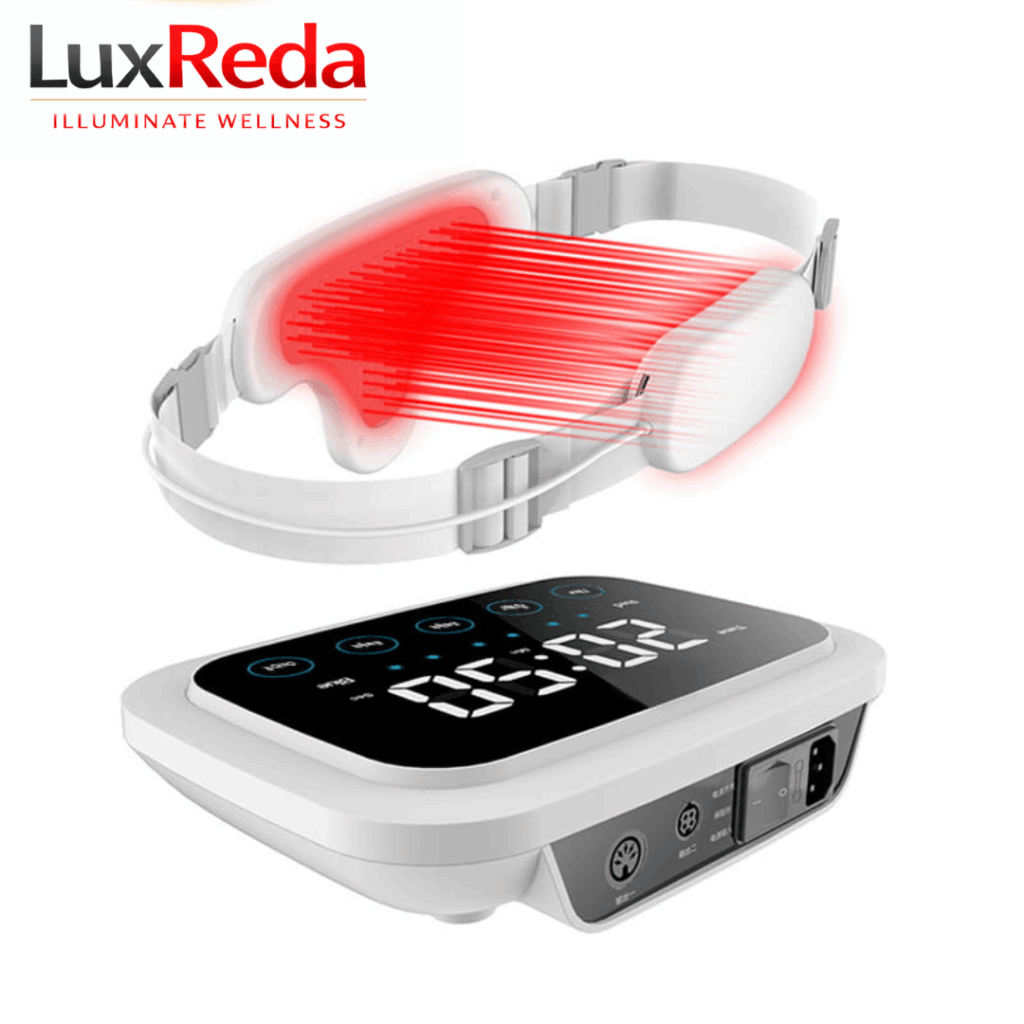
This guide explains how the two colors differ and what the research says. It also covers how the LuxReda device is built and what to check before you buy.
630nm Red vs. 465nm Blue: The Quick Comparison
A nanometer (nm) measures the length of a light wave. Each color has its own wavelength, and the wavelength affects how light behaves on and in the body.
| Feature | 630nm red light | 465nm blue light |
|---|---|---|
| Color | Visible red | Visible blue |
| Wavelength length | Longer | Shorter |
| Tissue penetration | Deeper than blue | Shallower than red |
| Research base | Larger, within photobiomodulation | Smaller for this use |
| How LuxReda describes it | Anti-inflammatory support | Sterilization support |
Both colors are visible light. Neither is ultraviolet (UV) light. That matters, because UV is the type used in tanning beds and carries different skin risks.
How Red Light and Blue Light Differ
What 630nm Red Light Does
Red light is the better-known partner in this pair. Researchers use the term photobiomodulation for low-level red and near-infrared light applied to tissue. A review by Michael Hamblin in the NIH’s PubMed Central library notes that many wavelengths in the red (600–700 nm) and near-infrared (770–1200 nm) ranges have shown positive results. Light in these ranges also travels deeper into tissue than blue or green light. nih
630nm falls inside that red band. The LuxReda product page calls the red wavelength anti-inflammatory support. Treat that as the manufacturer’s description, not a guaranteed outcome.
What 465nm Blue Light Does
Blue light works differently. The same Hamblin review explains that hemoglobin absorbs blue and green light more readily, which limits how deeply they penetrate. That is why most photobiomodulation research centers on red and near-infrared light. nih
LuxReda describes its 465nm light as sterilization support. The product page frames this as hygiene and antibacterial assistance. It does not present blue light as a proven medical treatment, and neither should anyone else.
Why Combine Two Colors?
Pairing two wavelengths gives one device two different light profiles. Red offers more depth. Blue stays near the surface. Some people like having both options in a single piece of equipment.
Dual-color designs also appear in other LuxReda products. For example, LuxReda’s article on red and blue light therapy for feminine wellness explores the same two-color idea for a different audience. If you want to see how a third wavelength fits in, the 3-color LED light therapy device guide covers red, blue and near-infrared together.
What Photobiomodulation Research Does and Does Not Show
Photobiomodulation has a long research history. Scientists have studied how red and near-infrared light interact with cells, especially mitochondria. Even so, the science is still developing.
A National Institute on Aging workshop summary is a good reality check. It states that the exact mechanisms of photobiomodulation are not entirely understood, and the methods used across light therapies are poorly defined. You can read it in GeroScience via PubMed Central. nih
That honesty helps you shop wisely. A device can use real, well-studied wavelengths and still lack proof that it works for a specific goal. Be wary of any seller who claims otherwise.
Another point matters here. Most photobiomodulation studies look at other body areas and conditions. They do not prove results for the prostate region. LuxReda’s own complete guide to its LED-Prostate device covers the device in more depth. For a broader primer on red light, see the ultimate guide to red light therapy in the USA and Canada.
A calm evening routine can also support wellness. Think stretching, a warm shower, and screens off early. Light devices, if you choose one, can sit alongside those habits.
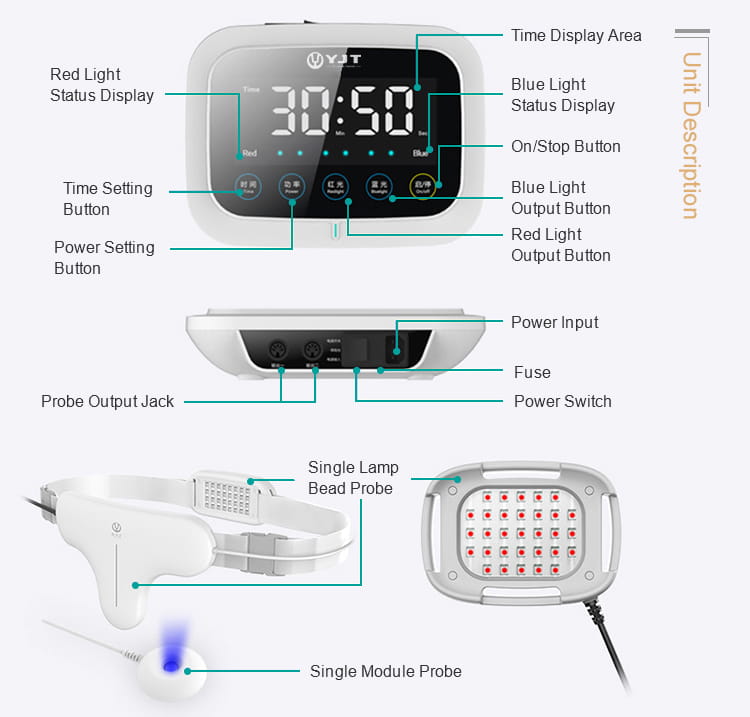
How the LuxReda LED-Prostate Therapy Device Is Built
This section sticks to details listed on the official product page. It does not add anything from outside sources about the device.
Key Specifications
| Specification | Listed detail |
|---|---|
| Red wavelength | 630nm ±10nm |
| Blue wavelength | 465nm ±10nm |
| Power density | ≤10 mW/cm² (center of a single lamp bead) |
| Power instability | ≤10% |
| Output power repeatability | ≤10% |
| Rated input power | ≤100VA |
| Anti-shock type | Class 1 |
| Applied part | Type B |
| Operation mode | Continuous operation |
| Fluid protection | IPX0 (conventional equipment) |
| Operating temperature | 5°C–40°C |
| Relative humidity | ≤80% |
| Average service life | Approximately 6,000 hours |
The ±10nm tolerance means the actual wavelength can vary slightly from the stated number. That is normal for LED equipment.
Reading the Power Density Number
LuxReda lists power density at ≤10 mW/cm², measured at the center of a single lamp bead. This is a ceiling for that point on the device. It does not describe a treatment dose or the energy that reaches deeper tissue.
IPX0 means the device has no special protection against liquids. Keep it dry and follow the manual’s care instructions.
The Targeted Application Areas
The product page names two target areas: the Guan Yuan acupoint and the perineum. Guan Yuan is a traditional acupoint on the lower abdomen. The perineum is the external area between the genitals and the anus.
The page does not give step-by-step placement instructions. Read the included manual and follow the manufacturer’s directions closely. If anything is unclear, contact LuxReda before your first session.
How to Compare Specialized LED Light Therapy Equipment
Specialized equipment can look similar on a product page. These checks help you tell devices apart.
A Practical Buying Checklist
- Confirm the exact wavelengths. Look for numbers with tolerances, not just color names.
- Find the power density. Check where it was measured. A value “at a single lamp bead” is not the same as output across the whole surface.
- Read the safety specs. Look for electrical protection class and operating conditions.
- Check operating limits. Temperature and humidity ranges tell you where the device belongs.
- Look for a manual and support. Clear instructions matter more than a long feature list.
- Check the return policy. You can find LuxReda’s on its website.
Common Mistakes to Avoid
- Treating more claims as more quality. Long benefit lists do not prove performance.
- Ignoring the difference between wellness and treatment. A wellness device does not replace medical care.
- Skipping the manual. Placement and session guidance belong to the manufacturer.
- Buying on price alone. A low price does not tell you much about build quality or support.
Choose gear that fits your routine. The best wellness habit is the one you can keep up comfortably.
Safety, Regulation and Realistic Expectations
Light therapy for wellness is a growing market, and rules around it matter. The FDA has a policy on low-risk general wellness products. Its guidance clarifies that inclusion under this policy does not establish that a product has been shown to be safe or effective for its intended use. You can read the full FDA general wellness guidance on the agency’s website. hhs
Prostate symptoms also deserve a professional look. The National Institute of Diabetes and Digestive and Kidney Diseases advises that you should discuss any urinary symptoms with a health care professional, since several different conditions can cause them. See its overview of prostate problems for symptom details. nih
A light device should never replace a checkup. If you notice changes, pain, or trouble urinating, see a doctor first. Then ask whether a wellness device makes sense for you.
Frequently Asked Questions
630nm is a longer, red wavelength. 465nm is a shorter, blue wavelength. Red light penetrates tissue more deeply. Blue light stays closer to the surface.
No. Blue light is visible light. UV light has even shorter wavelengths and sits outside the visible range.
It means one device emits two different wavelengths, here red and blue. Each wavelength behaves differently, so the pairing gives the device two light profiles.
The product page names the Guan Yuan acupoint and the perineum. Follow the manufacturer’s manual for placement and session details.
The product page describes it as a wellness and physiotherapy-support device. This article does not claim it treats, cures or prevents any condition. Talk with a doctor about any health concern.
LuxReda says it is suitable for home wellness routines or professional physiotherapy settings. Follow the manual for safe use.
Yes, especially if you have urinary symptoms or a health condition. A health care professional can check what is going on and suggest the right next step.
Conclusion: Choose Light Therapy With Clear Eyes
Understanding 630nm red light and 465nm blue light therapy helps you read product pages with confidence. Red light has the larger research base. Blue light has a smaller one. A dual-wavelength device combines the two, and the specs tell you how it is built.
Your next step is simple. Review the full LuxReda LED-Prostate Therapy Device page and compare it against the checklist above. Then talk with your doctor about whether it fits your goals.
Take time for yourself this week. Rest well, keep moving, and choose wellness habits that feel easy to maintain.