Most of us juggle workouts, work, and family, and our bodies notice. A few quiet minutes of self-care can fit into even the busiest day.
A 3-color LED light therapy device puts red, blue, and near-infrared light into one handheld tool. Each color behaves differently, and the research behind each one varies. This guide explains what the three wavelengths do and what studies suggest so far. It also covers what to check before you buy an at-home light therapy device.
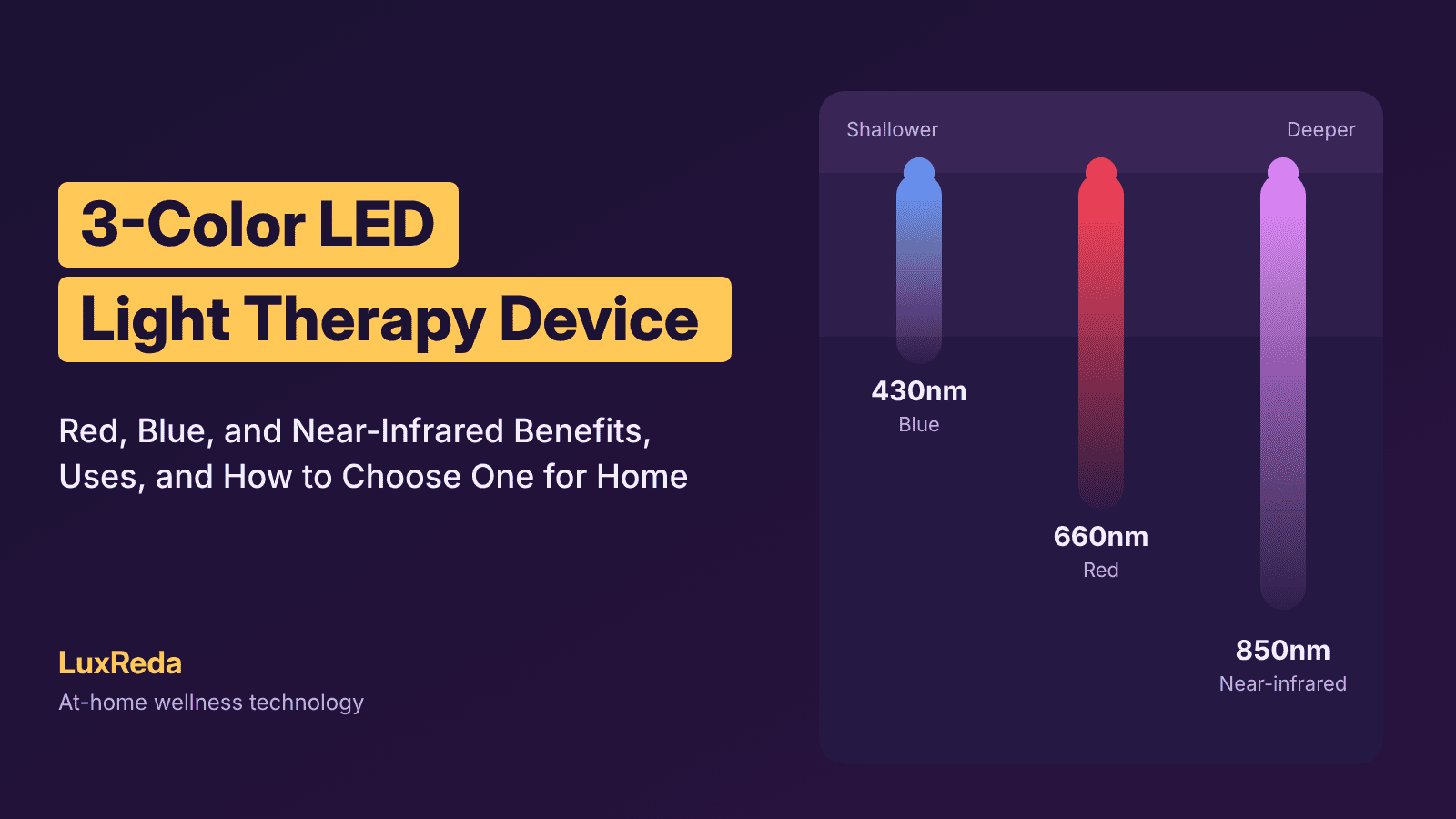
Quick answer: Red (660nm) light mostly reaches the skin’s surface. Near-infrared (850nm) light travels deeper, so people often use it around muscles and joints. Blue (430nm) light stays near the surface and gets most of its attention in skin research. A handheld device lets you pick the color and the spot. It supports a wellness routine, but it does not replace medical care.
How Red, Blue, and Near-Infrared Light Therapy Work
What photobiomodulation means
Photobiomodulation (PBM) means applying low-level red or near-infrared light to body tissue. One published review of PBM in muscle explains that the rationale rests on mitochondrial activity picking up after cytochrome c oxidase absorbs the light. In plain terms, researchers think light exposure may influence how cells handle energy. You can read the details in this review of PBM and human muscle. nih
The science is still developing. A 2026 review notes that inconsistent dosing, methods, and reporting across studies still limit how far PBM has moved into clinical practice. That caution is worth keeping in mind as you read product claims, including ours. You can find that 2026 skeletal muscle review online. nih
Why wavelength matters
Light color decides how far the light travels into tissue. Here is a simple comparison of the three wavelengths in this device.
| Wavelength | Type | Where it mostly acts | Common area of interest |
|---|---|---|---|
| 430nm blue | Visible | Skin surface | Skin balance, blemish-prone skin |
| 660nm red | Visible | Skin and shallow tissue | Skin recovery, surface tissue |
| 850nm near-infrared | Invisible | Deeper tissue | Muscle and joint routines |
For a closer look at 660nm and 850nm, read LuxReda’s 660nm vs. 850nm comparison. It focuses on mats, but the wavelength basics carry over.
Red Light Therapy for Muscle Recovery: What Research Suggests
Muscle recovery has some of the deepest research in this field. The review above looked at trials in volunteers and athletes, and it sorted protocols into those that helped muscle performance and recovery and those that showed no effect. So results depend on how the light is used. Wavelength, dose, and timing all appear to matter. nih
That mixed picture is useful for shoppers. It means “red light helps muscles” is too simple. Look for devices that clearly list their wavelengths and power, and follow the manufacturer’s instructions.
Recovery also happens between sessions. Sleep, good food, water, and rest days all do heavy lifting. Light therapy, at most, is one small piece of that routine.
Near-Infrared Light Therapy and Joint Comfort
Near-infrared light travels deeper than red light. The 2026 review reports that near-infrared light in the 810–980nm range appears to activate mitochondria more than red wavelengths of 630–660nm. That depth is why many people pair 850nm light with sore knees, elbows, or shoulders. nih
Interest is high, but evidence for joint discomfort remains mixed and depends on the condition. If you want to go deeper on one joint, LuxReda’s guide to red light therapy for knee pain walks through the topic.
Persistent pain, swelling, or pain after an injury needs a healthcare professional. Light therapy can sit alongside that care, but it should not replace it.
Blue Light Therapy Benefits for Skin: Promising but Limited
Blue light has mostly been studied for acne. A 2019 systematic review and meta-analysis found that light between roughly 407 and 420nm has a bactericidal effect on acne bacteria. The same review concluded that methodological and reporting limits in the existing trials restrict firm conclusions about effectiveness, and that adverse events were generally mild. You can read the full paper in the Annals of Family Medicine. nihpolyu
Here is a detail many buying guides skip. Most of that research used wavelengths around 407–420nm. This device uses 430nm, which is close but not identical. Do not assume the same results carry over.
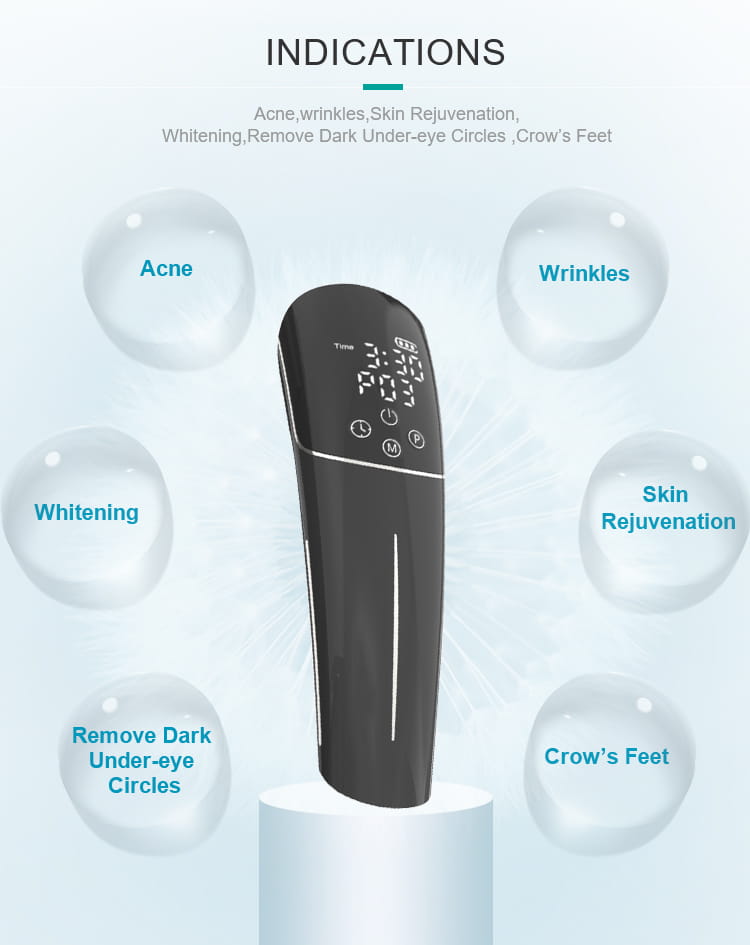
LuxReda describes the blue light in this device as supporting skin balance and irritation reduction. Treat that as a wellness feature, not a treatment for any skin condition.
Why Choose a Handheld LED Light Therapy Device for Home Use
A handheld device suits targeted, short sessions. You point it at one area, set a timer, and relax. It also travels well, so it can come with you to the gym bag or a weekend trip.
The trade-off is coverage. A handheld treats a small area at a time. If you want broad coverage, a larger format may fit better. LuxReda’s full-body red light therapy buying guide compares those options. For recovery-focused full-body setups, see this article on a red light therapy blanket for muscle recovery.
A good routine is one you will actually keep. Short, simple sessions often fit real life better than complicated plans.
LuxReda 3-Color LED Therapy Device: Verified Features
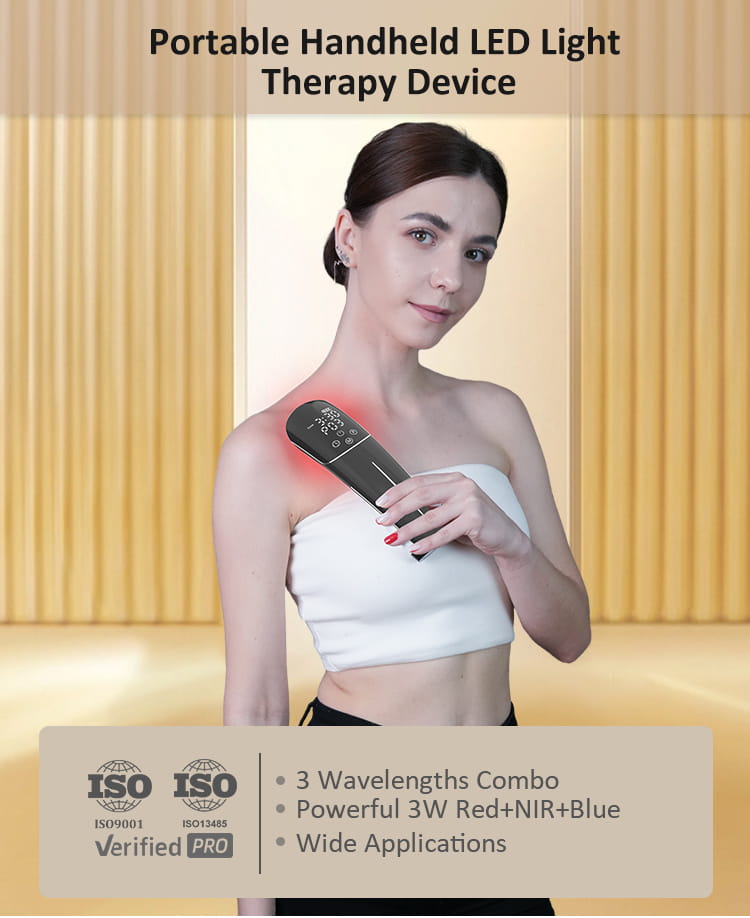
The LuxReda 3-Color LED Therapy Device is a portable handheld unit. Here is what the product page lists:
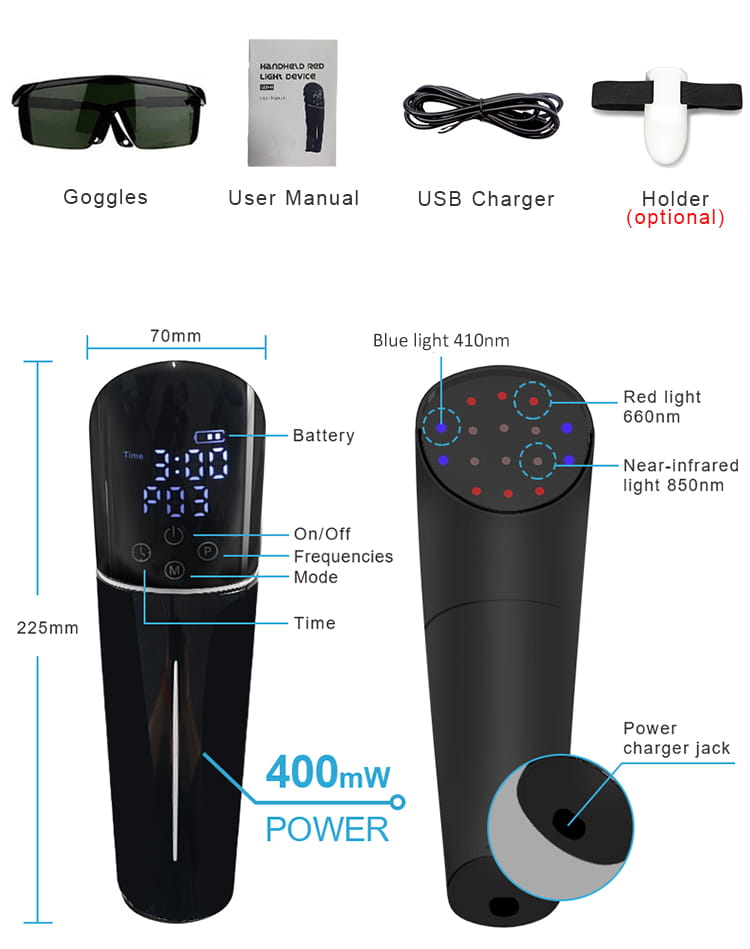
- Light spectrum: 660nm red (6 chips), 850nm near-infrared (6 chips), and 430nm blue (4 chips)
- Power output: 400mW
- Power levels: P1 to P5 adjustable
- Display: Smart LED screen
- Battery: Built-in 1800mAh rechargeable lithium battery
- Timer: 1 to 5 minutes, in 30-second steps
- Body: Lightweight ABS construction
LuxReda designed the device for sports recovery, joint comfort, and skin recovery routines. The product page does not list any regulatory clearance. If that matters to you, ask LuxReda’s support team before you buy.
How to Choose an At-Home Light Therapy Device: A Practical Checklist
Use these questions to compare any at-home light therapy device:
- Does it list exact wavelengths? Vague labels like “red light” tell you very little.
- Can you adjust intensity and time? Adjustable settings help you follow the instructions.
- Does the treatment area match your goal? Small handhelds suit targeted spots.
- Is the battery practical? A rechargeable unit gives you freedom from outlets.
- What documentation comes with it? Check manuals, safety notes, and support options.
- Are the claims realistic? Be wary of any brand that promises cures.
You can also search the FDA’s 510(k) database to check whether a specific device has FDA clearance.
Common mistakes to avoid
- Expecting overnight results
- Using longer sessions than the manual allows
- Looking straight into the LEDs
- Skipping basics like sleep, movement, and nutrition
Safety and Realistic Expectations
These wavelengths are not ultraviolet light. This device is not a tanning device.
Never shine bright LEDs into your eyes. Follow the manufacturer’s directions for session length and distance. Talk with a healthcare provider first if you are pregnant, take medication that increases light sensitivity, or have a skin condition. The same goes for pain that lasts or keeps getting worse.
Frequently Asked Questions
It is a device with LEDs in three colors, usually red, blue, and near-infrared. LuxReda’s version uses 660nm, 430nm, and 850nm light in a handheld body.
Red light is visible and mostly reaches the skin and shallow tissue. Near-infrared light is invisible and travels deeper. Researchers often study the two together.
Follow the manual that comes with your device. Studies use many different schedules, so no single routine fits everyone. This device offers timer settings from 1 to 5 minutes.
Some studies report benefits in some protocols, and others report none. Results depend on wavelength, dose, and timing. It works best as one part of a broader recovery routine.
No. It is a wellness tool. See a healthcare professional for injuries, ongoing pain, or skin concerns.
Final Thoughts
A 3-color LED light therapy device can make a simple, repeatable part of a self-care routine. Red, blue, and near-infrared light each play a different role, and the research is still growing. Choose a device with clear specifications, honest claims, and settings you can adjust.
If a portable option sounds right, explore the LuxReda 3-Color LED Therapy Device and review the full specifications.
Be patient with your body, stay active in ways you enjoy, and give yourself a few calm minutes each day. Small habits add up.
Thank you