A sore knee after a weekend hike. A stiff neck after a long week at your desk. A muscle that still complains three days after a hard workout. Most of us want gentle ways to feel better and keep moving.
A multi-functional laser therapy device is one option people explore for pain relief, muscle recovery, and rehabilitation routines at home. It uses low-level laser light, a method researchers call photobiomodulation. Many users treat it as one part of a broader self-care routine. It does not cure disease, and it does not replace medical care.
This guide explains how the technology works and what it may and may not do. You will also learn how to compare devices and how the LuxReda Multi-Functional Laser Therapy Device fits in.
What Is a Multi-Functional Laser Therapy Device?
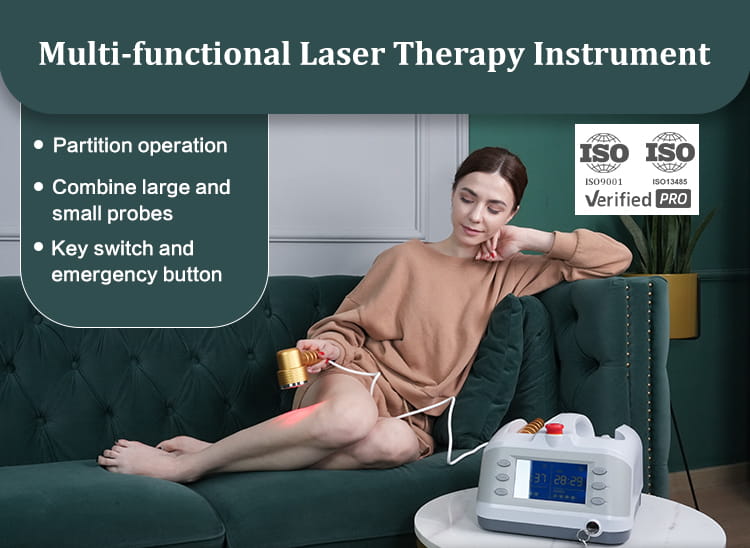
A multi-functional laser therapy device sends low-level laser light through one or more handheld probes. “Multi-functional” usually means the unit offers more than one wavelength, probe, or treatment setting. That flexibility lets one device cover a small, precise spot and a larger muscle area.
Common features include:
- Two or more laser wavelengths, often red and near-infrared
- Separate probes for small and large treatment areas
- An adjustable timer and several power levels
- A design for home use, clinic use, or both
This is not a surgical laser. Researchers describe low-level lasers as working through non-thermal effects, unlike lasers that cut or burn tissue.
How Does Laser Therapy Work?
Photobiomodulation, also called low-level laser therapy (LLLT), applies red or near-infrared light to the body. According to a review by photobiomedicine researcher Michael Hamblin, cells absorb this light mainly through an enzyme in the mitochondria. Mitochondria are the parts of a cell that handle energy production.
Scientists are still studying what happens next. The leading ideas involve cell energy and the signals cells send each other. That is why careful wording matters here. The light may influence cell activity, but results vary from person to person.
Why Wavelength Matters
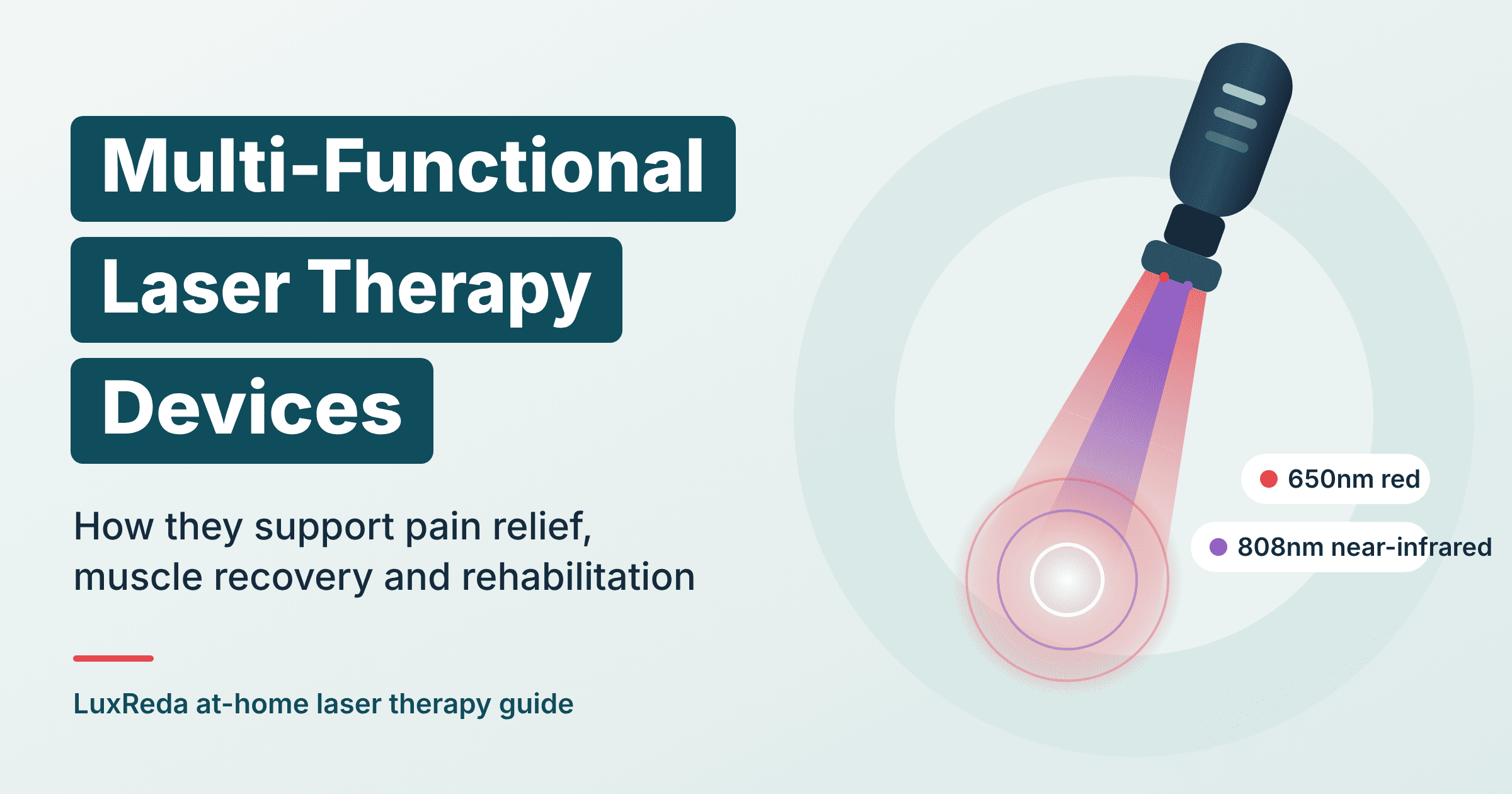
Different wavelengths travel to different depths. In general, red light around 650nm reaches shallower tissue. Near-infrared light around 808nm travels deeper. A device with both can cover surface areas and deeper muscle and joint areas.
For a plain-language overview of the basics, see LuxReda’s guide to cold laser therapy for pain relief.
Why More Is Not Always Better
Light dose follows a curve. Hamblin’s review describes a biphasic response: low doses can stimulate cells, while very high doses can work against that effect. A separate review of treatment parameters notes that experts still disagree on ideal settings. So a longer session is not automatically a better one. Follow the manufacturer’s guidance instead.
Potential Benefits of Laser Therapy for Pain Relief and Recovery
People use laser therapy for several everyday goals. Research quality varies by condition, so treat these as potential applications rather than promises.
Supporting Muscle Recovery
After hard workouts, many people look for ways to ease soreness and tightness. Laser therapy may support muscle recovery as part of a routine that also includes sleep, hydration, stretching, and rest days. The device works best as an add-on, not a shortcut.
Joint Comfort and Mobility
Knees, shoulders, and lower backs often get the most attention. Near-infrared light may support comfort in these areas. People who want to learn about light therapy for one joint can read LuxReda’s article on red light therapy for knee pain.
Rehabilitation and Physical Wellness
Some people use laser therapy alongside physical therapy or a home exercise plan. A probe lets you work on a specific spot between appointments. Ask your healthcare provider first, because they know your injury and your limits.
Circulation and Overall Wellness
Light therapy may support circulation in the treated area. Many people also enjoy the calm, deliberate time a session creates. A quiet ten minutes with no phone can be a healthy habit by itself.
Laser Therapy vs. Traditional Red Light Therapy
Both approaches use red and near-infrared light. They differ mostly in how the light reaches your body.
| Feature | Laser therapy device | LED red light therapy |
|---|---|---|
| Light source | Laser diodes | Light-emitting diodes (LEDs) |
| Typical form | Handheld probes | Panels, mats, blankets |
| Coverage | One spot or small area at a time | Large areas at once |
| Usage style | Hands-on, targeted sessions | Often hands-free |
Neither one wins in every case. Hamblin’s review notes that LEDs can produce similar photobiomodulation effects, so a laser is not automatically stronger. Pick the format that fits your routine. If you want targeted, probe-based sessions, a laser device makes sense. If you prefer lying back and covering a larger area, a panel or mat may suit you better.
What to Look for in an At-Home Laser Therapy Device
Shopping for portable laser therapy equipment can feel confusing. A short checklist helps.
- Clear wavelengths. The seller should list them plainly.
- Probe options. Look for a small-area option and a large-area option.
- Published power details. Look for output per diode and total output.
- Adjustable time and intensity. You should control both.
- Safety information. Check for laser warning labels, eye protection details, and a clear manual.
- Realistic claims. Be cautious about guaranteed results or “cure” language.
- Size and weight. A device you can store and reach easily gets used more often.
The FDA warns that some laser products sold online may not meet federal safety requirements. It also reminds buyers that laser products must carry proper labels. So ask sellers about labeling before you buy.
Common Buying Mistakes
- Chasing the highest power number without understanding the dose
- Skipping the eye safety instructions
- Expecting an instant change after one session
- Ignoring the difference between cold lasers and higher-power systems
That last point trips up many shoppers. LuxReda’s comparison of Class IV laser therapy vs. cold laser therapy explains the difference. For a longer checklist, try the laser therapy device for pain relief buying guide.
How to Use a Laser Therapy Device Responsibly
Your wellness routine should feel comfortable and easy to keep up. Responsible use starts with a few habits.
- Read the manual first. Follow the manufacturer’s instructions for time, power, and probe placement.
- Protect your eyes. Never look into the beam or aim it at anyone’s eyes, including pets.
- Start low. Begin with a lower intensity and shorter sessions, then adjust only as the instructions allow.
- Stay consistent, not extreme. Regular, moderate use usually fits a routine better than long sessions.
- Stop if something feels wrong. Pause if you notice discomfort, and talk to a professional.
Ask a healthcare provider before you start if you are pregnant, managing a medical condition, taking medication, or unsure. Seek medical care for severe, new, or worsening pain. A device can support your routine, but it cannot diagnose a problem.
Discover the LuxReda Multi-Functional Laser Therapy Device
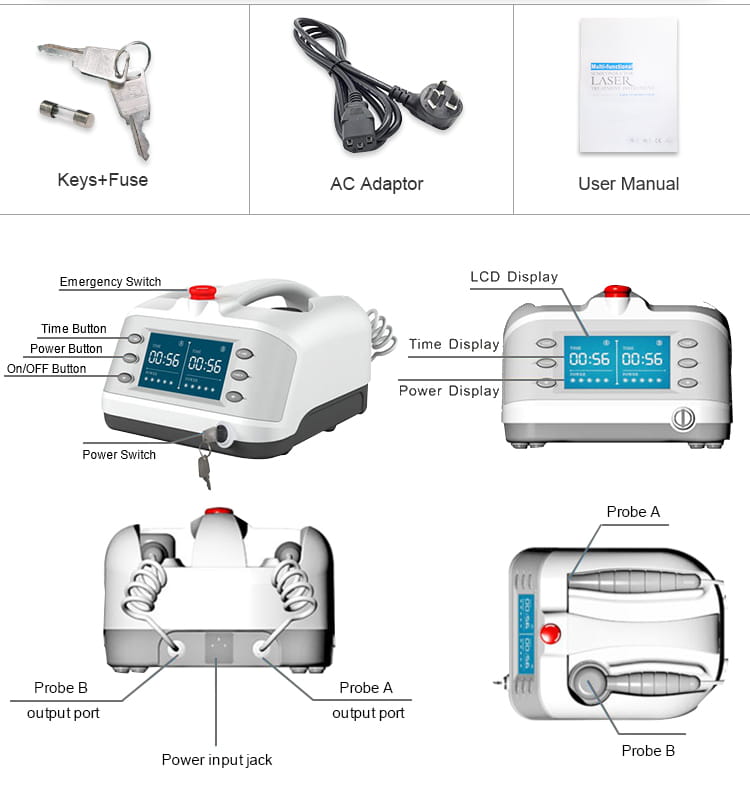
The LuxReda Multi-Functional Laser Therapy Device for Pain Relief & Rehabilitation combines two wavelengths and two probes in one unit. LuxReda describes it as a non-invasive system that may support muscle recovery, joint comfort, and soft tissue rehabilitation. The product page lists gallium aluminum arsenide (GaAlAs) semiconductor laser diodes.
Verified Specifications
| Specification | Details (from the LuxReda product page) |
|---|---|
| Wavelengths | 650nm + 808nm |
| Probe A | 1 laser diode (808nm), up to 180mW |
| Probe B | 11 beams at 650nm + 4 beams at 808nm, up to 775mW |
| Output per diode | 5mW (650nm), 180mW (808nm) |
| Timer | Adjustable, 10 to 60 minutes |
| Power levels | 6 intensity grades |
| Product size | 34 × 24 × 16 cm |
| Weight | 3.5 kg |
How the Two Probes Work
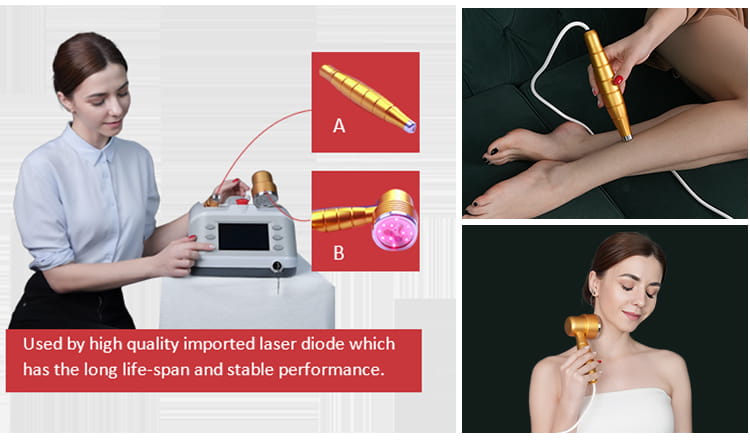
Probe A uses a single 808nm diode. LuxReda designed it for small areas and acupuncture-style points. Probe B uses multiple 650nm and 808nm beams and covers larger areas such as the knees, neck, back, and muscles.
LuxReda lists common uses such as muscle soreness, knee discomfort, joint stiffness, neck and back tension, sports recovery, and physiotherapy support routines.
Questions to Ask Before You Buy
The product page does not state a laser safety class, included eye protection, or warranty terms. Ask LuxReda to confirm those details first. Also confirm shipping to your location and what the box includes. Good sellers answer these questions clearly.
Take a look at the full specifications and photos on the official LuxReda product page. Compare them with your own routine and goals.
Frequently Asked Questions
Researchers have studied low-level laser therapy for decades. Results vary by condition, dose, and person. Laser therapy may support comfort for some people, but it does not work for everyone. Talk with a healthcare professional about persistent pain.
Follow the manufacturer’s manual. The LuxReda device offers a 10 to 60 minute timer and six intensity levels. More time does not always mean better results, so start conservatively. Ask your provider if you want a plan for a specific problem.
No device is risk-free. Eye exposure is the biggest concern with any laser. Follow the manual, use recommended eye protection, and never point the beam at eyes. Check that the product carries proper labels.
Both use red and near-infrared light. Laser devices send focused light through probes, usually to one area at a time. LED panels and mats cover broader areas. Your routine and goals should guide the choice.
No. It may complement a routine, but it cannot diagnose or treat a condition. Keep seeing your healthcare team for injuries, ongoing pain, or new symptoms.
Conclusion
A multi-functional laser therapy device may support muscle recovery, joint comfort, and rehabilitation routines when you use it carefully. The best choice depends on wavelengths, probe options, safety information, and how easily the device fits your week. Read the specifications, ask questions, and follow the manual.
When you are ready, review the LuxReda Multi-Functional Laser Therapy Device and compare it with your needs.
Take care of yourself in small, steady ways. Stretch a little, rest when you need to, and give your body time to recover. A routine that feels easy to keep is usually the one that lasts.
Thank you