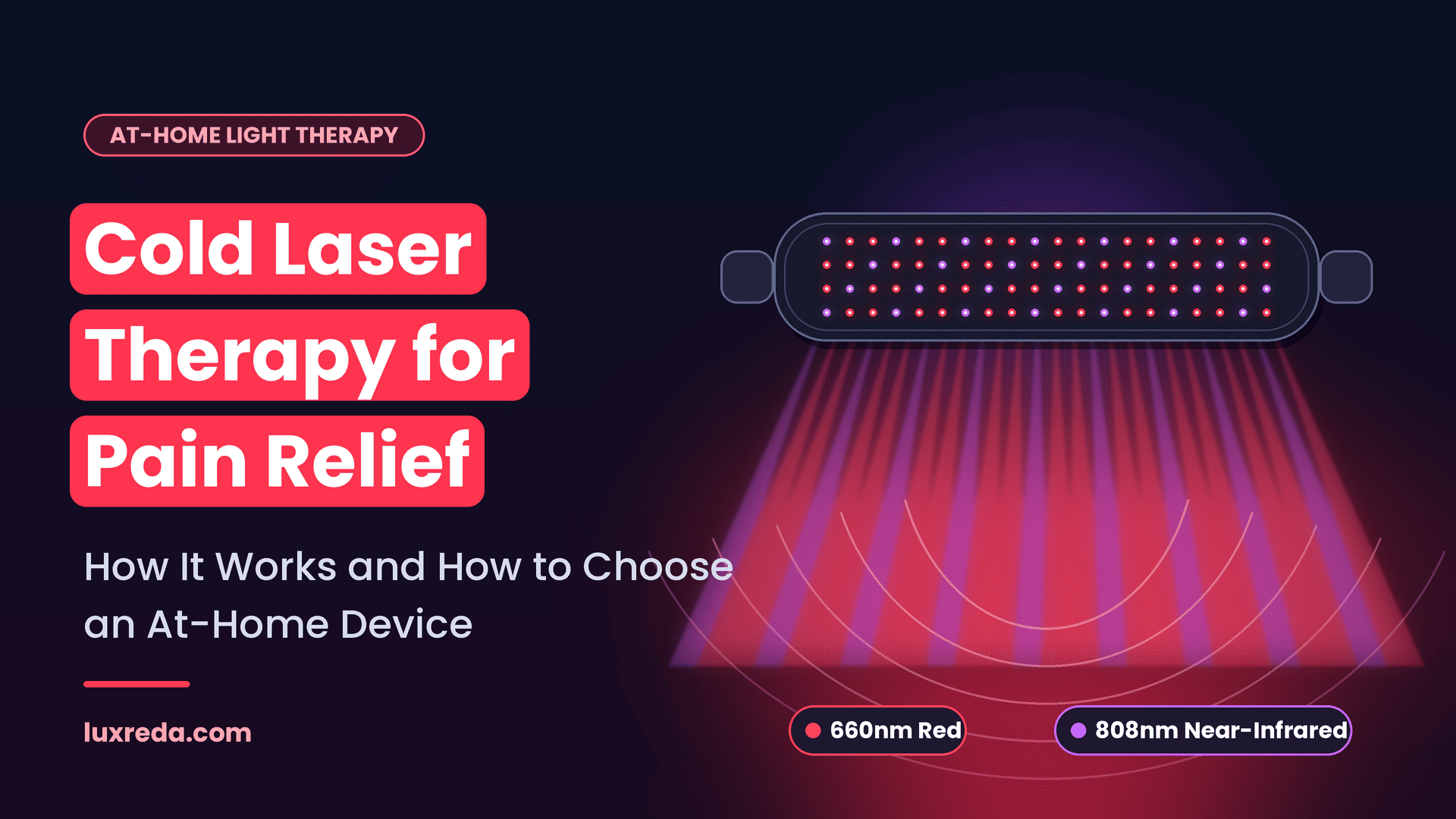
Moving comfortably is a big part of feeling well. A stiff lower back or sore knee can make a walk, a workout, or a good night’s sleep harder than it should be. Many people start looking for gentle, drug-free ways to support recovery.
Cold laser therapy for pain relief uses low-level red and near-infrared laser light on the skin. Researchers call this approach photobiomodulation. People use it for muscle and joint discomfort, but the research is mixed and results vary from person to person.
This guide covers how the technology works and how 660nm and 808nm light differ. It also explains what to check before you buy an at-home device, such as the LuxReda™ Foldable Cold Laser Therapy Pain Relief Belt.
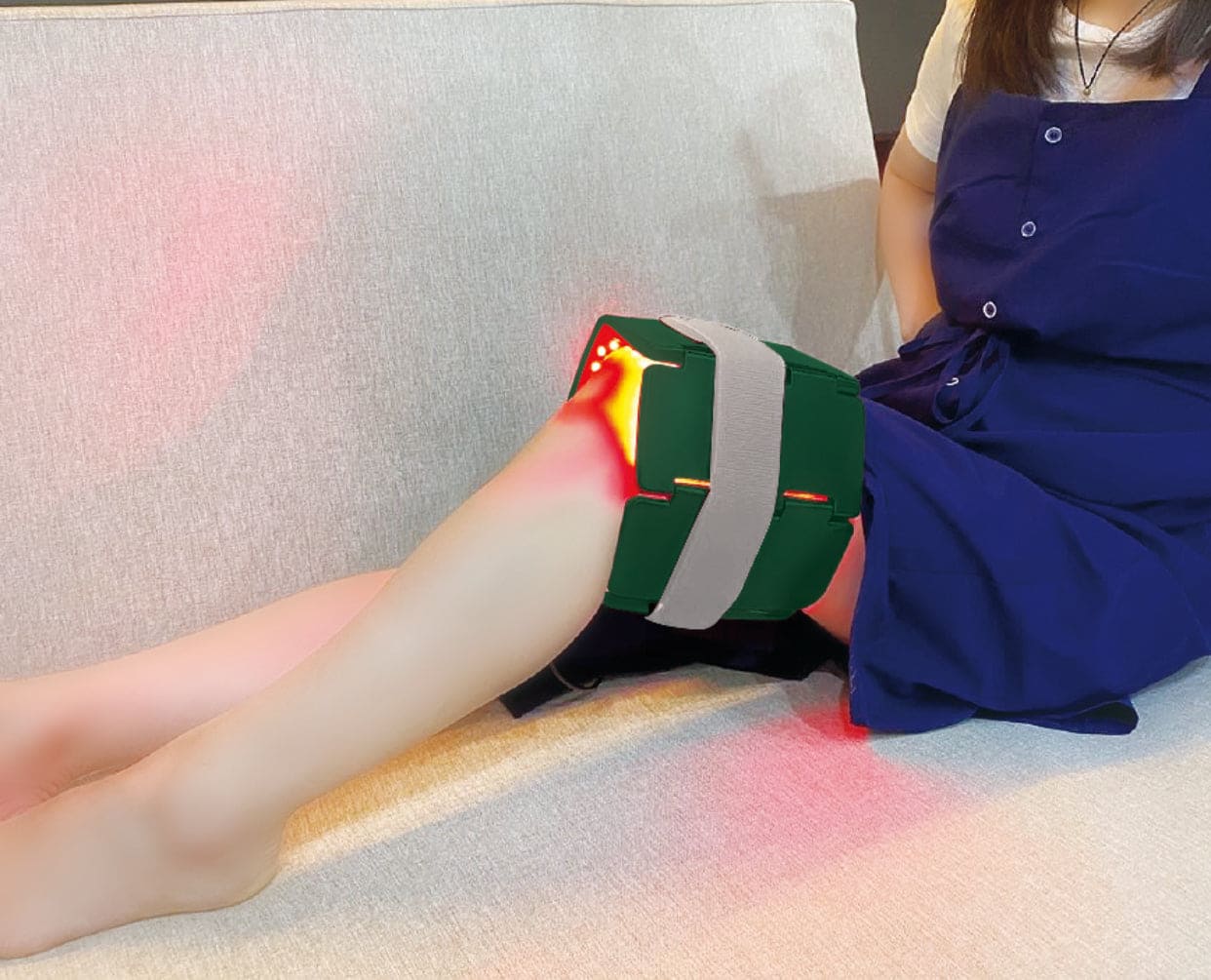
What Is Cold Laser Therapy and How Does It Work?
Cold laser therapy is also called low-level laser therapy, or LLLT. “Low-level” means the light is weak compared with surgical or cutting lasers. It does not heat tissue enough to cut, burn, or damage it.
A review of photobiomodulation mechanisms describes the leading theory. Light in the red and near-infrared range reaches the mitochondria inside cells. A light-sensitive enzyme there may then increase energy production. Scientists still debate the full mechanism, so treat it as a working theory, not a settled fact.
Cold Laser vs. Class IV Laser
Cold lasers differ from higher-powered therapy lasers. Higher-powered devices usually belong in a clinic with trained staff. If you want a deeper comparison, LuxReda explains class IV laser therapy vs. cold laser therapy in a separate guide.
Photobiomodulation in Plain English
Think of photobiomodulation as using light to nudge cells, not to force a change. The dose matters a lot. A review in Annals of Biomedical Engineering explains that too little light may do nothing and too much may reduce the effect. This is one reason a longer session is not automatically better.
660nm Red Laser vs. 808nm Near-Infrared Laser
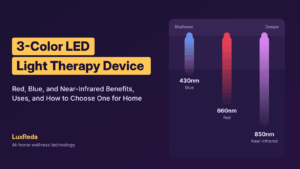
Wavelength describes the color of the light, measured in nanometers (nm). Red light at 660nm looks visibly red. Near-infrared light at 808nm stays invisible to the eye.
Researchers usually place low-level light therapy in two windows: about 600 to 700nm for red and 780 to 1,100nm for near-infrared. Both LuxReda wavelengths fall inside those ranges.
| Feature | 660nm Red Laser | 808nm Near-Infrared Laser |
|---|---|---|
| Visibility | Visible red light | Invisible to the eye |
| Typical depth | Generally shallower | Generally deeper |
| Often discussed for | Skin and surface tissue | Deeper muscle and joint areas |
| Feels warm? | Usually not noticeable | Some people notice mild warmth |
Depth varies with skin tone, body area, and tissue thickness. Think of this table as a general guide, not a promise.
Why Dual-Wavelength Devices Exist
A dual-wavelength device pairs the two ranges so one session covers both surface and deeper tissue. That idea makes sense on paper. Still, no wavelength combination guarantees a result for every person.
Potential Benefits and Realistic Expectations
People mainly use cold laser therapy to support comfort and recovery after activity. Common uses include muscle soreness, joint stiffness, and general aches.
The evidence is honest but modest. A 2015 meta-analysis on chronic low back pain found that low-level laser therapy lowered pain scores compared with placebo. The same analysis found no clear improvement in function. A Cochrane review found the pain reduction small and the data insufficient for firm conclusions.
So a fair expectation is this: some people notice a difference, and some do not. A therapy belt can fit alongside stretching, strength work, and rest. It does not replace them.
Everyday Situations People Consider It For
- Tight muscles after a long gym session or a weekend hike
- Stiff joints after a long day at a desk
- A recovery routine for active adults who want a quiet, screen-free habit
For a deeper look at one common area, read LuxReda’s guide to red light therapy for knee pain.
Laser Therapy vs. LED Light Therapy
Both laser and LED devices can deliver red and near-infrared light. They work differently. A laser produces a focused, single-wavelength beam. An LED produces a broader, more scattered light.
Experts disagree on which one works better. One review notes that LEDs have proved as effective as lasers in some studies. Another says the debate over their clinical effects continues. LuxReda’s product page states that laser diodes give deeper penetration than LED devices. Research has not settled that point.
When LED Devices Make Sense
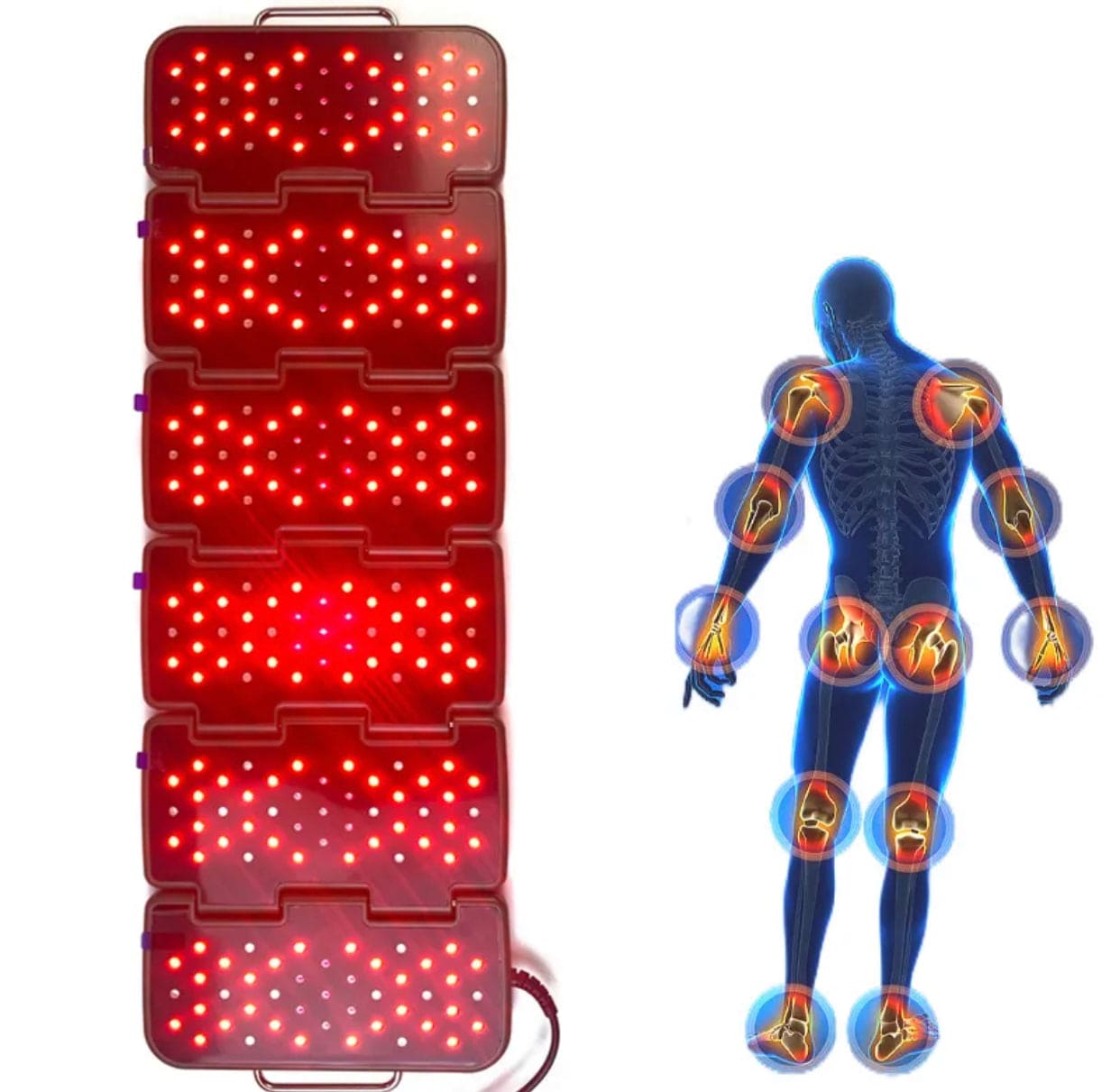
LEDs often cost less and cover larger areas. Many full-body mats and panels use them. If you want to compare wavelength choices on those devices, see LuxReda’s guide to 660nm vs. 850nm red light therapy mats.
When a Laser Belt May Appeal
A belt targets one area at a time. Someone who wants focused sessions on a back, hip, or knee may prefer that format. Pick the technology that fits your routine and your comfort level.
What Are GaAs Laser Diodes?
Gallium arsenide (GaAs) is a semiconductor material. Manufacturers use it in many diode lasers, including near-infrared ones. A diode laser is a small chip that turns electricity into laser light.
Device makers often add the phrase “medical-grade.” Treat that phrase carefully. It means little unless the company backs it with documentation, such as laser class labeling and safety testing. A good seller will answer questions about it.
How to Choose an At-Home Laser Therapy Device
Price and diode count draw the most attention. They should not decide the purchase on their own. Use this checklist instead.
1. Check the Wavelengths
Look for clearly stated wavelengths, such as 660nm and 808nm. Vague claims like “advanced light” tell you nothing.
2. Ask About Safety and Regulation
Ask for the laser class, labeling, and safety documentation. The FDA has warned that some laser products sold online may not meet federal safety requirements. Ask the seller directly before you buy.
3. Look for Eye Protection
Laser light can harm eyes even when it looks dim. A good kit includes protective goggles and a clear user manual.
4. Review the Controls
Useful features include an adjustable timer, power settings, and automatic shut-off. A remote control helps when the belt sits on your lower back.
5. Think About Portability and Fit
A device you can fold and store easily gets used more often. Consistency usually matters more than any single spec. For a wider look at what to weigh, read LuxReda’s laser therapy device buying guide.
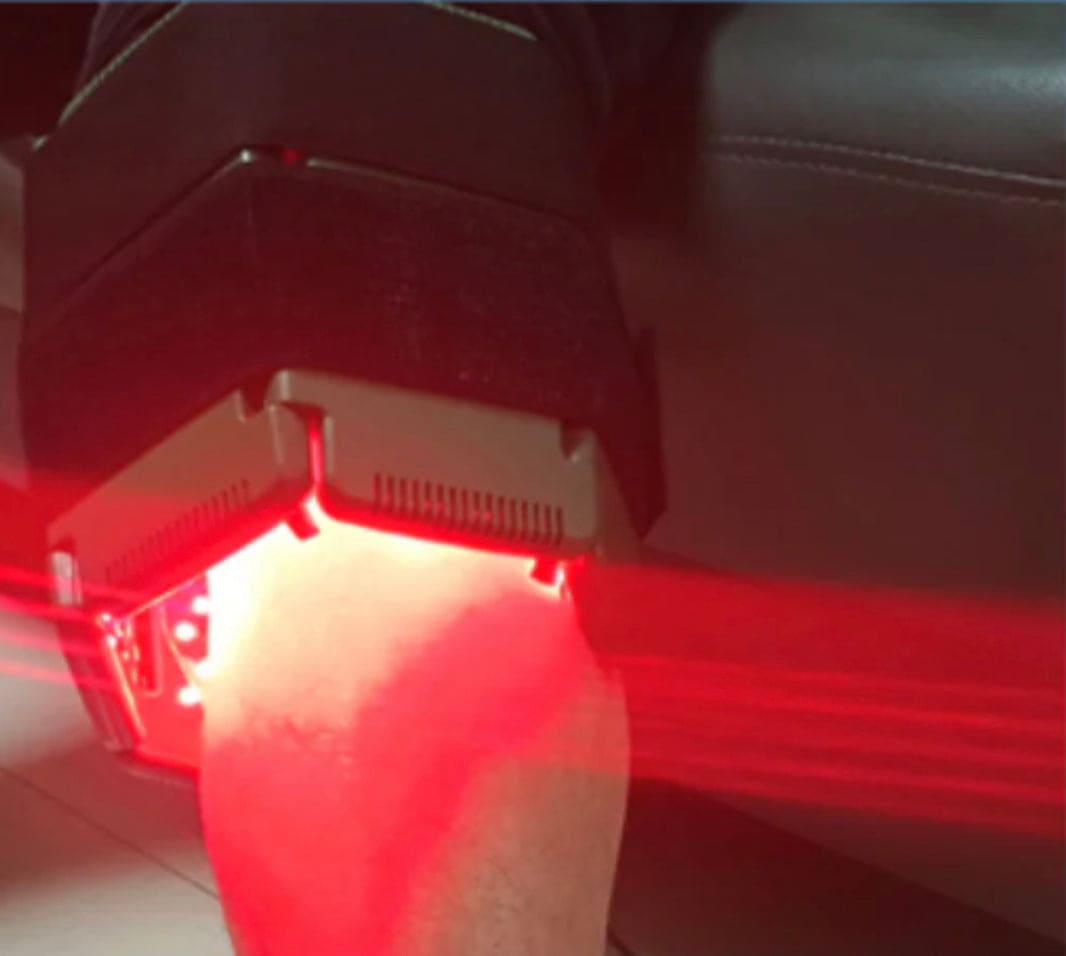
Common Buying Mistakes
- Choosing only on diode count or total wattage
- Skipping the manual and eye-safety steps
- Expecting instant results from one session
- Ignoring return and support policies
Benefits of a Foldable, Portable Laser Therapy Belt
A foldable belt solves a practical problem. Many therapy devices stay in one room. A belt can move with you from the living room to a hotel room or a home gym.
A strap helps too. It holds the device in place so you can relax, read, or listen to music during a session. A small habit you enjoy is easier to keep than a complicated one.
Discover the LuxReda Foldable Cold Laser Therapy Pain Relief Belt
The LuxReda Foldable Cold Laser Therapy Belt fits the category described above. Here are the details LuxReda lists on its product page.
Key Specifications
- Laser diodes: 270 gallium arsenide laser diodes
- Wavelengths: 660nm red and 808nm near-infrared
- Power settings: Adjustable, from 5W to 65W
- Timer: Adjustable from 10 to 30 minutes, with automatic shut-off
- Controls: LCD touchscreen and wireless remote
- Power: USB rechargeable
- Design: Foldable and portable, for home and professional use
- In the box: Belt, remote, protective goggles, USB cable, USB charger, and user manual
LuxReda also ships worldwide and includes the correct plug for your country.
How Sessions Work
The product page describes a simple routine. You place the belt over the area, turn it on, pick a power level, and choose a time. Then you secure the strap and relax. Read the manual first and follow it exactly.
What to Ask Before You Buy
The page does not list the laser class or regulatory status. Ask LuxReda for that information, along with warranty and return terms. A transparent answer helps you buy with confidence. If you want to compare formats first, you can also explore the full LuxReda laser belt details alongside other options.
Safety Tips for Using Cold Laser Therapy at Home
- Wear the protective goggles. Never look into the beam.
- Follow the manual for timing and placement.
- Start with shorter sessions and see how your body responds.
- Stop if you feel discomfort, and talk to a clinician.
- Keep the device away from children.
Talk with a healthcare professional before use if you are pregnant or have a history of cancer. Do the same if you take medicines that increase light sensitivity, have an implanted medical device, or have pain that is new or unexplained. Pain that persists or worsens deserves a proper evaluation.
Frequently Asked Questions
Cold laser therapy applies low-level red and near-infrared laser light to the skin. People use it to support comfort and recovery in muscles and joints. It does not treat or cure any medical condition.
Researchers think the light interacts with mitochondria and may influence cell energy production. The full mechanism is still under study.
660nm is visible red light that generally stays closer to the surface. 808nm is invisible near-infrared light that generally travels deeper.
Yes. Lasers produce a focused single wavelength, while LEDs produce broader light. Researchers still debate how much that difference matters for results.
They are laser chips made from gallium arsenide. Manufacturers use them in many near-infrared diode lasers.
Many people use at-home devices. Choose one with clear safety information, eye protection, and a manual. Follow every instruction.
Check the wavelengths, laser class, eye protection, timer, controls, and return policy. Ask the seller for safety documentation.
No universal schedule exists. The LuxReda page lists a 10 to 30 minute timer. Follow the user manual and ask your clinician for personal guidance.
People often use it as part of a recovery routine. Studies show mixed results, so keep expectations realistic and pair it with rest, hydration, and movement.
It combines two wavelengths in one device. That gives you red and near-infrared light in the same session.
Conclusion: A Calm, Informed Next Step
Cold laser therapy for pain relief sits in a promising but still-developing area of wellness technology. The science supports careful curiosity, not big promises. Choose a device that explains its wavelengths, shares safety details, and fits your routine.
If a foldable belt sounds like a good match, review the specifications on the LuxReda cold laser therapy belt page. Check the details, ask questions, and talk to your healthcare provider if you have concerns.
Your body works hard for you every day. Small, steady habits like stretching, walking, and setting aside quiet recovery time can make daily life feel better. Be patient with yourself, and enjoy the routine.
Thank you