If you’re tired of booking salon appointments around your own schedule, a home tanning bed can put you back in control. But “buying a tanning bed” isn’t as simple as picking a color and checking out — the best tanning bed for home use depends on your electrical setup, the room you have available, how the unit will be maintained, and what kind of support the manufacturer offers after the sale.
This guide walks through every decision that actually matters before you buy a home tanning bed, in the order you’ll need to make them. By the end, you’ll know exactly what to measure, what to ask a supplier, and what a reasonable budget looks like for a residential tanning system.
Determine Your Available Space
Before comparing any specific models, measure the room where the tanning bed will live. This single step eliminates more options than any spec sheet will.
At a minimum, you need:
- Floor footprint for the bed itself, plus at least 18–24 inches of clearance on each open side for getting in and out comfortably.
- Ceiling height that accommodates the canopy in its fully raised position, especially important for stand-up or swivel-style units that open vertically.
- Doorway and hallway width the unit must pass through during delivery, since most home tanning beds arrive as a large, boxed unit that gets assembled on-site.
- Storage space if you plan to fold the bed away between sessions rather than leave it set up permanently.
A spare bedroom, finished basement, or larger bathroom are the most common spots homeowners choose. Basements work well because they’re often already wired for higher-draw appliances and tend to stay cooler, which helps with the heat a tanning canopy generates during a session.
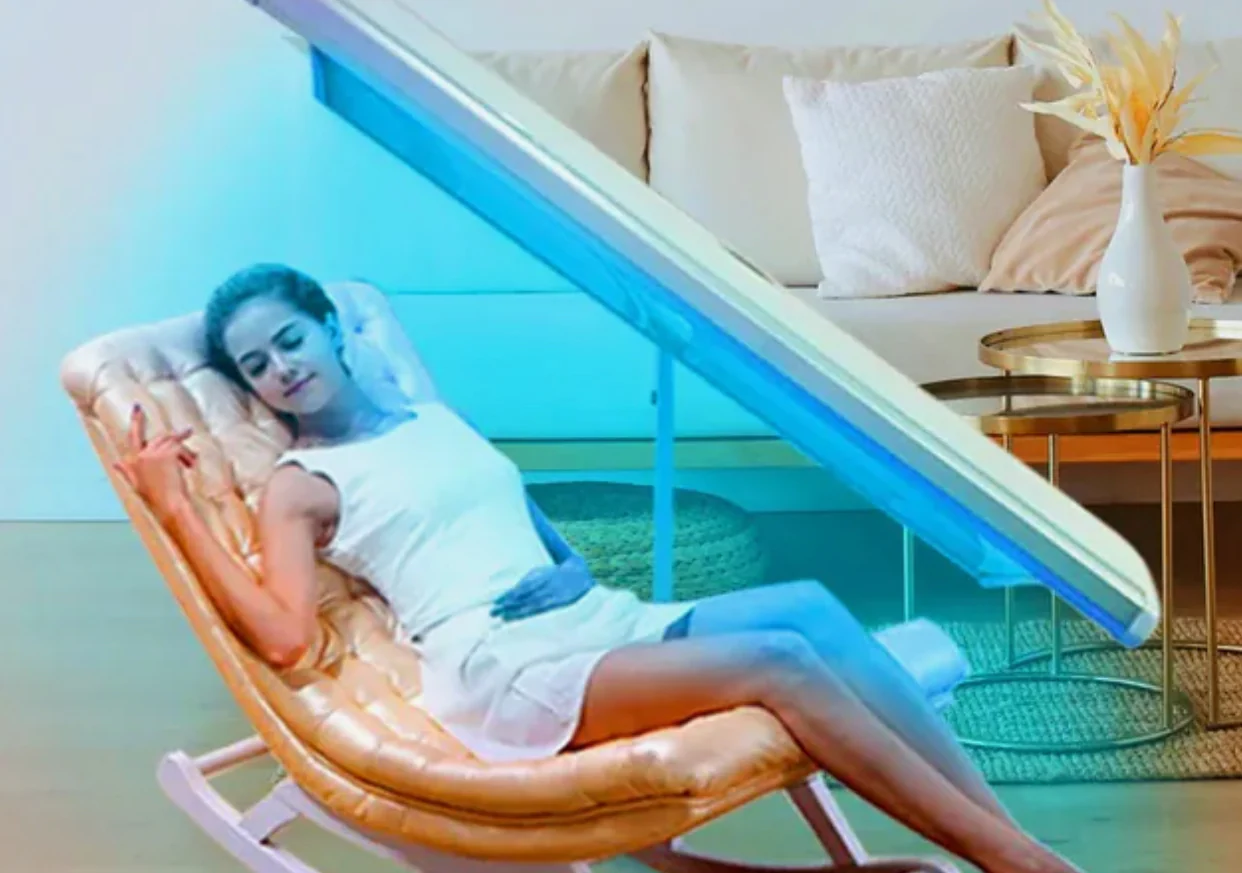
If space is tight, look specifically at listings that describe a foldable or portable design — some residential tanning systems, including the LuxReda 360° Home Tanning Bed, are built to collapse for storage under furniture or in a closet when not in use, which matters a lot in apartments or smaller homes.
Decide Which Type of Tanning Bed You Want
“Tanning bed” is a category, not a single product. Home units generally fall into a few configurations:
| Type | How It Works | Best For |
|---|---|---|
| Horizontal (lay-down) bed | User lies flat under a hinged UV canopy | Traditional salon-style tanning, longer relaxed sessions |
| Vertical/stand-up booth | User stands inside a ring or column of lamps | Smaller footprint, faster sessions, less lying down |
| Swivel/convertible bed | Frame adjusts between horizontal and vertical positions | Households that want flexibility without buying two units |
| 360° canopy design | Lamps surround the body from multiple angles for more even coverage | Reducing pale spots and strap lines from a single-angle bed |
A convertible design is worth a close look if more than one person in the household will use it, since preferences for lying down versus standing up vary from person to person. The LuxReda 360° Home Tanning Bed, for example, is built around a swiveling frame that switches between horizontal and vertical positions rather than locking you into one format.
Consider Electrical Requirements
This is the step people skip and regret. A home tanning bed with a full lamp array draws a meaningful amount of power, and plugging one into an already-loaded household circuit is a common cause of tripped breakers or, worse, a fire hazard.
Before ordering, check:
- Total wattage. Add up the lamp count multiplied by wattage per lamp. A 12-lamp unit with 100-watt lamps, for instance, pulls roughly 1,200 watts once every lamp is firing — that’s on top of any fans or timer electronics.
- Voltage compatibility. Some residential tanning systems are built for 110V household outlets only; others, like LuxReda’s 360° bed, are designed to run on either 110V or 220V, which gives you flexibility if your home already has 220V service (common near dryers or workshops).
- Dedicated circuit. Even where the manufacturer allows a standard outlet, it’s worth running the unit on its own circuit rather than sharing it with other high-draw appliances.
- Extension cords. Avoid them. Most tanning bed manufacturers explicitly warn against using extension cords or power strips, since the sustained current can overheat lower-gauge wiring.
If you’re unsure what your outlet or panel can safely support, a licensed electrician can confirm capacity in under an hour — a small cost against the price of the equipment itself.
Check Dimensions and Clearance
Once you know the room works electrically, confirm the exact footprint against the manufacturer’s technical specifications, not just a photo. Look specifically for:
- Overall height with the canopy open, particularly for vertical or swivel designs
- Width and depth with the unit fully assembled and in tanning position
- Shipping weight, which affects both delivery logistics and whether the floor (especially upper-floor rooms) can support it comfortably
- Assembly clearance — some units arrive close to fully built, while others need meaningful floor space during setup
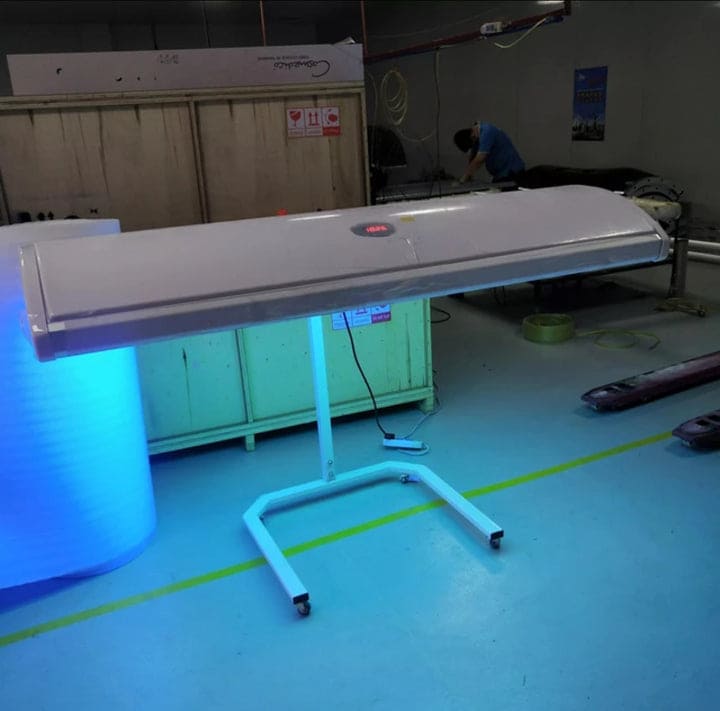
As an example of what a real spec sheet looks like, the LuxReda 360° Home Tanning Bed lists a height of 73 inches and a width of 34 inches at roughly 150 pounds, and arrives approximately 95% pre-assembled, which shortens the setup window compared to fully knocked-down units.
Consider Ventilation and Cooling
UV lamps generate heat, and a session that’s supposed to be relaxing turns uncomfortable fast in a stuffy room. Ventilation isn’t just a comfort issue — overheated equipment also shortens lamp life and stresses electrical components.
Things to plan for:
- Room airflow. A window, vent, or portable fan in the room keeps ambient temperature manageable, especially for longer sessions.
- Built-in cooling fans. Many home tanning systems include internal fans that run during the session to keep the lamp housing and acrylic within a safe operating range — check whether this is included or optional.
- Session length versus room temperature. Basements and rooms without direct sun exposure tend to stay more comfortable for tanning sessions than upper-floor rooms in summer.
If the specification sheet doesn’t mention a cooling or ventilation system at all, ask the seller directly before buying — it’s a detail worth confirming rather than assuming.
Compare Features
Once space, electrical, and clearance requirements are settled, features are where home tanning beds actually differentiate themselves. Focus on the details that affect the tanning experience itself:
- Lamp count and wattage. More lamps at higher wattage generally means more even coverage and shorter sessions to reach the same result, though total power draw rises accordingly.
- Lamp type and lifespan. Lamp brand and rated hours vary significantly between manufacturers — this affects both tanning consistency and how often you’ll need replacements.
- Exposure timer. A built-in timer that automatically shuts the unit off is a meaningful safety feature, since it removes the risk of losing track of session length.
- Acrylic quality. The acrylic panels that diffuse UV light and separate lamps from skin should be rated for tanning bed use — this affects both light diffusion and durability over years of use.
- Full-body versus partial coverage. A 360-degree canopy design is intended to reduce untanned strips left by single-angle beds, which is a common complaint with entry-level units.
- Portability. Gas-shock assisted canopy lifts, wheeled frames, or fold-flat designs make day-to-day handling significantly easier, particularly if you’re opening and closing the canopy for every session.
For a concrete example of how these specifications are typically listed, LuxReda’s 360° model includes twelve 100-watt lamps (Cosmedico Cosmosun lamps rated for roughly 600 hours), a built-in 20-minute timer, and a gas-shock assisted canopy — details worth using as a benchmark when comparing other listings.
Consider Maintenance
A tanning bed is a piece of equipment, not a furniture purchase, and it needs upkeep to keep performing safely and consistently.
Ongoing maintenance typically includes:
- Acrylic cleaning after each session or at regular intervals, using a cleaner rated safe for acrylic surfaces (avoid ammonia-based glass cleaners, which can cloud or degrade acrylic over time)
- Lamp replacement once bulbs reach their rated lifespan — tanning results noticeably fade as lamps age, even before they fail outright
- Fan and vent cleaning to prevent dust buildup, which reduces cooling efficiency
- Hinge, wheel, and swivel maintenance for units that fold or rotate, since these mechanical parts see repeated use
- Periodic inspection of the power cord and plug for wear, especially on units run at higher wattage
Ask any manufacturer or seller directly how often lamps typically need replacing and where replacement lamps and acrylic parts are sourced — availability and cost of replacement parts matters more over a 5-year ownership period than almost any other spec.
Compare Warranty and Support
Because a tanning bed is a long-term equipment purchase, warranty coverage and post-sale support deserve real scrutiny, not a passing glance at a badge on the page.
Questions worth asking before you buy:
- What specific components are covered, and for how long?
- Does the warranty cover lamps, or only the frame and electronics? Lamps are consumables on most units and often carry separate (or no) coverage.
- Is support based in the U.S., and what’s the average response time for a warranty claim?
- Are replacement parts — lamps, acrylic panels, timers — stocked domestically, or does a repair mean waiting on an overseas shipment?
- What’s the return policy if the unit arrives damaged, given how large and heavy these shipments are?
Because these details vary widely by seller, it’s worth getting warranty terms in writing rather than relying on a general “satisfaction guaranteed” statement.
Set Your Budget
Home tanning beds span a wide price range, and the differences usually come down to lamp count and quality, frame construction, and included features rather than brand name alone.
A rough way to think about budget tiers:
- Entry-level units tend to have fewer lamps, lighter frames, and fewer built-in conveniences like automatic timers or cooling fans.
- Mid-range to premium units typically add higher lamp counts, sturdier steel-and-aluminum frames, built-in timers, and features like foldable or swivel designs for flexible positioning.
- Ongoing costs beyond the purchase price include replacement lamps, acrylic cleaner, electricity (a 1,200-watt unit run regularly will show up on your utility bill), and, if needed, a dedicated circuit installed by an electrician.
It’s worth comparing the total cost of a home unit against what you’d otherwise spend on repeated salon visits over a few years — for people who tan year-round, the math often favors owning equipment, but it depends heavily on how often you’d realistically use it.
Final Home Tanning Bed Buying Checklist
Use this as a last pass before you order:
- Room measured for footprint, ceiling clearance, and delivery path
- Circuit voltage and total wattage confirmed against the unit’s requirements
- Dedicated circuit arranged if recommended by the manufacturer
- Ventilation or cooling plan in place for the room
- Lamp count, wattage, and rated lamp lifespan compared across listings
- Maintenance requirements and replacement part availability confirmed
- Warranty terms — including lamp coverage — requested in writing
- Delivery timeline and setup process (fully assembled vs. self-assembly) understood
- Protective UV eyewear sourced separately if not included
- Manufacturer instructions and FDA guidance on sunlamp products reviewed before first use
Frequently Asked Questions
Is it worth buying a tanning bed for home use?
It depends on how often you’d use it. If you tan year-round and already spend regularly on salon visits, a residential tanning system can pay for itself over a few years. If you only want a tan occasionally, the upfront cost and space commitment may not make sense.
Do home tanning beds need a special electrical outlet?
Not always, but many higher-wattage units run better — and more safely — on a dedicated circuit rather than sharing an outlet with other appliances. Always check the manufacturer’s stated voltage and wattage requirements before ordering, and consult an electrician if you’re unsure what your home’s wiring supports.
How much space do I need for a home tanning bed?
Beyond the unit’s footprint, plan for clearance on each side to get in and out, enough ceiling height for the canopy in its open position, and a delivery path (doorways, stairwells) wide enough for a large boxed unit. Foldable designs help if the room needs to serve other purposes between sessions.
Is UV tanning safe?
UV tanning, whether outdoors or from an indoor sunlamp product, carries risks including skin damage and eye injury, and should not be treated as risk-free. The FDA classifies sunlamp products as medical devices subject to labeling and performance requirements, and recommends following manufacturer instructions, using protective eyewear, and staying within recommended exposure limits. Anyone with skin sensitivity or health concerns should talk to a healthcare provider before using any tanning device.
How long do tanning bed lamps last?
Lamp lifespan varies by product, typically measured in hours of use — some residential-grade lamps are rated for several hundred hours before output noticeably declines. Check the specific lamp’s rated hours on the product’s technical specifications rather than assuming all lamps perform the same.
Do I need protective eyewear with a home tanning bed?
Yes. UV exposure without eye protection can cause both short- and long-term eye damage. Protective eyewear is not always included with home units, so confirm whether you’ll need to source it separately, and always wear it during every session per manufacturer instructions.
Final Thoughts
Choosing the best tanning bed for home use comes down to matching a specific product’s electrical requirements, dimensions, and features to the room and household you actually have — not to whichever listing has the most lamps. Work through space, power, ventilation, and maintenance first, then compare features and warranty terms across specific models. If you’re evaluating a full-body, 360° option as part of that comparison, the LuxReda 360° Home Tanning Bed product page lists its complete technical specifications, making it a useful reference point while you finalize your decision.
Keep your health good. Make sure Keep smile daily. Thank you very much.