If you’re looking into red light therapy, you’ve likely come across the term “tanning bed” and wondered if they’re the same thing. The short answer is no.
Do you know, Red light therapy beds and tanning beds are fundamentally different devices. Tanning beds use ultraviolet (UV) light to darken the skin—which carries well-documented risks. Red light therapy uses specific wavelengths of red and near-infrared light that do not tan the skin and work at a cellular level to support skin health, muscle recovery, and pain relief.
This article explains the difference between these two technologies, what red light therapy actually does, how to choose a home device, and where contact-free tanning beds fit into the picture.
What Is Red Light Therapy?
Red light therapy, known medically as photobiomodulation and previously called low-level laser light therapy, involves exposing the skin to red or near-infrared light using LEDs or low-level lasers. Unlike ultraviolet light, which damages skin cells, this type of light is believed to stimulate mitochondria—the energy-producing parts of cells—to reduce inflammation and support collagen production .
The FDA has cleared several red light devices for home use, and dermatologists now offer red light therapy for various skin concerns . But the science behind it goes back decades—researchers have been studying the effects of red light on biology since the 1960s . It wasn’t until 2015 that the National Library of Medicine officially recognized photobiomodulation as a medical subject heading .
How Red Light Therapy Works
The basic principle is straightforward. Red and near-infrared light penetrate the skin at different depths. Shorter wavelengths (like 660 nm red light) reach the surface layers of the skin. Longer wavelengths (like 850 nm near-infrared) penetrate deeper into muscles and joints.
When cells absorb this light, it triggers a biological response that can include improved circulation, reduced oxidative stress, and increased cellular energy production . The results aren’t immediate—consistent use over weeks or months is typically required to see meaningful changes .
Here’s what research suggests red light therapy can help with:
The Key Difference: UV vs. No UV
The most important distinction between a tanning bed and a red light therapy bed is UV radiation.
Tanning beds emit UVA and UVB rays to stimulate melanin production, which darkens the skin. This process is a response to DNA damage—your skin produces melanin in an attempt to protect itself from further harm. The World Health Organization classifies UV tanning devices as carcinogenic.
Red light therapy beds use LED lights that emit zero UV rays. They don’t tan the skin. They don’t cause the same DNA damage. They’re not designed for cosmetic skin darkening at all .
Some commercial tanning salons now offer “hybrid” beds that combine UV bulbs with a few red light bulbs. These beds prioritize tanning, with red light included as a minor bonus feature. A dedicated red light therapy session, by contrast, uses 100% red light wavelengths for the entire treatment .
What About “Contact-Free” Tanning Beds?
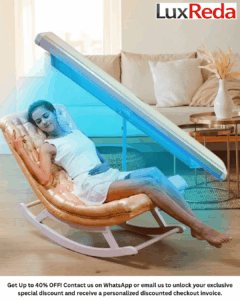
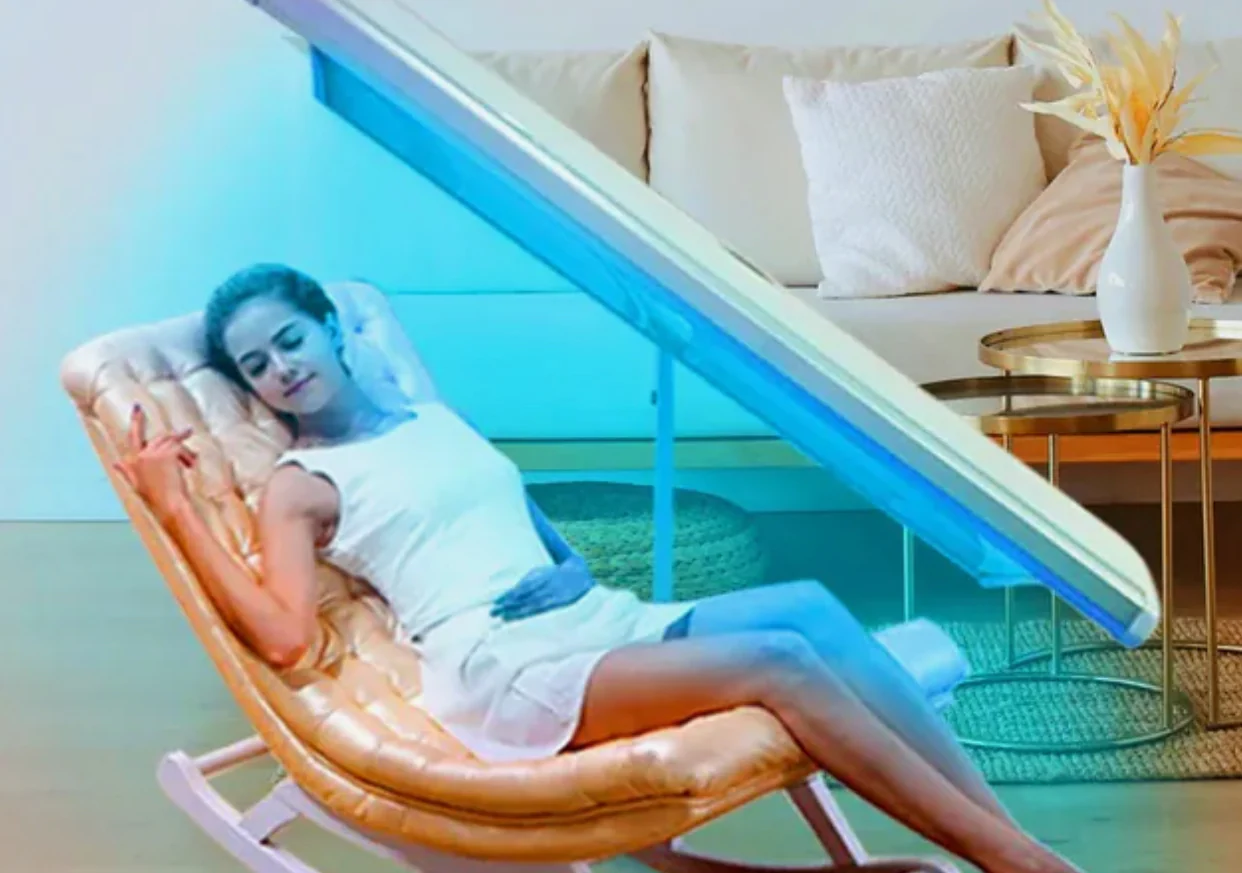
A product like the LuxReda 360° Premium Home Contact-Free Tanning Bed is not a UV tanning device. The term “tanning bed” is sometimes used loosely to describe full-body LED beds that you lie on, but these are fundamentally different from UV tanning beds.
Contact-free refers to the design: you lie on the bed without direct contact with the light source, allowing for full-body exposure without touching hot bulbs or panels.
Home Red Light Therapy: Beds vs. Panels vs. Masks
If you’re considering a home red light therapy device, you have several options. Here’s how they compare:
Red Light Therapy Beds
These are full-body devices designed to be laid on during treatment. They’re most commonly found in spas, wellness centers, and gyms rather than homes because they tend to be expensive and require significant floor space .
Pros:
- Full-body treatment in one session
- Hands-free experience
- Professional-grade output in commercial settings
Cons:
- High cost (often thousands of dollars)
- Large footprint; not portable
- May require 220V electrical circuits
- Overkill if you only need to treat specific areas
Red Light Therapy Panels
Panels deliver the same therapeutic benefits as beds but in a more flexible format. You sit or stand in front of them. They’re wall-mountable or freestanding and can treat the whole front or back of the body in one session .
Pros:
- More affordable than beds
- Portable and space-efficient
- Versatile—can treat full body or targeted areas
- Use standard 120V outlets
Cons:
- You need to stay positioned in front of the panel
- May require turning to treat both sides
- Lower total output than some commercial beds
For most home users, a panel offers the best balance of performance and practicality.
Red Light Therapy Masks
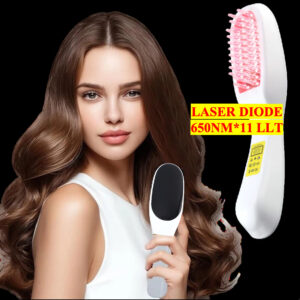
Masks treat the face only. They’re the most popular option for skincare-focused users who want to address wrinkles, fine lines, and skin texture without treating the rest of the body .
Pros:
- Highly targeted facial treatment
- Portable and easy to use
- Often more affordable than panels or beds
Cons:
- Only treats the face
- May have lower irradiance than larger devices
- Not suitable for muscle recovery or full-body use
Red Light Therapy Mats
Mats are flexible devices you lie on, often designed for targeted treatment of the back, neck, and shoulders. Some include near-infrared heat for deeper tissue penetration .
Pros:
- Ergonomic; comfortable to use
- Treats larger areas of the back
- Some models are portable and rollable
Cons:
- Primarily treats the back side of the body
- May have lower irradiance than panels
How to Choose a Home Red Light Therapy Device
If you’re comparing red light therapy devices for home use, focus on these specifications:
Wavelengths Provided
The most researched wavelengths are red light at approximately 660 nm and near-infrared at approximately 830–850 nm . A device that offers both gives you more flexibility.
Irradiance (Power Output)
This is measured in mW/cm² and tells you how much light energy reaches your skin at a given distance. Higher irradiance generally means shorter treatment times. However, manufacturers don’t always measure this consistently, so compare devices using the same distance specification.
Treatment Area
A larger surface area means fewer repositioning requirements. For full-body treatments, you’ll want a large panel or bed. For targeted issues, a smaller panel or mat may suffice.
Session Time
More powerful devices require shorter sessions. This matters if you plan to use the device daily and want to fit it into a busy schedule.
Safety Certifications
Look for devices labeled “FDA-cleared” or equivalent. This indicates the agency considers the device safe for its intended use . However, FDA-cleared doesn’t mean FDA-approved for a specific condition—understand the distinction.
Warranty and Support
A longer warranty suggests the manufacturer stands behind their product. Check what’s covered and for how long.
Common Mistakes to Avoid
Expecting Immediate Results
Red light therapy is not a quick fix. Dr. Rachel Reynolds, interim chair of dermatology at Harvard-affiliated Beth Israel Deaconess Medical Center, notes that devices must be used multiple times a week for four to six months to achieve results. “It’s slow and steady. It’s not going to be anyone’s quick fix” .
Assuming All Devices Are Equal
Home devices vary widely in strength, wavelength accuracy, and irradiance. Over-the-counter products “may be weaker, and it’s hard to know which device would be optimal to purchase” .
Skipping Eye Protection
If your device’s instructions recommend eye protection, use it. Long-term exposure to red or blue light can potentially damage eyes . Darker skin types may also need to start with lower doses due to potential sensitivity .
Using UV Tanning Beds for Skin “Health”
UV tanning beds are not a health tool—they’re a cosmetic device with known risks. If skin health is your priority, red light therapy is the safer, more appropriate choice.
Realistic Expectations
Red light therapy has legitimate, research-backed benefits, but it’s not a cure-all. Here’s what experts agree on:
- It works for skin aging and hair growth: The evidence for wrinkle reduction and hair regrowth is reasonably robust .
- It helps with some pain conditions: Research shows improvements in non-specific low back pain and other conditions, though pain often returns within weeks of stopping treatment .
- It doesn’t work for everything: Claims about improving athletic performance or treating serious conditions lack strong data .
- Dose matters: The optimal treatment duration and frequency for different conditions remain uncertain .
Where LuxReda Fits In
LuxReda offers a range of red light therapy devices designed for home use, including panels, belts, masks, and full-body systems. The LuxReda 360° Premium Home Contact-Free Tanning Bed is a full-body LED bed that provides contact-free red and near-infrared light therapy without UV exposure.
If you’re considering a red light therapy device, LuxReda’s product range covers multiple form factors, from targeted pain relief to full-body skincare and recovery. The company ships across the USA and Canada and offers customer support for personal and bulk orders.
Frequently Asked Questions
Does red light therapy tan your skin?
No. Red light therapy contains no UV rays and does not stimulate melanin production. It doesn’t change skin color .
Is a red light therapy bed the same as a tanning bed?
No. Tanning beds use UV light to darken the skin. Red light beds use LED lights with zero UV and work on cellular health. Some hybrid beds combine both, but the red light component is secondary .
How often should I use red light therapy?
Most research suggests multiple sessions per week for several months. Specific frequency depends on the device and condition. Always follow the manufacturer’s guidelines .
Can I use red light therapy if I have darker skin?
Yes, but you may be more sensitive to visible light. Starting with lower doses is recommended, and consulting a dermatologist beforehand is advised .
Who should avoid red light therapy?
Avoid if you have a light-sensitive condition like lupus or if you’re taking photosensitizing medications such as certain antibiotics or tetracyclines . Always consult a healthcare professional for medical conditions.
Are home devices as effective as professional ones?
Professional devices may offer better dose control and a greater range of calibrated options. Home devices can still be effective, but their lower output means more frequent or longer sessions may be needed .
What should I look for in a red light therapy device?
Compare wavelengths (660 nm and 850 nm are the most studied), irradiance at your intended treatment distance, treatment area, session time, and whether it has FDA-cleared status .
Red light therapy beds and tanning beds serve completely different purposes. If you’re looking for a natural-looking tan, red light therapy won’t help. If you’re interested in supporting skin health, reducing signs of aging, aiding muscle recovery, or managing pain, red light therapy is worth exploring.
For home use, panels offer a practical balance of performance, price, and flexibility. Beds provide full-body coverage but come with higher costs and space requirements. Whichever device type you choose, consistency is key—and realistic expectations are essential.
Explore LuxReda’s red light therapy devices to compare panels, masks, and full-body systems for your home wellness routine. Unsure which device suits your goals? Contact LuxReda before ordering—personal and bulk discounts are available via WhatsApp or email.