A long day at a desk, a weekend of yard work, or a hard workout can leave your back feeling tight. Most of us want simple, comfortable ways to look after our bodies, and a few quiet minutes of self-care can help.
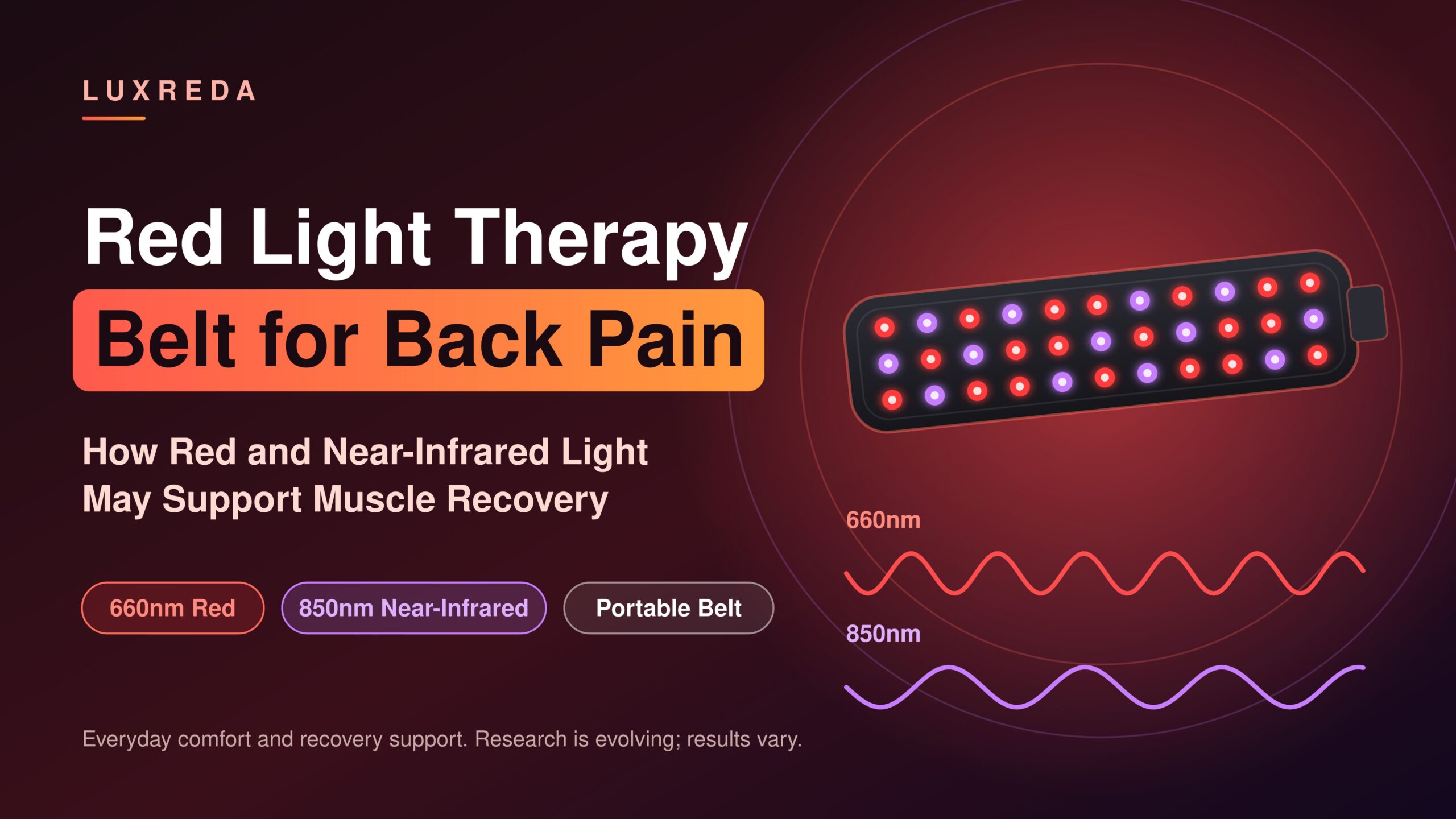
A red light therapy belt for back pain is a wearable device. It wraps around your waist or back and shines red and near-infrared light on the area. Some people use these belts to support muscle comfort and recovery after activity. Research on this kind of light is still growing, and results vary from person to person.
This guide explains how the technology works. You will learn how 660nm red light differs from 850nm near-infrared light. You will also see how a belt compares with a heating pad, what to check before you buy, and how to use one safely.
What Is Red Light Therapy?
Red light therapy uses low-level red and near-infrared light on the skin. Researchers call the broader field photobiomodulation. You may also see it called low-level light therapy or LED therapy.
The light is not hot like a sauna or a UV lamp. It does not tan the skin. Many red light therapy devices use LEDs, and people use them at home as non-invasive wellness technology.
Scientists study how light at certain wavelengths interacts with cells. This research is active, and not every question has an answer yet. A recent narrative review on muscle regeneration points to a lack of standard dosing across studies. In plain terms, researchers still debate the best settings, timing, and session length.
That honest starting point matters. Light therapy may be a useful comfort tool, but it is not a cure or a replacement for medical care.
How Do 660nm Red Light and 850nm Near-Infrared Light Differ?
A nanometer (nm) measures the wavelength of light. Different wavelengths behave differently on the body. Most belts use two of them.
660nm red light
You can see 660nm light. It looks deep red. It mostly interacts near the surface of the skin, so it often appears in skin-focused devices.
850nm near-infrared light
You cannot see 850nm light. It sits just beyond the visible range and generally travels deeper than red light. That is why many devices for muscles and joints include it.
| Feature | 660nm red light | 850nm near-infrared light |
|---|---|---|
| Visible to the eye | Yes | No |
| Typical depth | Closer to the surface | Deeper |
| Common use | Skin-focused wellness | Muscle and joint-focused wellness |
| Feels warm? | Usually little to none | Gentle warmth is possible |
Pairing both wavelengths gives you surface and deeper coverage in one session. If you want a closer comparison, LuxReda’s guide to 660nm vs. 850nm light therapy explains the difference in more detail.
Potential Benefits of Red Light Therapy for Muscle Recovery
Athletes and active adults study this area the most. Researchers have looked at near-infrared and red light before and after exercise.
A review of photobiomodulation in human muscle covered trials on fatigue and delayed onset muscle soreness (DOMS). It also looked at markers of muscle damage. Some studies showed positive effects, and others showed none. Dose, timing, and the device all appeared to matter.
A 2024 review in a sports-medicine context adds a useful caution. It asks athletes and clinicians to weigh the benefits against the limits of today’s evidence. It also notes that not every device on the market is approved for therapeutic use.
What this means for everyday routines
You do not need to be an athlete to think about recovery. A walk, a gym session, or a day of gardening can all leave muscles feeling tired.
Many people add light therapy to a larger routine:
- Gentle stretching
- Good sleep
- Water and balanced meals
- Rest days between hard efforts
A belt can fit into that routine, but it should not replace the basics. Small habits add up, and the easiest ones are the ones you actually keep.
Can a Red Light Therapy Belt for Back Pain Support Lower Back Comfort?
Possibly, for some people. The honest answer is that the evidence for light therapy and low back discomfort is limited and mixed.
Back discomfort is very common in the U.S. The National Center for Complementary and Integrative Health notes that about 80 percent of adults have low back pain at some point. Most episodes are short, but some last 12 weeks or longer. You can read more on chronic low back pain and complementary approaches at NCCIH.
The same resource lists approaches with stronger support, such as yoga, tai chi, and progressive relaxation. Light therapy is not the main focus there. So think of a belt as one possible comfort tool, not the first or only step.
Why a belt shape makes sense
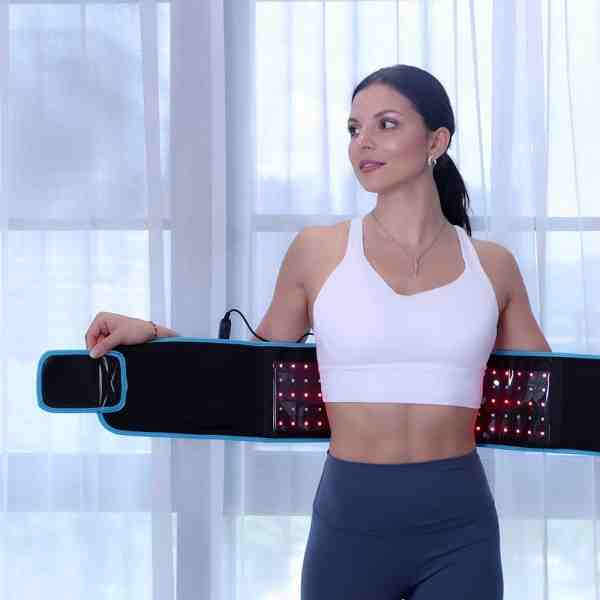
A flat panel can be awkward to position for your lower back. A wrap holds the light source against your waist or back while you sit or stand. That hands-free design may suit people who want a simple, repeatable routine.
When to see a professional first
Talk with a doctor or physical therapist before you try any new device if you have:
- Back pain after a fall or accident
- Numbness, tingling, or weakness in a leg
- Fever with back pain
- Changes in bladder or bowel control
- Pain that keeps getting worse or does not improve
These signs can point to something that light therapy cannot address.
Red Light Therapy Belt vs. Traditional Heating Pad
Heating pads and light belts both rest against your back, but they work in different ways. A heating pad warms tissue through direct heat. Many people like that soothing feeling for tight muscles.
A light therapy belt uses specific wavelengths of light. Any warmth is secondary. Researchers study the light itself, not just the heat.
| Factor | Heating pad | Red/near-infrared light belt |
|---|---|---|
| Main action | Direct heat | Light at set wavelengths |
| Familiar feeling | Strong, soothing warmth | Mild or little warmth |
| Portability | Often needs a wall outlet | Some run on USB or power banks |
| Evidence base | Long history of home use | Growing, still evolving |
| Typical session | Varies | Often 15–30 minutes |
Neither one is “better” for everyone. Some people use heat to relax before bed and light therapy after activity. If heat is what you enjoy, a heating pad may be all you need.
What to Look for When Choosing an Infrared Therapy Belt
Product pages can look similar, so a short checklist helps. Here is what a careful buyer can compare.
Wavelengths and ratio
Check which wavelengths the belt uses. Many pair 660nm red with 850nm near-infrared. Look for a clear description of how the manufacturer balances the two.
Fit and coverage
A belt only works well if it stays snug against your body. Look for an adjustable wrap and a clear size range. Measure your waist before you order.
Power source
Decide where you will use it. A USB-powered belt works with a power bank, which helps if you want to use it away from an outlet. Check the input rating so your adapter or power bank matches.
Controls and safety features
Useful features include session timers, brightness settings, and temperature control. Auto shut-off adds peace of mind if you doze off.
Warranty and support
A written warranty shows the seller stands behind the product. Read the terms before you buy.
Honest marketing
Be careful with bold promises. A trustworthy seller describes what the device is and how to use it. It does not guarantee results or claim to heal injuries.
Introducing LuxReda FlexiHeat™ Dual-Wavelength Technology
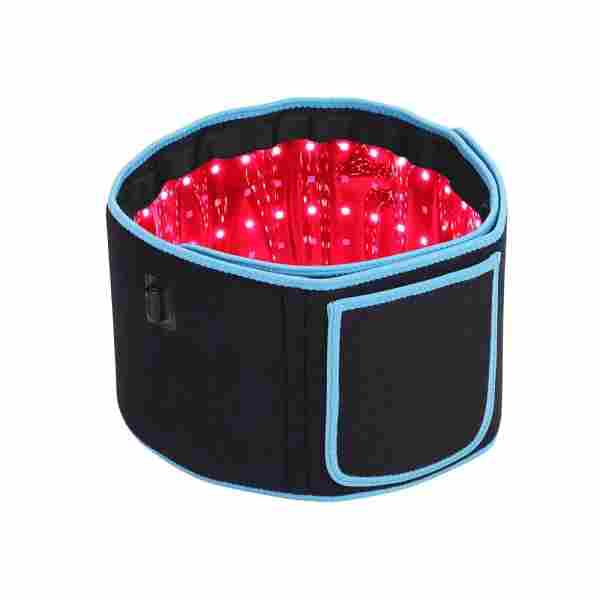
The LuxReda FlexiHeat™ Infrared Therapy Belt is a portable option that follows many of the points above. Here are the specifications listed on the product page.
| Specification | Listed detail |
|---|---|
| Wavelengths | 660nm red + 850nm near-infrared |
| Wavelength ratio | 3:2 (660nm : 850nm) |
| Fit | Adjustable, S to XL |
| Dimensions | 49.6 × 7.1 inches (126 × 18 cm) |
| Power source | USB / power bank compatible |
| Input and power | 12V / 2A, max 18W |
| Modes | Pulse mode and dimming mode |
| Safety features | Auto shut-off and temperature control |
| Recommended session | 15–30 minutes |
| Material | Soft, breathable fabric |
| Warranty | 1 year |
How the features fit real life
The adjustable wrap suits different body sizes, from small to extra large. It can wrap around your waist, back, or other areas, according to the product page.
The USB design lets you plug into an adapter or a power bank. That means you can sit at your desk or relax on the couch without hunting for an outlet. Pulse and dimming modes let you adjust a session to your comfort.
LuxReda also lists a 1-year warranty. Read the full terms on the product page before you buy.
If you want to compare other belt styles, LuxReda’s guide to an at-home cold laser therapy belt explains a related technology. It uses laser diodes instead of LEDs.
How to Use a Portable Red Light Therapy Belt
A good routine is simple and easy to repeat. Always follow the manufacturer’s instructions first.
- Check your skin. Place the belt on clean, dry skin. Remove lotions or oils first.
- Wrap it comfortably. Secure the belt snugly around your lower back or waist. It should stay in place without pinching.
- Connect the power. Plug the USB cable into a compatible adapter or power bank.
- Pick a mode. Start with a gentler setting if you are new to light therapy.
- Time the session. LuxReda recommends 15 to 30 minutes per session.
- Relax. Sit or lie back, breathe slowly, and let the session double as a quiet break.
- Check in afterward. Notice how your skin and muscles feel.
Sample routine ideas
- After a workout, use the belt while you cool down.
- After a long workday, use it during a calm evening wind-down.
- On weekends, pair it with light stretching.
Pick a time you can keep. Consistency matters more than perfection, and a routine you enjoy is easier to stick with.
Safety Considerations and Practical Usage Tips
Light therapy devices are generally low risk when you use them as directed. Still, a few common-sense steps help.
- Protect your eyes. Bright LED light can bother your eyes. Do not stare at the diodes.
- Stop if something feels wrong. End a session if you feel irritation, unusual heat, or discomfort.
- Do not exceed the session time. More is not automatically better.
- Check with a professional. Ask your doctor first if you are pregnant, have a medical condition, take medications that affect light sensitivity, or have an implanted device.
- Keep your expectations realistic. Results vary, and research is still evolving.
- Do not skip medical care. A belt should never replace a diagnosis or treatment plan.
Look after the belt, too. Follow the care instructions, store it flat or loosely coiled, and keep the cable free of sharp bends.
Frequently Asked Questions
It depends on the person. Some users report feeling more comfortable, but research on light therapy and back discomfort is limited and mixed. Treat a belt as one possible tool alongside movement, rest, and professional guidance.
Red light (660nm) is visible and mostly interacts near the skin’s surface. Near-infrared light (850nm) is invisible and generally travels deeper. Many belts combine both for broader coverage.
Follow the manufacturer’s guidance. LuxReda recommends 15 to 30 minutes per session for the FlexiHeat™ belt. Longer is not necessarily better.
Many people do. Research on photobiomodulation and exercise recovery shows mixed results, depending on dose and timing. A belt can fit into a cool-down routine, but sleep, hydration, and rest still matter most.
Neither is better for everyone. A heating pad delivers soothing heat. A light belt uses specific wavelengths and may feel less warm. Some people enjoy using both at different times.
The FlexiHeat™ belt lists USB and power bank compatibility, with a 12V / 2A input and a maximum of 18W. Check that your adapter or power bank matches those specs.
Check with a doctor if you are pregnant, have a medical condition, take medications that increase light sensitivity, or have an implanted device. Also see a professional for severe, sudden, or worsening back pain.
Conclusion: A Calm, Practical Way to Support Recovery
A red light therapy belt for back pain can be a simple, portable part of a wellness routine. The science is still developing, and results differ from person to person. A smart purchase focuses on clear specifications, comfortable fit, safety features, and honest marketing.
If you want to explore a dual-wavelength option, review the LuxReda FlexiHeat™ Infrared Therapy Belt and compare it with your needs. For a broader background, you can also read LuxReda’s guide to red light therapy in the USA and Canada.
Be kind to your back, move a little every day, and give yourself time to slow down. The best wellness routine feels easy to keep.
Thank you